More concerned for those vulnerable to COVID-19 than for their own health, poll shows
A majority of people surveyed across the world are most concerned for people who are vulnerable or weak amid the coronavirus pandemic even as lockdowns and closures force millions to isolate themselves.
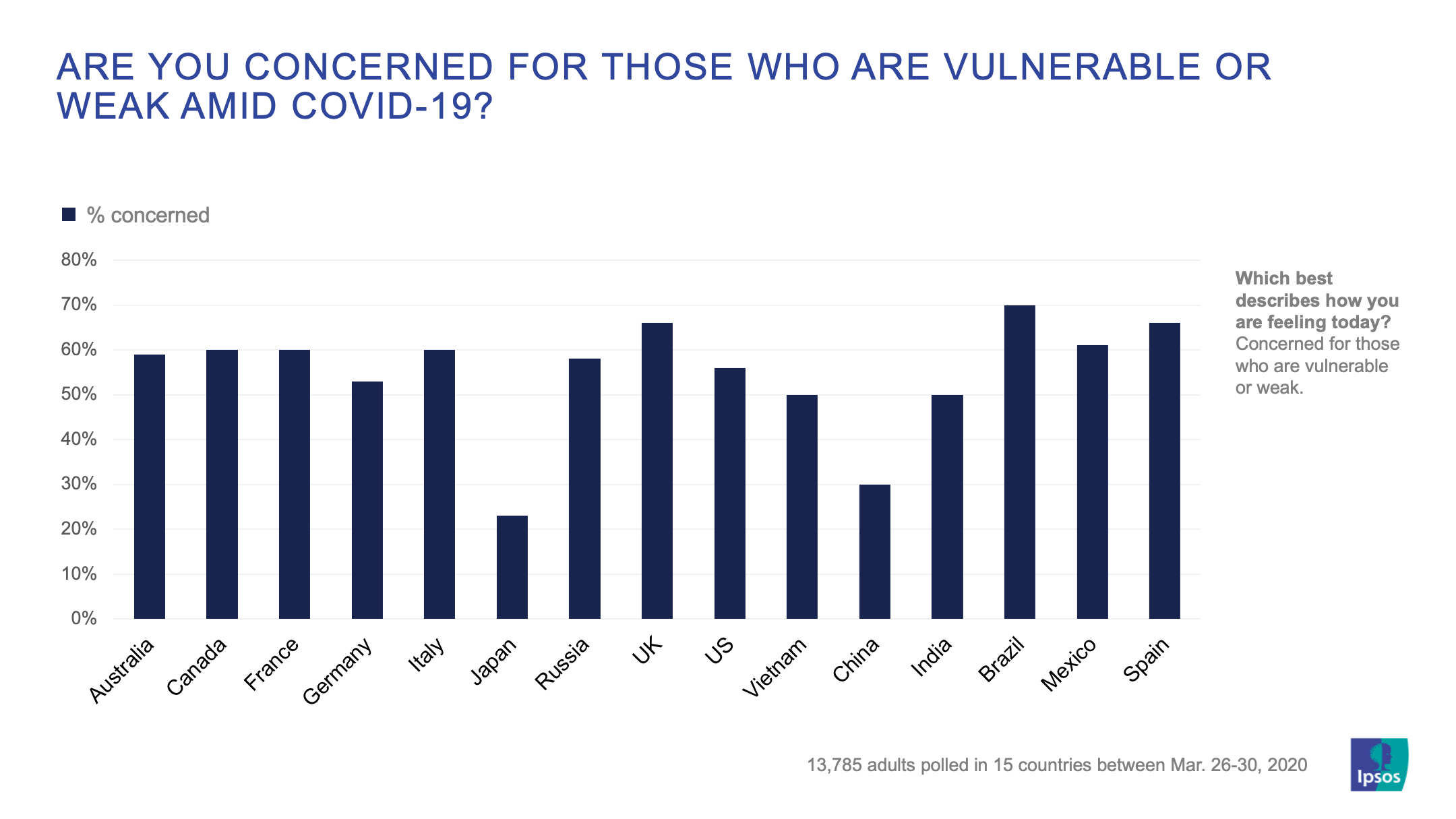
In 13 of the 15 countries, majorities cited concern for those who are weak and vulnerable at the top of a list of 10 options when asked what best describes how they are feeling today. People in Brazil (70%), Spain and the United Kingdom (66%), Mexico (61%) and Canada, France and Italy (60%) are mostly likely to express concern for others, while those in Japan (23%) and China (30%) are least concerned.
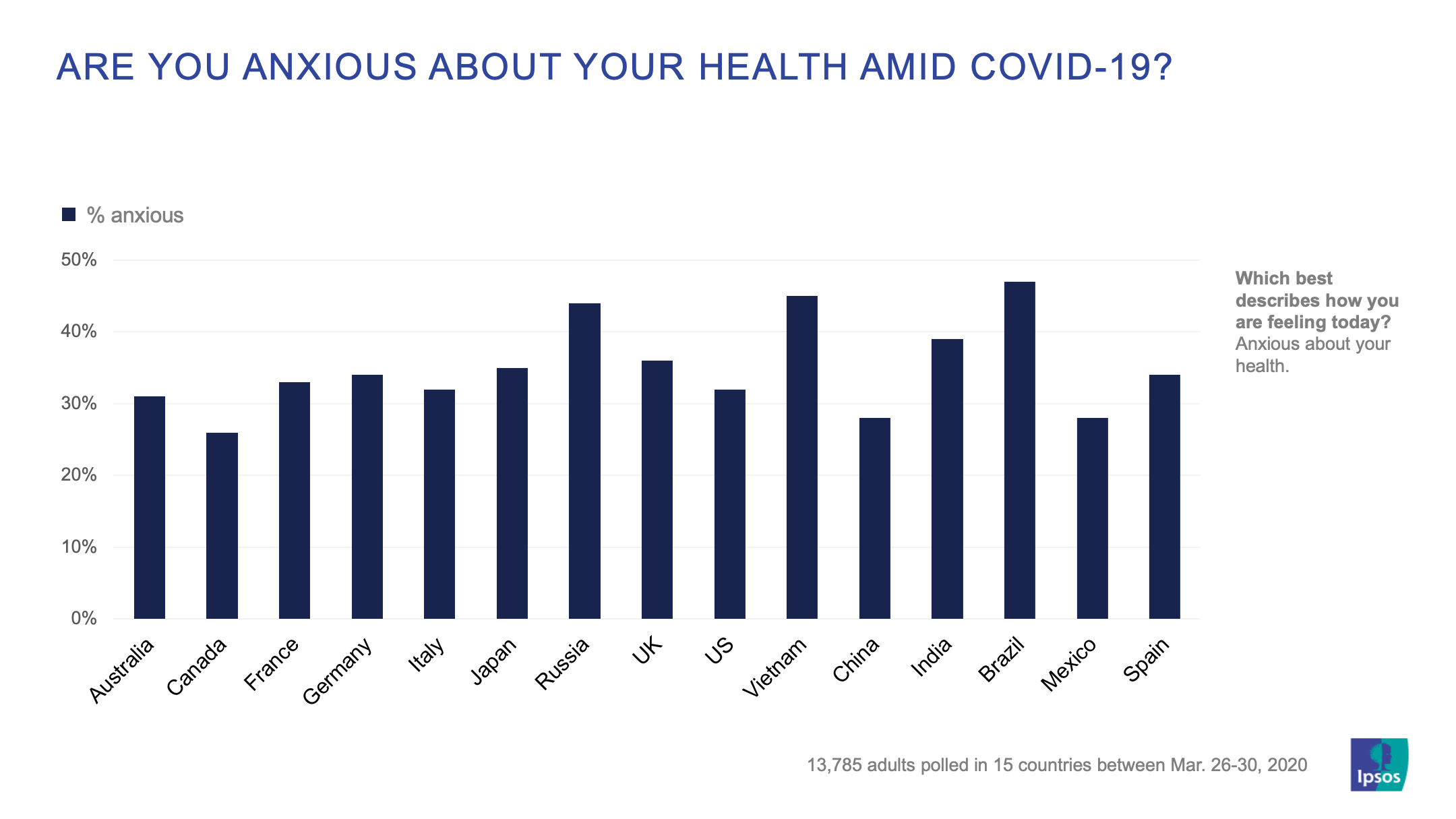
Fewer people are anxious about their own health, which ranked in the middle of the list of the 10 scenarios.
Darrell Bricker, Global Service Line Leader, Public Affairs, said the findings show that while we may be alone because of social distancing measures, there are signs this crisis is pulling us closer together.
“Even though many of us are avoiding physical contact with other people, it hasn’t diminished our desire to be emotionally connected to them or to the wider world,” said Bricker.
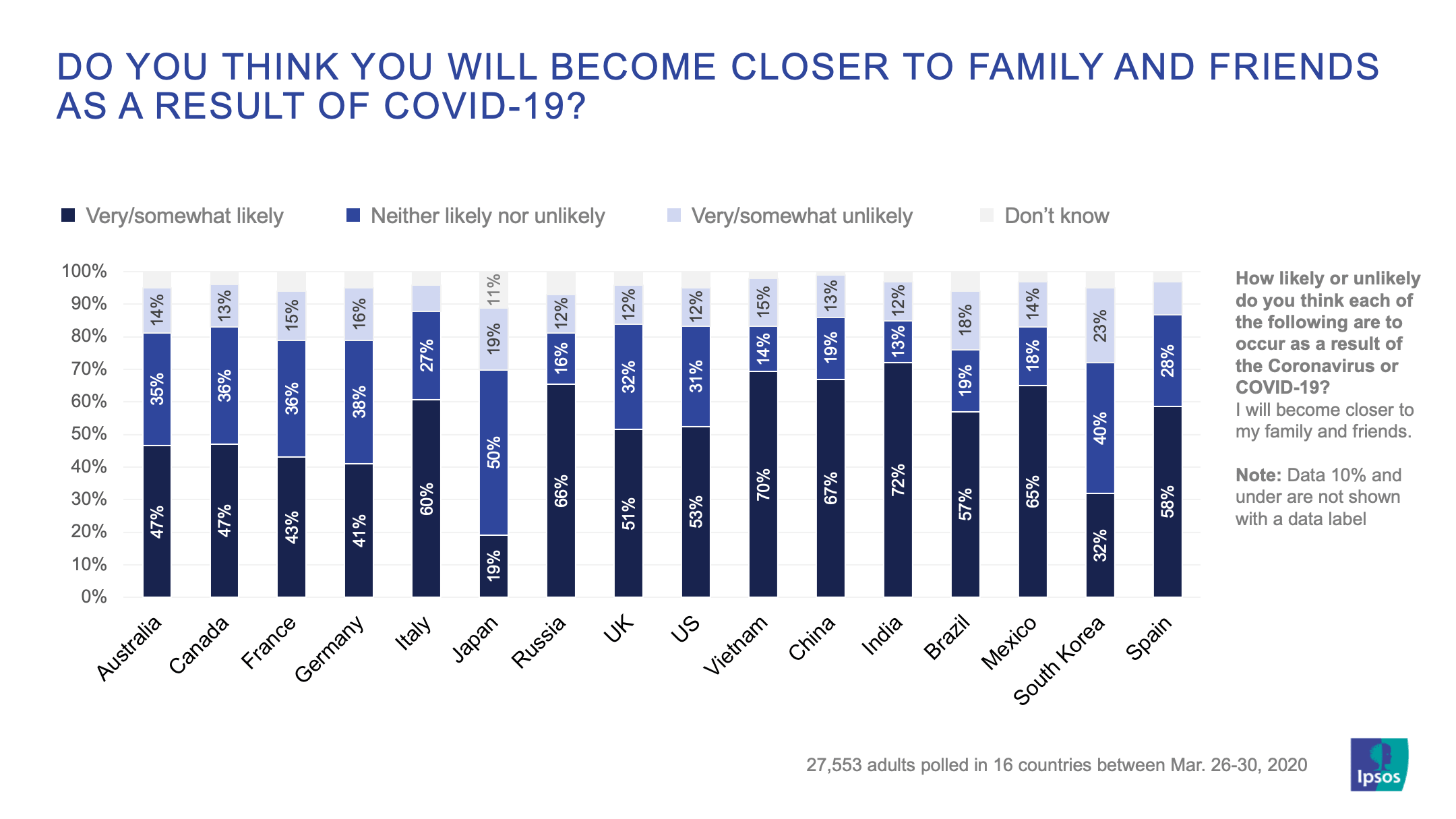
Added to this, a majority (53%) of people surveyed said it’s likely the pandemic will bring them closer to their family and friends. This sentiment is strongest in Asian countries of India (72%), Vietnam (70%), and China (67%). Those in Japan (19%), South Korea (32%) and Germany (41%) are least likely to agree with this.
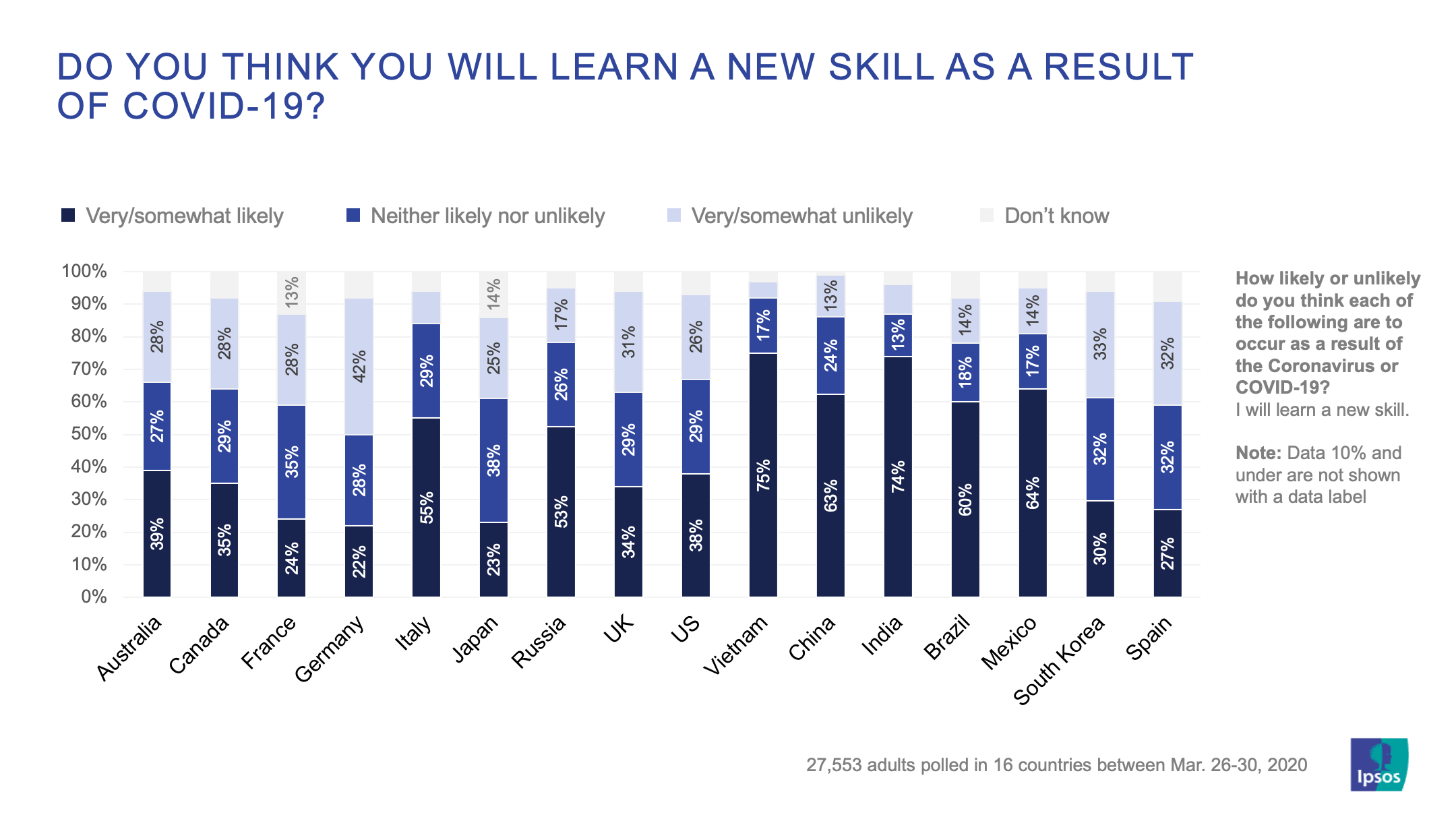
Many of us are trying to put our new found alone time to good use during this crisis. Two in five (44%) of those surveyed are optimistic they will likely learn a new skill as a result of the outbreak. This sentiment is highest in emerging markets of Vietnam (75%), India (74%), Mexico (64%), China (63%) and Brazil (60%), while those in Germany (42%), South Korea (33%), Spain (32%) and the U.K. (31%) said it was unlikely.
“Almost half of us are looking at this as a glass half full situation that’s freeing up space for personal growth,” said Bricker.