Flash Eurobarometer: Women in times of COVID-19
Key topics covered include:
-
European Parliament priorities for gender-related issues
-
Violence against women during the pandemic
-
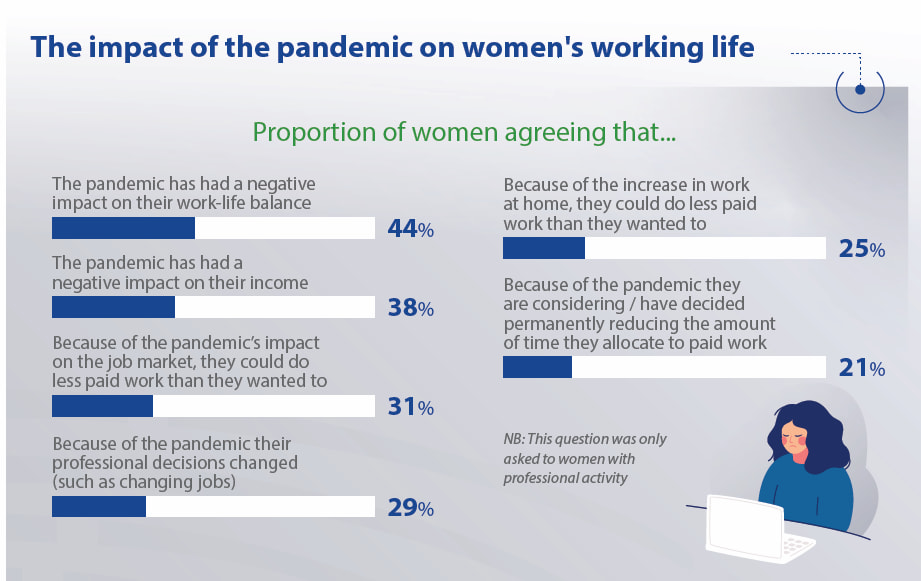
The impact of the pandemic on women’s working life and financial independence
-
The impact of the pandemic on mental health
Ipsos European Public Affairs interviewed a representative sample of women of 15 years and over in each of the 27 Member States of the European Union: between 25th January and 3rd February 2022, 26 741 women were surveyed via computer-assisted web interviewing (CAWI), using Ipsos online panels and their partner network.
Key survey findings are:
-
When asked which gender-related issues they would like to see tackled as a priority by the European Parliament, women are most likely to mention ‘trafficking and sexual exploitation of women and children’ , ‘mental and physical violence against women’ (both 47%), and the pay gap between women and men (41%)
-
About three-quarters (77%) of women across the EU think that the COVID-19 pandemic has led to an increase in physical and emotional violence against women in their country.
-
Women’s mental health has been significantly affected by pandemic restrictions, such as lockdowns and curfew measures (41% find this had a major negative impact on their mental health) and limitations on the number of people they could meet (38%).
-
Since the start of the pandemic, women have been most likely to feel worried about missing friends and family (44%), anxious and stressed (37%) and generally concerned about their future (33%).
-
About four in ten women (38%) agree that the pandemic has had a negative impact on their income. This can be explained by women doing less work for a salary or wage than they wanted to, either because of the pandemic’s impact on the job market (31% agree this applies to them) or because of the increase in work at home (25% agree).