
How will delivery drive food convenience in the future?
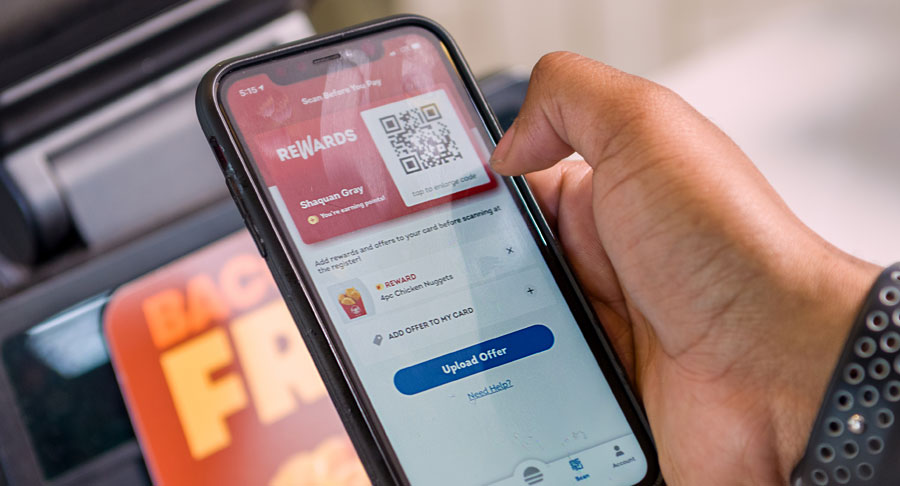
Food delivery became a go-to over the pandemic and consumers are hooked. Now, restaurant chains like The Wendy’s Company and even grocers are investing in delivery-centric ghost kitchens and other technology to make getting food even more convenient. When Wendy’s Chief Information Officer Kevin Vasconi thinks What the Future, he’s focused on what it means to deliver high-quality food in a convenient manner at an attractive price.
Kate MacArthur: Wendy’s is planning to open 700 ghost kitchens. What trends were you seeing that made you decide to make this investment?
Kevin Vasconi: Look at how consumer behavior changed at quick-service restaurants or even broadly within retail. We learned from the master, Amazon. There’s an Amazon package that shows up in my house at least once a day, sometimes twice a day. The consumer now has this expectation that “I should be able to have delivery for even more products.” Your choices for food before the pandemic were basically pizza and maybe Chinese food. Now we can have all kinds of conversations. Is it a quality experience? Is it convenient? Is it at a price that has value? But the sea change in the industry, for all retail, is that delivery is here to stay and consumers love delivery.

MacArthur: Consumers tell us what they want most is convenience. How do you see that continuing in delivery vs. drive-thru as we get beyond the pandemic?
Vasconi: There’s a time and a place for the service method. What consumers have discovered is that they can have it all and they can make it work into their day and they can make it their choice. There’s this underlying theme of “I want convenience, but I also want choice. And I want that choice to be on my terms, when I want it and I want it across a very large product mix.”
 MacArthur: When you consider delivery fees and tips, it can add $10, $12 more to bill. What does that mean for how people value the convenience of delivery? How long are they willing to pay for that?
Vasconi: Where that question gets really interesting is when we get past COVID. The willingness of younger consumers to pay a delivery fee is amazing to me. I have college-aged kids, and they don’t even think twice about it. But I look at my generation, and we’re not willing to pay that. I think it’s somewhat generational.
MacArthur: We’re seeing a move toward brands using AI to remember your past purchases and choices from past orders, which relates to first-party data. How can brands provide these kinds of AI options and still give customers control or a sense of comfort about sharing their personal data?
Vasconi: That’s why you want to have a relationship with a company, and that’s why you want to have a relationship with a brand, because you’ll trust them and know what their policies are. The other thing I think is hugely powerful and respects the consumer’s data is opt-in. I might be willing to give my license plate to a company that’s transparent to me and that I know will protect my data if that helps them register my frequent orders, and I can get through the drive-thru 30 seconds faster. But I might not. It goes back to customer choice.

MacArthur: We’re also seeing companies invest in permanent, outdoor dining structures as demand for indoor dining waned. Where do you see that going, particularly for fast-food chains?
Vasconi: I think the whole industry will continue to adapt. Indoor dining is still popular. If you go to a Wendy’s at lunchtime, there are a lot of people that want to eat in the dining room. The interesting thing about the behavior that’ll change in the dining room is how do people order? You don’t have to go up to the counter and order anymore. You can order before you even walk in the restaurant. You can order from a kiosk in a restaurant. If you’re in line and you think the line is too long, you can pull out your device and order from an app. There are some interesting dynamics of consumer behavior inside the dining room that we may, in fact, see a resurgence if it’s the quickest, easiest way for you to get your food.
MacArthur: We’re also seeing the lines blurring across retail types. There are grocery stores putting restaurants in stores, convenience stores putting restaurants in drive-thrus, restaurants doing ghost kitchens. What does this mean for the consumer and what they expect and how you try to understand their expectations, since they can go anywhere now?
Vasconi: Grocery stores are really good at selling groceries, and with the right partners, they may be really good at being a restaurant. But I think you’re going to see a shake-out in some of that stuff. I’m all about trying new things.
![[WEBINAR] The Modern Twenty-Something: How Gen Z Thinks About Money, Milestones, and More](/sites/default/files/styles/list_item_image/public/ct/event/2026-07/thumbnail-templates_0.png?itok=GNEHIkP1)

