Disinformation and Informational Chaos: Baltic Dive
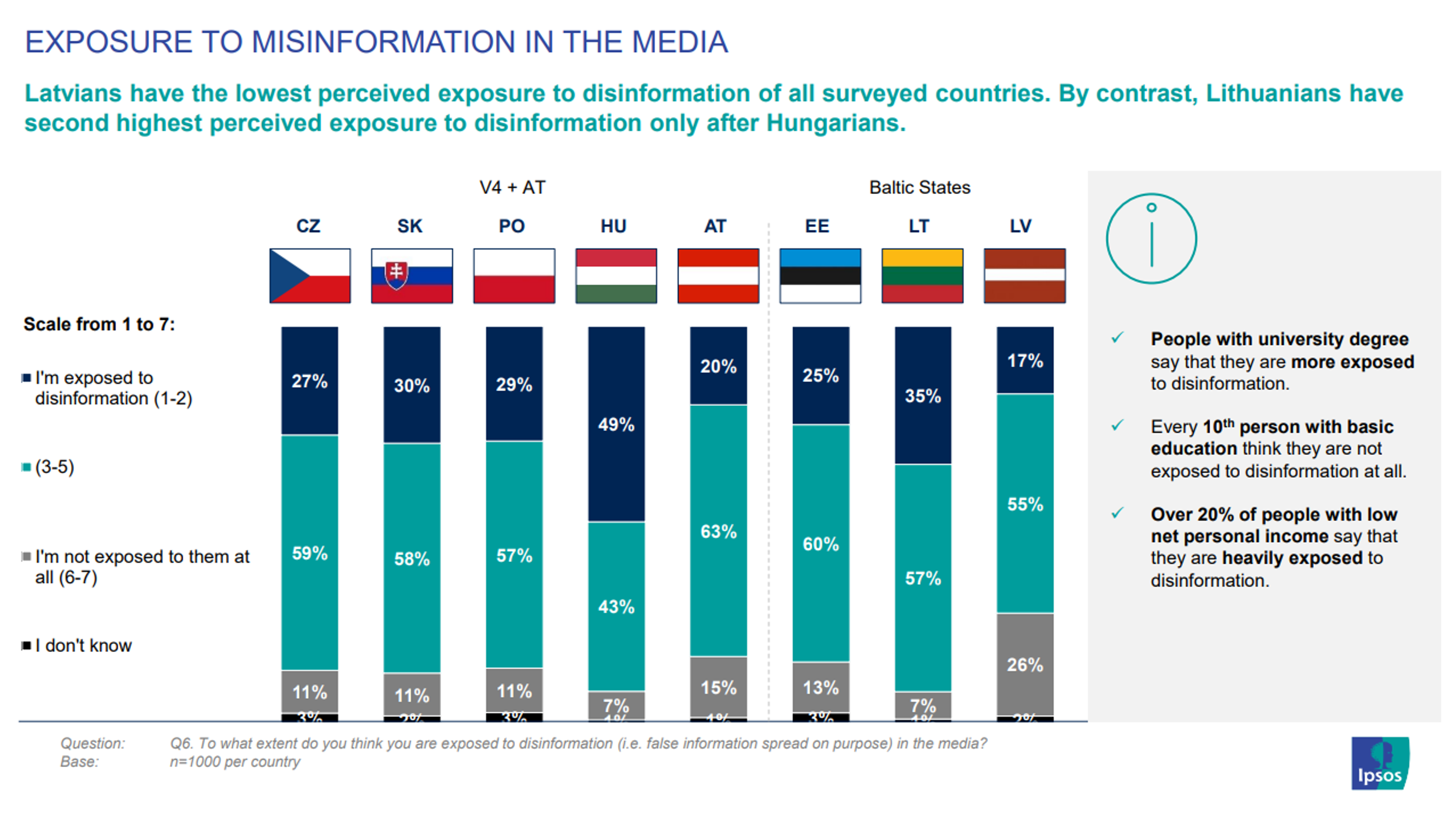
Every fourth citizen of Baltic countries is heavily exposed to disinformation. This statistic was unveiled by the research conducted by the Ipsos agency, which was carried out in cooperation with the Central European Research Consortium known as the Central European Digital Media Observatory (CEDMO) and sponsored by Google . The research was conducted on an 18-65 year old representative sample of the populations of the Czech Republic, Slovakia, Poland, Hungary, Austria, Lithuania, Latvia and Estonia.

Exposure to misinformation in media


According to the Ipsos study, Estonia and Lithuania have similar views on disinformation and information chaos, but Latvia differs significantly. Latvians trust social media more (new media at general), are more sceptical of disinformation, and are less likely to report exposure or identify contributing factors and consequences. However, Latvians are more prone to believe tested disinformation reports and less confident in preventive tools than their Baltic counterparts. Overall, Latvians appear disinterested and passive compared to Estonians and Lithuanians when it comes to disinformation. 
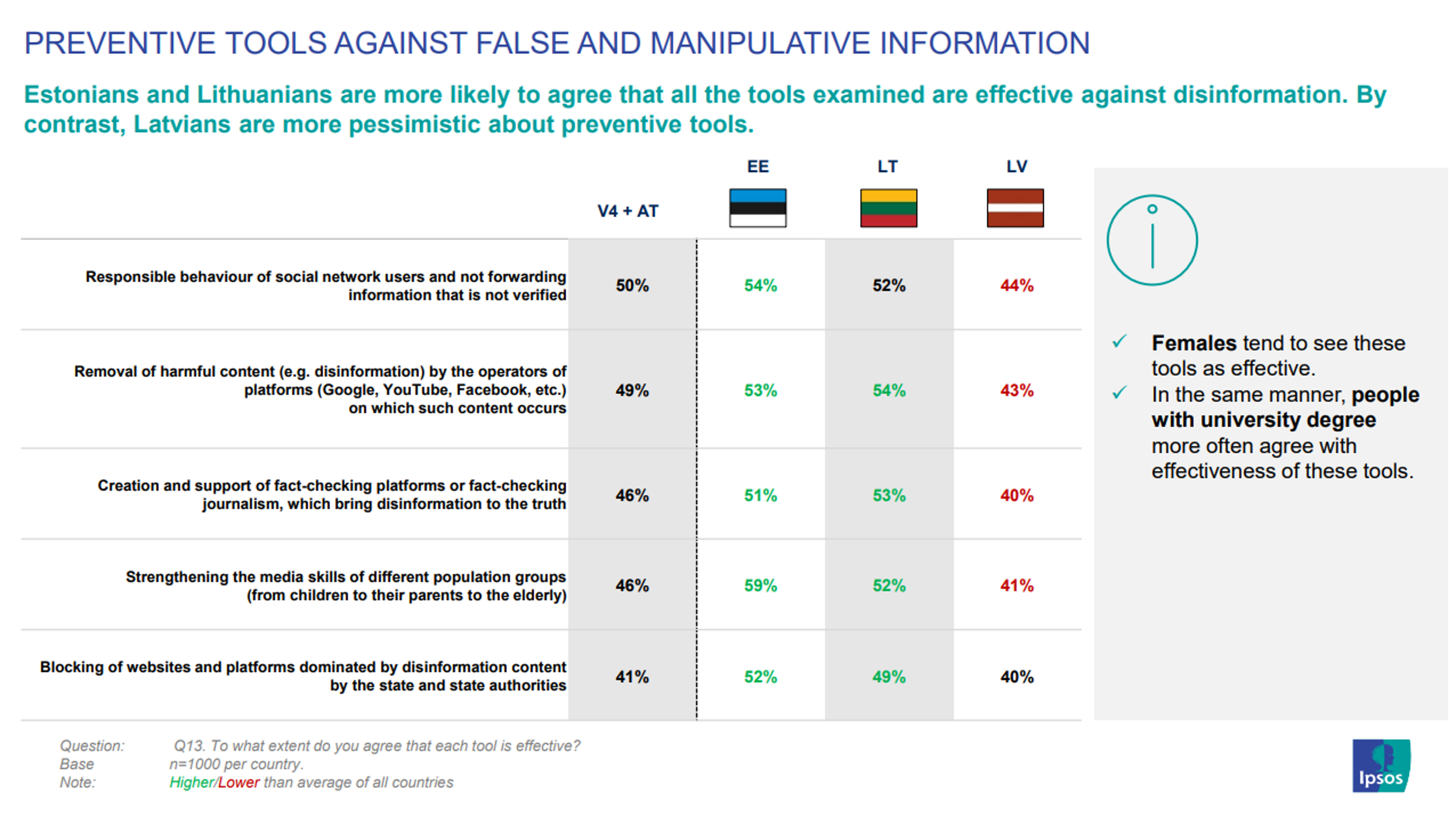
 

Preventive tools


Furthermore, the inclusion of visual content in current disinformation reports, such as misassigned pictures, leads to higher credibility scores compared to reports that only contain text. This finding applies to all surveyed countries and suggests that visual content can enhance the perceived credibility of misinformation. With the rapid evolution of deepfake technology, this could pose a significant challenge in the near future or even present.
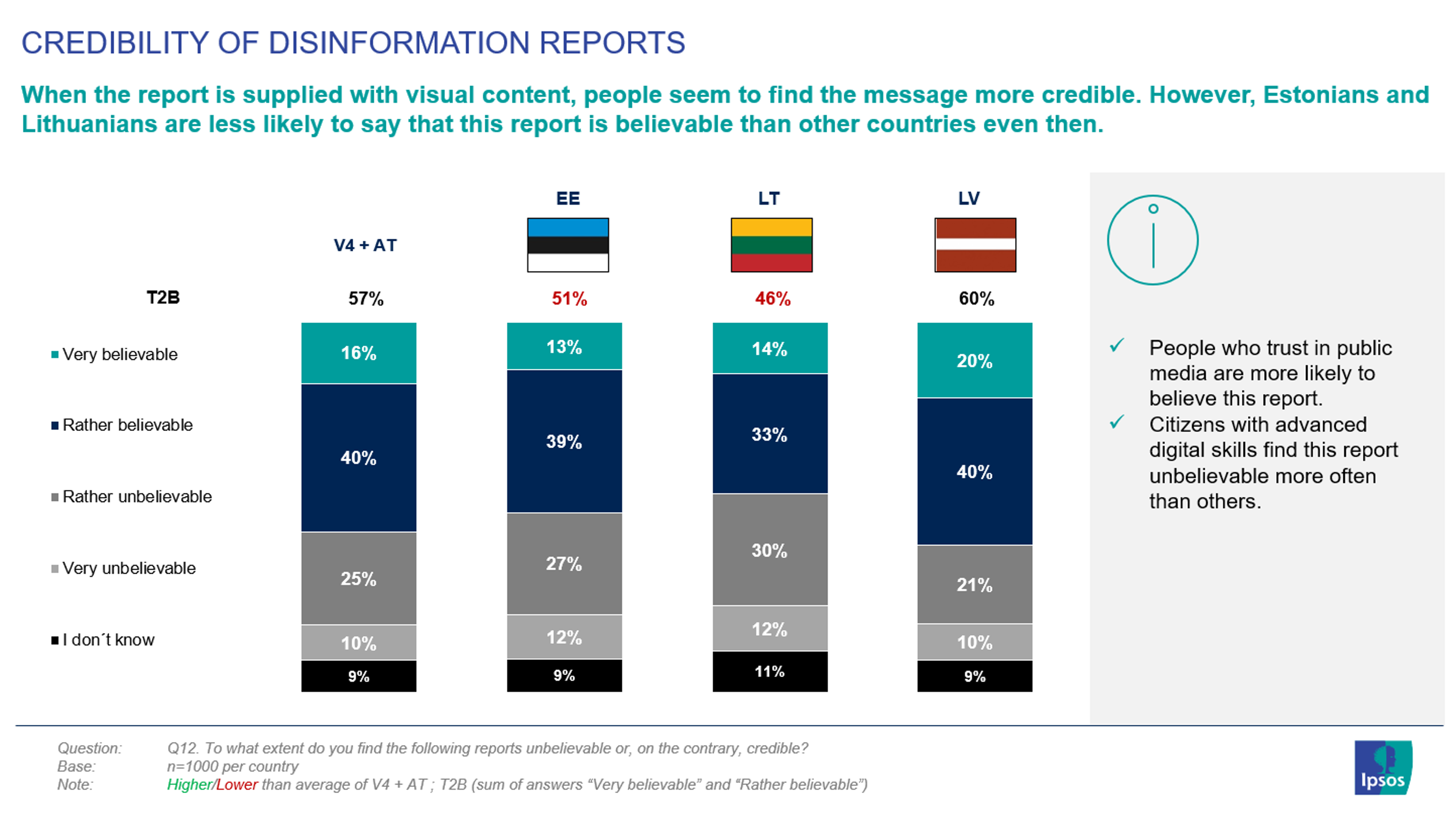
 

Credibility of reports


About the research:
The research was carried out from 2nd till 15th September 2022 on a representative sample of the Internet population of the Czech Republic, Slovakia, Hungary, Poland, Austria, Lithuania, Latvia and Estonia (aged 18-65). A total of 1,000 respondents participated in each country, and the data collection tool was online panels in individual countries. The research was conducted in cooperation with the Central European Research Consortium Central European Digital Media Observatory (CEDMO) and sponsored by Google.


Podobná témata

  • Obavy Čechů
    Krize Tisková zpráva

    Češi se bojí zdražování a války. V krizích spoléhají na stát

    Největší obavy Čechů pro příštích pět let se týkají ekonomické nejistoty a bezpečnostní situace. Výzkum zároveň ukazuje, že lidé považují sebe, společnost i stát za nedostatečně připravené na řadu velkých krizí, přesto od veřejných institucí očekávají hlavní odpovědnost za jejich zvládání. Vyplývá to z výzkumu Ipsos realizovaného na reprezentativním vzorku obyvatel České republiky.
  • ESG & Reputation Research
    ESG Průzkum

    ESG & Reputation Research

    Jak prostřednictvím odpovědného chování budovat firemní reputaci?
  • energie
    Energie Tisková zpráva

    7 z 10 Čechů považuje roli státu v energetice za důležité téma

    Energetika patří mezi klíčová společenská témata a většina Čechů podporuje silnější kontrolu státu nad společností ČEZ. Zároveň veřejnost vidí budoucnost české energetiky v kombinaci jaderných a obnovitelných zdrojů. Vyplývá to z našeho nejnovějšího reprezentativního výzkumu agentury Ipsos.