
India - What keeps us awake at night?

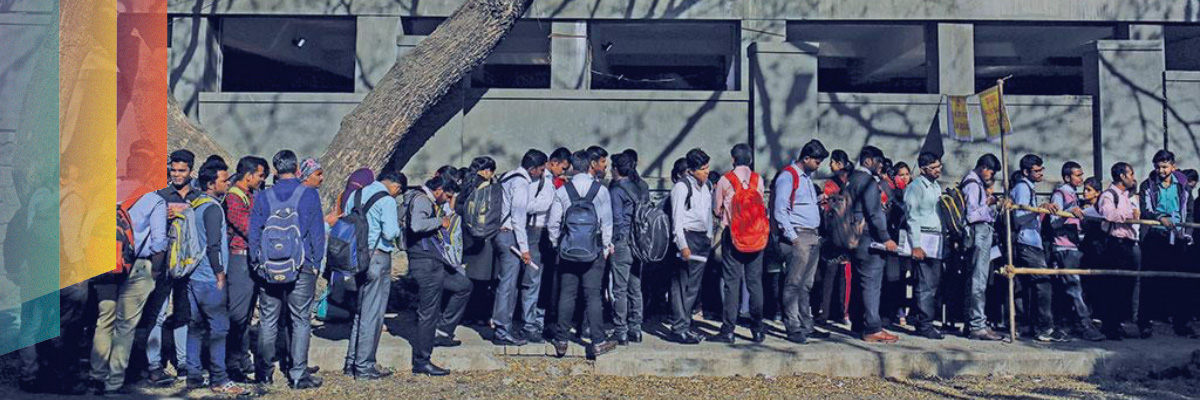
Globally, inflation has consistently been the top worry this year, according to Ipsos’ What Worries the World monthly survey. Indian netizens (the urban/younger/connected population) have bucked this trend. Since the Covid threat abated during the second half of 2021, over the past 12 months unemployment has repeatedly been the top worry for Indian netizens (44% citing unemployment as a top concern in November 2021, 39% in November 2022. Inflation did not figure in the top five worries for Indian netizens a year ago, and even now it comes up as the fifth highest worry with 18% mentioning it.
In a way, this seems intuitive. Over the last 10 years, retail inflation in India has hovered in the 1.54% - 12.17% range, with an average of 6.02%. Prior to that, India has experienced double digit inflation. During 2022, retail inflation touched 7.79% in April and is now down to 7%, with an expectation of dipping further to 6.5%. Food and beverages contribute 45.86% towards consumer price index calculation and India’s food independency (and in fact, we have “net exporter” status) has protected most Indians from harsh inflationary damage. So, can we conclude that inflation is not really a worry? Well, not really!

Inflation – one size doesn’t fit all!
India is too big and diverse for us to conclude this. Ipsos’ broad-based (i.e. representative of urban India) IndiaBus July 2022 data shows that inflation worries were neck and neck with unemployment worries amongst the masses (44% each). We see this interesting India vs Bharat divide. “India” – comprising urban netizens – is less worried about and impacted by inflation. Bharat (smaller towns and villages), on the other hand, has been impacted by rising food and fuel prices. In fact, it has been a double whammy for Bharat. Two harsh lockdowns led to large scale unemployment in manufacturing, physical retail and hospitality sectors that employ large populations belonging to Bharat. Increased retail inflation – even at 7% – would have exacerbated this. According to a Credit Suisse Global Wealth report published in September 2022, the Gini Coefficient for India stood at 82.3 in 2021 – the second highest in emerging markets – indicating a high economic inequality. During Covid, as India prospered, Bharat suffered in a relative sense. It is but natural that though a marginal hike in inflation in 2022 may not have material impact (given the food weightage in consumption basket), perceptually it would worry Bharat natives as they recover from unemployment worries during the pandemic. This uneven K-shaped recovery does not auger well in the medium term.
So, here are three key takeouts:
- Worries about inflation are uneven across the demography of India, though at an overall level inflation concerns in India are not at the same level as other parts of the world.
- Inflation concerns are sharper amongst people who are still recovering from unemployment as a result of the pandemic.
- India is witnessing a K-shaped recovery which is driving social and economic inequality in the short term.
India is accustomed to inflation levels of 6-7%, as long as there are jobs or other self-employment options that provide growing income. So, is inflation keeping Indians awake at night? Yes and no!
Amit Adarkar