United Kingdom - Have we reached peak change?

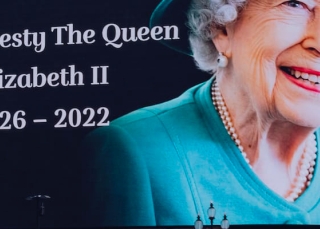
2022 has been a year of significant change in the UK. As the pandemic has relented, other pressures have boiled over, contributing to a rush of new ends, new beginnings, and greater instability. Our politics have shown no sign of settling: the country has had three Prime Ministers (at time of writing) including, in Liz Truss, the shortest-serving holder of this office in its 300-year history. More profoundly we have also experienced the first change in head of state in 70 years with the passing of Queen Elizabeth II.
Over the year the public mood has soured, with three-quarters of people in September thinking that the country is headed in the wrong direction. This level of pessimism has been seen before in Britain (most recently in 2019) but over the course of 2022, and alongside other European countries, we have seen a more sustained shift toward pessimism. This has been the backdrop for all the other instances of change we have seen over the year.
However, this downbeat outlook has roots that go back at least as far as the financial crash of 2008. Analysis by the Resolution Foundation shows that the 15-year period from 2004-2019 was the weakest for economic growth in a century, which has had significant impacts on wages. And while 2022 has seen a culmination of many changes, it is building on longer-term instability: a decade of public service austerity, divisive referendums on Scottish independence and Brexit, three General Elections within five years and two years of a global pandemic have all led up to this year of change.
However, this downbeat outlook has roots that go back at least as far as the financial crash of 2008
For each of the arenas of peak change (some of which we outline below) it is important to keep this broader picture in mind. The change we see should not be viewed in isolation, but in the context of a consistent pattern of change and uncertainty – some domestic, some global – that has converged on the UK in 2022 and contributed to the shape of public opinion in the country.
Politics
In June, the Prime Minister Boris Johnson was forced to resign under extreme pressure from his party and the public - 69% of whom were by that point dissatisfied with his performance. The public grew to be just as dissatisfied with his replacement Liz Truss just one month into her tenure with the earliest, most rapid, fall we have seen for a Prime Minister in over 40 years of our records, shortly before she was also forced to resign. Our newest PM, Rishi Sunak, starts in a more benign place, with 34% favourable to him – but he has a great deal of ground to make up as he trails the leader of the opposition Sir Keir Starmer by nine points when the public are asked who would make a better leader. Sir Keir’s Labour party has also recorded its first lead on the economy for 15 years and its biggest lead in voting intention for 20 years.
Brexit
Britons remain divided on the impact that Brexit has had on the country. In our most recent polling, 51% felt that leaving the EU had had a negative impact on the country. This is the highest score recorded since October 2021, when 50% felt the same way. However, almost a fifth think it has had a positive effect and another fifth say there has been no impact. The result is that roughly half of Britons think Brexit is a bad idea and roughly half do not – close to the 48:52 vote which saw the UK begin its exit in 2016. Were the referendum to be re-run today (which is itself highly unlikely) it is unlikely there would be a clear winner.
Our economic concerns
In line with many other countries, Britons have lurched from one crisis to another, with pandemic concern quickly superseded by worry about inflation and prices. Our UK Issues Index recorded the highest level of concern about inflation since the early 1980s in August this year, with 54% mentioning prices as a big worry for the country. Crucially, this has sprung to prominence very quickly and is a new, troubling worry for the public who haven’t had to give the issue this level of attention for 40 years.
War in Europe
The Ukrainian cause has struck a chord with many in the UK: Ukrainian flags still fly over many houses, churches and government buildings across the country. Britons remain among the most supportive of Ukraine: in October six in ten supported Britain’s role in the conflict, including sending money and weapons (although there is less support for direct military involvement). But despite this, there is also a recognition that it is contributing to rises in the cost of living at home.

The Royal Family
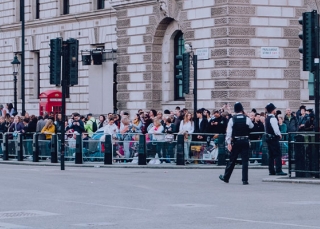
In March, Britain celebrated “Platty Jubes” – the Queen’s Platinum Jubilee, marking her 70 years as Queen. She had a 69% favourability rating, with just 12% of Britons holding an unfavourable view. Her passing in September was an epochal event: only one in seven people in the UK are old enough to have been alive under a different monarch, yet a quarter of a million filed past her coffin as it lay in state (some queuing for more than 24 hours) and an estimated 32.5 million people watched at least part of the State Funeral ceremony.
Nevertheless, polling after the State Funeral in October also showed the durability of the institution: King Charles’s standing with the public had improved 11 points to 54% favourable since March, while Prince William became the most popular Royal at 69%.
As the UK leaves its second Elizabethan era and enters its third Carolean age, many in the country may wonder whether we have reached peak change or if there is more instability and upheaval to come. Looking forward, Britons see more challenges ahead; underneath inflationary worries there is serious concern about the performance of the UK economy (including how to deal with long-standing regional disparities), dealing with climate change and net zero, rising levels of poverty and inequality, and coping with a post-pandemic backlog that still hangs over most public services (especially the National Health Service).
All of these are connected by their impact on citizens’ wellbeing and hope for the future, with the Office of National Statistics reporting that the four official measures of personal wellbeing were still below their-pre-pandemic levels earlier this year. The challenge for businesses, public services and whoever leads the government in the UK over 2023 will be to engender a sense of hope and optimism that the country has a sense of purpose and direction which will let it rise above its present challenges.
Kelly Beaver