
Norway - Oilfields and snapchatters

Energy matters
Norwegians are ready to reduce Norwegian oil extraction for environmental reasons, even if this leads to lower incomes for their country.
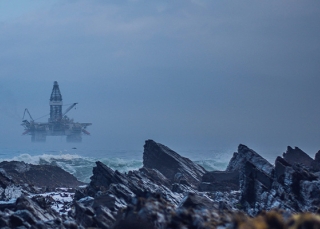
In 1969, one of the world’s largest offshore oilfields was discovered off Norway. The country’s economy grew dramatically and oil shaped the Norwegian society as we know it today. The Norwegian oil fund was established to ensure that national wealth lasts for as long as possible. Today it is one of the world's largest funds.
Each year, the government is committed to spending a maximum of 3% of the fund, which amounts to almost 20% of the government budget. This is one of the main political issues when the government communicates their budget for the coming year.
Norwegians’ sentiment about spending the “oil money” has evolved over the last two decades. Stronger economic growth in the five years leading up to the pandemic has strengthened Norwegians’ wish to be spending less from the fund, reaching a peak in 2017 at 35% according to Ipsos’ Norwegian Monitor survey[1]. The latest 2022 data still shows some people in favour of limiting the spending, with one in four currently supporting cautiousness (23 %).
Another pivotal and highly debated political question our social research survey shows is citizens’ attitude towards Norway reducing oil extraction for the sake of the environment, even if it leads to lower income. There has been majority agreement on this issue for the last decade. In 2022, support is highest among the younger generations below 40 (59%) and women (62%).
Despite that, Norwegians are divided on whether there should be an end date for the exploration of oil. Four in ten agree but just as many disagree. People living in Oslo are the subgroup where most (55%) agree that an end date should be set.
While oil-related issues are heavily debated, the country is also quickly evolving towards greener energy sources. While the survey also reveals that six in ten (59%) are willing to pay more taxes to obtain more renewable energy, support for more wind farms is however rapidly decreasing across all demographics, while in rural areas where the inland windmills are actually installed they are encountering strong local protest. So, despite a strong will to move away from oil towards energy sources like water, wind, solar or even nuclear power, there is still a way to go for Norwegians to accept that those solutions might be just by where they live.
Meanwhile no other country in the world has more electric vehicles per capita than Norway. The trend is not slowing down despite the continuous reduction in the benefits offered by the government since 2001. The registration statistics for October 2022 confirms that 77.5% of the cars sold in that last month are zero-emission cars, an increase of 7.4 point compared to last year. Our survey shows that 27% of Norwegian households now have an electric car, while it was only 4% in 2015. The country is definitely evolving from its oil legacy towards its ambitious goal that all new passenger cars sold should be zero-emission by 2025.
Snapchat lessons
From the outside world, the four countries of Northern Europe (Denmark, Finland, Norway and Sweden) often look the same. But for us living here, we do feel quite different in many ways.
However, when it comes to our social media habits, we should be more similar, knowing that we all are tech-savvy and have benefited from one of the world’s best broadband and smartphone penetration since the start.
With the launch of Ipsos’ state of social media in Northern Europe report this November, we could finally look at the facts, and some of them are quite surprising. There are clearly similarities among others in the overall usage of social media. Both in Norway and Sweden, eight out of ten people are daily users while in Denmark and Finland it is seven in ten.

In all four countries Facebook is the leading social media platform both by the number of profiles and daily use. But there is a clear difference when it comes to which platform is the second largest by daily use. Both in Finland and Sweden it is Instagram while in Denmark, YouTube is in second place, while this place is taken by Snapchat in Norway.
Looking closer at Norway, where Ipsos has been reporting social media trends since 2013 with our quarterly SoMe-tracker, we can underline the unique position Snapchat has. Not only is the platform the second largest in terms of profile, with 69% of the population aged over 18 having access, every second Norwegian adult is using it every day (53%). Moreover there is a strong adaptation of the platform across all age groups; even 37% of the over 60s are using Snapchat daily.
Still, it is the younger generation who are much more addicted. Among those aged 13-30, Snapchat ranks as the one platform they would keep if they had to choose. Two in ten of them even say that they cannot manage for more than an hour without Snapchat, according to our 2022 Children and Youth survey.
Will this hegemony be threatened by newer platforms like TikTok? In Norway, it is already the second largest in daily use among 12 to 19-year-olds and ranks number five for the adult population with now one-third of Norwegian over 18s spending time on the platform every day, according to the Q3 2022 figures. TikTok has also the most differentiated image profile. Both in Norway but also in the three other countries in the Nordic region, the platform is perceived as a trendsetter, and it is the most loved social media across the region.
Nathalie Eyde Warembourg
Anastasiia Chernykh
John Spilling
Notes
[1] Ipsos’ Norwegian Monitor, Norway’s largest social research survey 1985-2022.