
Peru - Good and bad news

2022 was a year of great paradoxes in Peru. There was good and bad news. The best news, as elsewhere, was the end of the Covid-19 pandemic and the return of students to face-to-face classes. In a country with low connectivity (just 43% of Peruvians homes have access to internet), the two years of non-face-to-face classes may have caused a significant delay in learning.
The bad news came from the political side. The government elected in 2021 turned out to be less radical but inepter and corrupt than expected. President Pedro Castillo, elected as a candidate of a Marxist party, Peru Libre, did not follow an extreme left orientation in economics or foreign policy, but he did demonstrate a limited vocation for meritocracy in the state and, most seriously, a propensity for corruption. The Prosecutor of the Nation, Patricia Benavides, opened several judicial investigations against Castillo and many of his collaborators. In November, she submitted to the Congress the request for the suspension of the president in the exercise of his position.
Castillo's reaction was to attempt a self-coup on December 7 to shut down Congress and intervene in the judicial system. The Armed Forces and the National Police did not support him and Congress dismissed him for acting against the Constitution. He was immediately replaced by his vice president, the lawyer Dina Boluarte, who assumed the presidency and convened a technical council of ministers. The dismissal and detention of Castillo led to protests and acts of vandalism by some far-left activists. The new president has proposed to Congress an advance of the general elections.
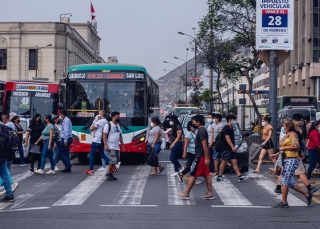
In a country with low connectivity, the two years of non-face-to-face classes may have caused a significant delay in learning
In the economic field, Peru closed with an inflation rate of 8% relatively moderate compared to other countries, thanks to its macroeconomic strength and the good management of its central bank. Peru is a country with a trade surplus, low external indebtedness and a central bank with constitutional autonomy since the country suffered hyperinflation three decades ago. Economic growth, on the other hand, was modest, just 2.8%, and still supported by a post-pandemic rebound. Private investment was negative as a result of international uncertainty and, above all, because of national politics.
In the regional and municipal elections, that were held in October, the ruling party won very few regions, provinces and districts. The mayor of Lima, the capital, was won by Rafael López Aliaga, from the right-wing Popular Renovation party, but with only 26% of the vote. In most of the country, candidates from regional movements won, which confirms that not only the government party is weak but also the opposition parties, which raises many questions about what could happen if early general elections are held...
Alfredo Torres