
South Africa - It was the best of times it was the worst of times

As a first and third world country, South Africa demonstrates the dichotomy of world-class innovation and tech offset by crippling corruption and illicit trade.
Big tech needs to address the “basics” to truly digitise Africa…
Digital transformation remains the largest priority for key opinion formers today. In order to facilitate this, there is a need for the basics to be addressed i.e. accessibility to internet and proper infrastructure so that rural and urban areas can access technology alike.
Lockdown showed us the stark differences in access to technology and digital services in South Africa. While around 95% of us own a mobile phone and 75% own a smartphone, which allows for relatively high internet access – not many of us had knowledge of the online tools available or sufficient data to be able to utilise these tools – adding to the growing divide in education and wealth creation.
The landing of the Equiano undersea cable in 2022 will hopefully bring down the costs of data, but whether this gets passed on to the consumer, in order to improve accessibility and affordability, remains to be seen.
Lockdown showed us the stark differences in access to technology and digital services in South Africa
South Africans look to the tech and telco companies rather than the Government to implement these changes correctly. What these companies need to explore is how to increase access based on: reduced costs, increased exposure to solutions and tools (and how to do this if they can’t use digital platforms i.e. through schools), increased access to hardware, increased access to funding (like the funds available for SMBs or Women Entrepreneurs) – all of this would improve their own business but more importantly it would help to educate and uplift the population and country.
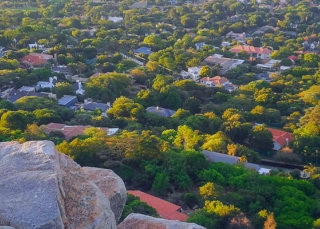
After 30 years of ANC rule, a change might be on the cards in South Africa…
The ANC has been the ruling party in South Africa for almost 30 years, but cracks in the once uniform party face are getting deeper: the leadership staggers from national election to party conference to local government election, but without a lot of success. To add insult to injury, state-owned enterprises (like the power utility, Eskom) are on the brink of collapse.
What are the alternatives? The two strongest opposition parties do not seem to be able to affect any positive change either, plagued as they are with corruption scandals, allegations, xenophobia (EFF) and leadership crises.
A recent Ipsos press release[1] showed support for the ruling party dipping well below 50% and was met with reactions ranging from incredulity to a flurry of media speculation about what a possible coalition government will entail. To a large degree the cat is still amongst the pigeons and Ipsos will use our next Omnibus[2] to again assess the political “temperature” and find answers in the increasingly heated discussions on the political future of the Rainbow Nation.
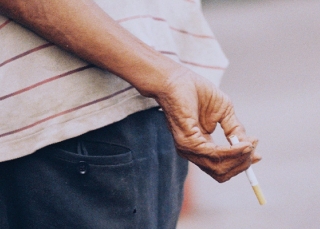
Where there is smoke there is fire…
Illicit cigarette trade has been a scourge in South Africa since 2018 and was accelerated with the cigarette sale ban imposed by the Government during Covid. Illicit cigarettes are defined as those selling below Minimum Collectable Tax (MCT).
The total estimated number of illicit cigarettes is 29.1 billion sticks. Since 2018, illicit cigarettes have been making significant inroads at the expense of the legal market (BAT, JTI and PMI). The broader social impact is that the Government has missed billions of tax revenue collection (~ZAR 9.6bil) which is needed to improve the dire state of the nation’s economy. In South Africa we talk about the “lost decade” of the Zuma presidency. These years culminated in negative growth, implosion of utilities, massive fraud and corruption and destroying of infrastructure. Below-MCT cigarettes have doubled since 2019, nationally at 26.1% share and within informal trade at 30.5%.
Ipsos SA together with our client (Tobacco Industry SA) have engaged government (South Africa Revenue Service) and law enforcement (Hawks) to highlight the growth and impact of this illegal trade and are seeing a major clamp down as a result.
Kelly Arnold
Notes
[1] Support for political parties, two years before the next National Election. 15 August 2022. Johannesburg: Ipsos.
[2] Results will be available on 10 December 2022, before the very important National Elective Conference of the ANC.