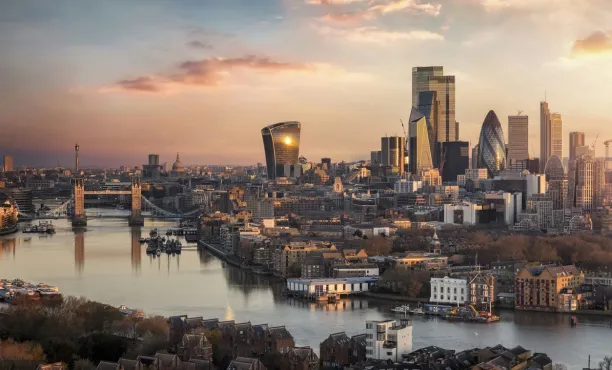
The definitive benchmarking of European cities, produced by Resonance with research by Ipsos, surveyed more than 5,000 people in 10 countries to find the best of the best.
The United Kingdom moves to second place, its best performance ever recorded, with reputational gains on the Governance, Culture, People, and Tourism Indices. Canada ranks in third place for a second consecutive year. There are major ranking slips in the top-10 with France’s ranking declining by three positions from second place in 2019 to fifth place in 2020, and the United States’ ranking dropping from sixth place last year to 10th this year.
The 2017 edition of the Ipsos Top Cities Index finds that New York is the most popular city worldwide, retaining the title it claimed when the survey was first run in 2013.
Recent events are having a negative impact on travel plans to each one of 30 destination countries including the United States, according to an Ipsos survey of over 18,000 adults across 25 countries.
The everyday concerns of the global population are the focus of one of Ipsos’ flagship global surveys. Each month we ask an online sample of over 18,000 citizens in more than 25 countries1 about the key issues they believe are facing their country, asking them to pick up to three from a diverse array of topics, ranging from unemployment to access to credit.
To stay in touch with the sheer pace of information delivery, we’ve created a fast and lean qualitative approach – Overnight Qual – to deliver insights at speed.
The theme for World Water Day 2017 is “Why waste water?” and is in support of the United Nation’s Sustainable Development Goal 6.3 to improve water quality by reducing, treating and reusing wastewater.
A recent Ipsos survey for an international research consortium led by Cardiff University explored public perceptions of climate change in four European countries – France, Germany, Norway and the UK.
On the eve of International Women’s Day, new data from Ipsos Global @dvisor shows that although the vast majority in 24 countries around the world say they believe men and women should be treated equally (88% on average), most still think the current situation is one of inequality in terms of social, political and/or economic rights (72% on average).
New data from Ipsos Global @dvisor shows that many across 23 countries around the world think that their society is broken, while feeling a lack of confidence in establishment institutions - especially political parties, governments and the media.