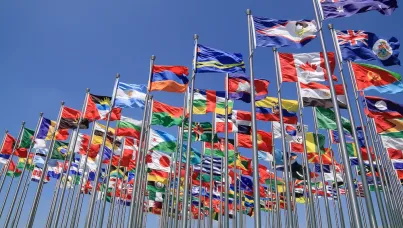
The proportion saying the United States will have a positive influence on world affairs has fallen in 26 out of 29 countries over the last six months. America’s reputation has fallen most markedly in Canada. For the first time in our decade-long survey series, China is placed ahead of the US when it comes to playing a positive role on the international scene.
For the first time in Anholt-Ipsos Nation Brands Index history, Japan finishes in first place, completing its steady climb from fifth place in 2019. Germany drops down to second after a six-year reign, while Canada remains in third place overall. The United Kingdom and the United States climb the ranks and place fourth and sixth, respectively. Italy drops one rank and places fifth, while France sees the largest rank change within the top ten and falls from fifth to eighth place.
Established in 2023, the Ipsos ESG Council brings together senior level executives with responsibility for sustainability and the development of ESG best practice from some of the most respected corporations in the world.
Here we explore the changing role of the CSO and what this tells us about how organisations are responding to the challenges of ESG and sustainability.
While the concepts that sit behind ESG are certainly not new - and have been at the centre of corporate strategy for decades - the growth and formalisation of ESG as an explicit mission have been catalysts for change. The impacts of this change are far reaching including how companies define, prioritise and manage their stakeholders. This is demonstrated by the rise of stakeholder capitalism, the notion that businesses no longer exist to create profit for shareholders/owners, but instead have a responsibility to create value for a much broader set of stakeholders.