Who are the World’s Biggest Wearable Tech Buyers?
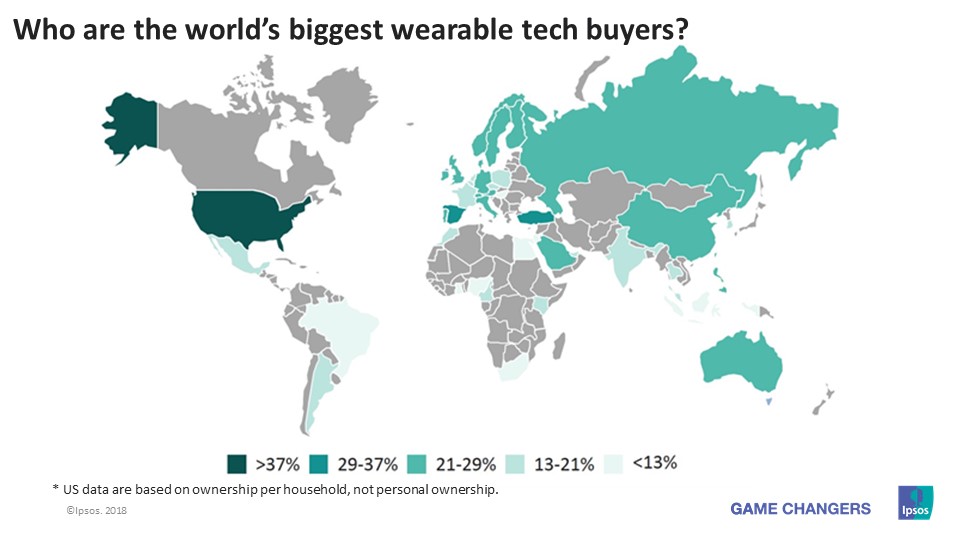
From the Fitbit to Apple’s smartwatch: wearable tech is becoming increasingly popular across the globe. Early adopters of new technology, the world’s affluent are at the forefront of purchasing wearable tech, ownership reaching over 30% in Spain, Turkey and the USA.

Who are the world’s biggest wearable tech buyers?

Increased adoption of fitness trackers and smartwatches is greatest in Western markets. Rapidly developing countries such as China (28,1%) and Russia (23,8%) offer opportunities for wearables producers and app developers.

Top 5 Markets for wearable tech   Top 5 Markets with greatest sales potential

USA

Spain

Turkey

Singapore

Switzerland

1

2

3

4

5

Jordan

South Africa

Kuwait

Indonesia

Egypt

Globally, the USA ranks first in terms of wearable tech penetration, 35,5% of Affluent Americans have a fitness tracker in their household, such as the Garmin Vivofit or the Fitbit. Another 15,5% of Affluent Americans own a smartwatch like the Samsung Gear or Apple Watch.

The Spanish Affluent rank second worldwide, a fitness tracker is the most popular wearable tech device: 19.5% personally owns one or more.

In Turkey, which has the third highest penetration, Affluent are most likely to own a smartwatch.

Wearable tech owners: not who you might expect

You might expect that smartwatches and fitness trackers are mostly bought by male, tech-savvy millennials – you would be wrong!

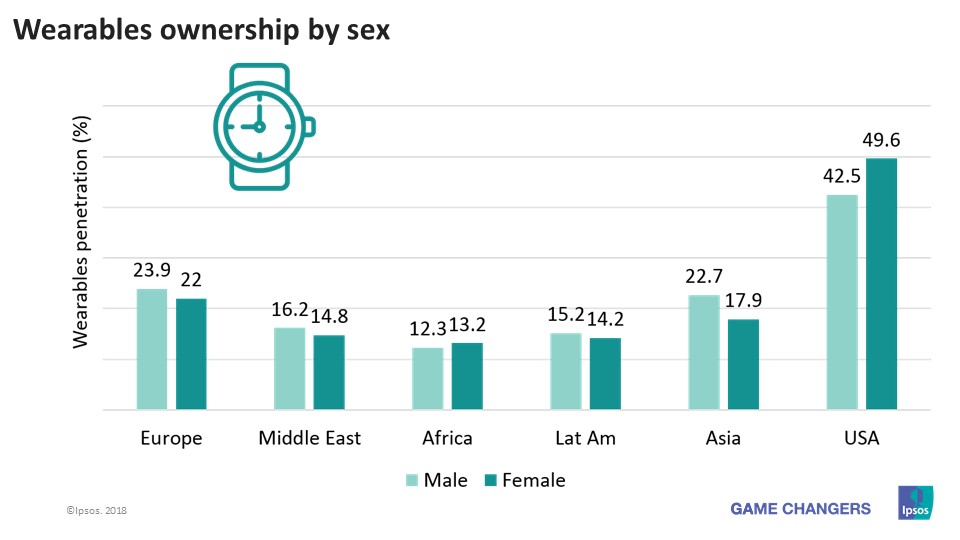
While, the gender gap in most countries is relatively small; men are more likely to own smart watches and fitness trackers are more popular amongst women.

In Europe, the USA, Asia and Latin America, adoption and ownership of smartwatches and fitness trackers is biased towards Affluent millennials. In the Middle East and Africa penetration is higher among consumers aged 35 and over.
Wearables ownership by sex | Ipsos

Did you know that in Europe, fitness trackers are most popular amongst women aged 35 to 44? And that 20,3% of the European Affluent is planning to buy a wearable device in the next twelve months?

The Ipsos Affluent Survey contains data about Affluent’s adoption of wearables, smartphones and many other personal electronics in 41 countries worldwide, providing you with deep insights in the buying habits of the world’s most influential consumers.
At Ipsos Affluent Intelligence, we deliver data and insights that help you to reach and understand the world’s most influential consumers. Since 1995, our Ipsos Affluent Survey has been tracking the media use and consumption habits of over 35.000 respondents within the top income segment, representing 62.6 million Affluent in 41 countries. Not only do Affluent spend more, they are also innovators who adopt new technologies at an early stage. Moreover, these top business decision makers act as opinion leaders and influence others within their communities. Contact us below and learn more the Affluent today.

Related news

  • WWIndonesia H1 2025
    Consumers Press release

    [Press Release] What Worries Indonesia 2025

    Corruption, unemployment, and social inequality are now the top concerns among Indonesians, according to Ipsos’ What Worries Indonesia H1 2025 report.
    Discover what’s driving this shift — and how it’s shaping business and consumer behavior.
  • Indonesian Consumer Confidence Declines Sharply in September
    Economy Press release

    [PRESS RELEASE] - Indonesian Consumer Confidence Declines Sharply in September

    Indonesian Consumer Confidence Index fell by -5.2 points compared to August 2025 and -9.2 points compared to September 2024, reaching 52.3 points. This decline places Indonesia at 9th globally, down from 3rd position in the previous month, although it remains above the global average (48.0 points). This trend indicates a shift in consumer sentiment, with Indonesians becoming more cautious in assessing economic conditions and their personal finances amid ongoing global uncertainty.
  • Index June 2025

    [PRESS RELEASE] - Global Consumer Confidence Index June 2025

    Sentiment is up significantly in both the Asia-Pacific and Europe according to the Ipsos Global Consumer Confidence Index for June 2025