
Greece - A nation in transition

The end of 2022 finds Greece and its people in a transitional and suspended state. Having been in some form of crisis since at least 2009, things today are definitely better from many perspectives - but old challenges do persist and new ones have appeared on the radar.
Today there is no clear sense of direction, as economic indices and community sentiment create a mixed environment of positivity and hope combined with frustration and gloom at the same time (with the latter definitely weighing in more at the end of the day).
Some good news – or at least the numbers say so
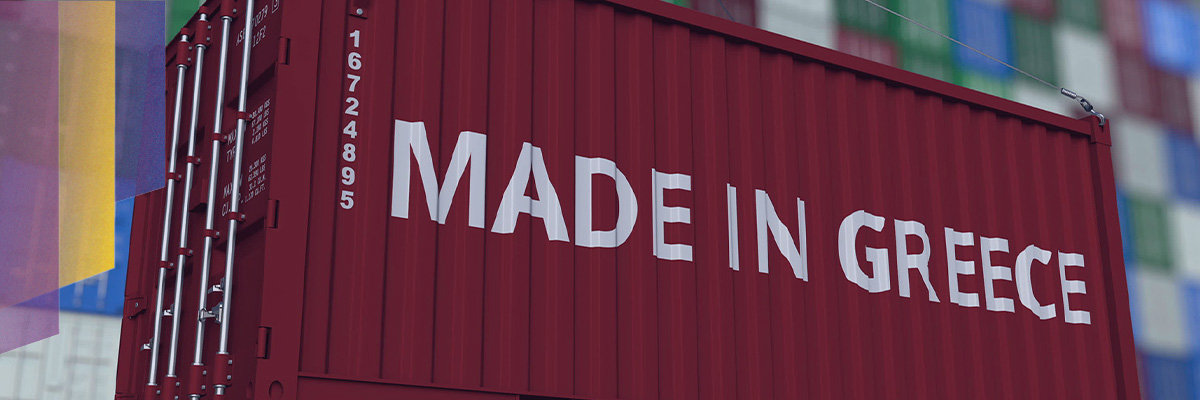
At the level of the national economy there have been some very welcome positive signs, such as a newly found export drive, with exports today reaching ca. 41% of GDP (up from only 22% in 2010). On top of that, the export mix is becoming highly diversified – which adds an extra layer of safety.
In parallel, tourism has recorded an unprecedented boom, with revenues for 2022 expected to surpass the pre-pandemic €18.2 billion mark of 2019 - a record year[2]. More than 35 million tourists are expected this year in total.
These leaps forward are naturally seen in a positive light by the Greek public. However, the key concern is the extent to which benefits trickle down to the general population – that is, who gets to win and lose out of the evolving situation. The initial verdict: not so many.
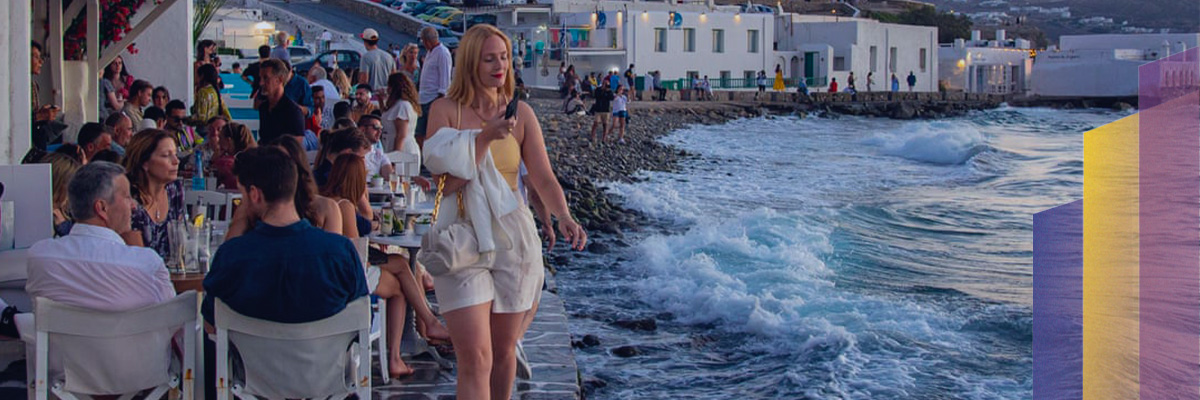
The loss of Greek summer
Unprecedented tourism demand has pushed up prices upwards everywhere (including a notable side effect on rental prices).
Granted, the extreme, sensationalistic news stories on €25 espressos and €500 calamari dishes that have spread widely this year do not represent the typical situation. They do serve, though, as the warning shots of a phenomenon that we would not have fathomed some years ago. Crazy prices combined with extreme crowding have made it increasingly difficult for Greeks to have their ‘traditional’ summer holiday.
An affront to the Greek way of life
Losing ‘our’ Greek summer is seen as a loss of a part of our collective soul. This is not only about access and capability – it is also about aesthetics, style, scale, and, at the end of the day, a philosophy of life. If nasty-looking folklore hastily put together for foreigners was the plague of the past, now the danger comes mostly from another direction.
It is the danger of soulless, vulgar ‘Dubaization’ – experiences that one could have anywhere. All this is foreign to Greeks – not only because it is a trend imported from abroad but also because it is distant from how we feel about our relationship with our land and our heritage. Greeks feel increasingly as foreigners in their own land.
Perceptions of prospects is clearly negative
While some hard indices such as exports, arrivals and GDP are on the rise, the ones that are more directly linked to everyday life are not as nice to look at. It is true that inflation is a generalized global and particularly European phenomenon, but in Greece things are worse than the European average with inflation standing currently at 12-13% (while everybody strongly believes that in reality things are worse). In parallel to that, a housing crisis is brewing, with rents and purchase prices (by some accounts) having gone up by 20-30% in a very small period of time.
It should come as no surprise then that people do not feel optimistic either for the financial course of the country or for their own. In a survey run locally by Ipsos/Opinion, 66% of Greeks predict a downward course for the financial state of the country in the next 6 months with only 12% being positive. 54% predict a downward course for their own household (13% positive)[3]
Economic malaise dominates concerns
When asked in an Ipsos/Opinion study to name the top three topics that they find the most worrying in the country, Greeks were most likely to mention energy price increases (44%), price increase in goods and services (39%) and the economic crisis in Greece (21%). These were followed by decrease in income (19%) and poverty & social equality (18%).
It is clear that economic challenges take the lion’s share of our headspace, pushing everything else to the periphery (Covid-19 for instance is down to 13%, and even the Russia/Ukraine war stands at 11%, though in reality it is at the root of many of the previous issues that take center stage).
Balancing control and living well
With global fluidity affecting daily affairs in a way not felt for years, Greeks feel that much of what they experience today is beyond their control – which adds an extra layer of uncertainty and desperation into the mix. In line with what we discussed before on tourism, Greeks do appreciate the fact that the level of free time and leisure options (e.g., restaurants, cafes, hotels) is expanding in terms of quantity and quality, but the pressure to make ends meet make these otherwise welcome changes mostly irrelevant. A country that is a playground for the rich and out of reach for the many is not a good prospect.
Crazy prices combined with extreme crowding have made it increasingly difficult for Greeks to have their ‘traditional’ summer holiday
Still, the drive to have a good time is as strong as ever - especially after two years of vastly reduced activities due to the pandemic. The general population has not resorted overnight to ultra-cheap options, but rather became very critical of products and services that do not embody high value for money. And they have not cut fun stuff. Despite the raise of gas prices, traffic is as heavy as ever, cafes and restaurants do not suffer perceptibly and popular tourism destinations are fully (pre)booked. It is too early to predict how things will pan out, but at this point in time heavy sacrifices are not the obvious choice for most.
Any notable collateral damages?
Unlike other countries in Europe and beyond, the political scene in Greece has not displayed any serious signs of radicalization – probably because we have already been through that stage on our own years ago and we are, in a sense, one phase ahead. The quite widespread subsidy/financial support policies of the Greek government that started in the pandemic period and continued into the energy crisis have probably helped curtail more extreme reactions (note though that a recent wave of high-profile crimes may fuel reactions and moves towards the radical end of the political spectrum).
Still, there is a sway of opinion in other critical domains, such as environmental consciousness for instance. There is for instance a generalized critique of the early decommission of our coal-fired power plants (they would come in handy today) and a growing negativity to anything ‘environmental-sounding’ - from setting up wind farms, to the banning of plastic straws and to the use of electric cars – the price of electricity providing an extra argument against the latter.
Lambros Katsanevas