
Brazil - A new horizon

After almost a decade, in 2023 Brazil is finally able to think about its future and start working to build it. This is not about the election or any specific candidate but rather about no longer reacting to the incredibly hard circumstances it has experienced in recent years.
In the wake of the profound recession the country faced from 2014, Brazilians have gone through a presidential impeachment, gigantic corruption scandals, Covid and two aggressively disruptive elections. Just reacting to these successive battles has drained resources, attention, investments, common sense and the feeling of the country having a shared journey.
After almost a decade, in 2023 Brazil is finally able to think about its future and start working to build it
Now, in an environment of surprisingly positive economic growth (the Central Bank’s latest estimate for 2022 is 3.05%, compared with 1% in the beginning of the year) and relatively favorable ongoing economic conditions, Brazil will have, in 2023, a president chosen in the largest democratic election in our history. Even if it was an election full of conflicts, the country has made its choice and will walk a new journey... Moreover, for the first time in a while, we will not have a clear and defined antagonist at the beginning of a year (be it economic crisis, Covid, political problems or polarizing social divisions): we are now owners of our destiny again.
Obviously, this perception cannot be confused with inconsequential optimism: the country's challenges are colossal, and there are already possible issues that could rise up, such as a potential fiscal unbalance as a side-effect of the expected steep increases in social spending. However, for the first time in many years, it will be up to us to choose our battles.
Mixed feelings
The Brazilian people say goodbye to 2022 with mixed feelings: 66% of them believe that the country is off on the wrong path, an undeniably crude assessment of our situation. However, this is down from 80% only 18 months ago. So, although the feeling is of course negative, the recent trend has actually been quite positive. We see this pattern again via the Ipsos Consumer Confidence Index: in November, for the first time, the country index has reached a higher level than where we were before Covid came along: right now it is at 50.7, and has been improving consistently since November 2021.
November’s What Worries the World points to an evolution in our main concerns: poverty and social inequality concerns are very much in evidence (mentioned by 42%, the second highest of any country in the survey). Worries about unemployment (32%) and inflation (26%), even though very present, have stopped growing or even started declining recently (-4pp, 0 and -2pp, respectively from Oct 22). Naturally, these trends could change in the coming period, but it again signals the improvement in the economic perceptions of the population for the first time in a long while. In the same study, the concerns that increase vis-à-vis the previous month are the ones with heavier social weight, such as health (reaching 39%, up 4pp) and education (28%, up 3pp).
Away from the headlines
Below the most visible and moving context metrics addressed above, there are a number of unseen aspects of the country that also contribute to a fuller understanding of Brazilians. They normally do not make the headlines, but very often explain quite a lot about the overall mood:
-
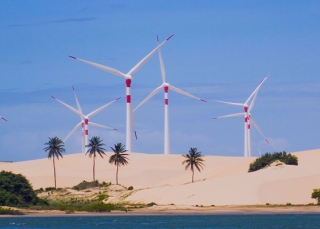
As the pandemic is left behind, Brazilians emerge with bigger concerns about sustainability: 61% demand more aggressive public policies to develop eco-friendly technologies and clean energy. A similar number of people (59%) demand more production incentives (Brazil has more than 48% of its energy generation from renewable sources, way above the global average, according to official sources, due to hydro-electric potential and automotive ethanol). And 76% of Brazilians think it’s important to have global rules to ensure that manufacturers and retailers are responsible for reducing, reusing and recycling their packaging. In spite of the visibility of discussions around preservation of the Amazon, Brazilians are very much concerned with the environment and climate emergency.
-
One negative legacy the pandemic has left visible in the country is the concern with its mental health, a rather recent phenomenon: according to Ipsos’s World Mental Health Day study, 76% of Brazilians claim to think frequently about their mental health (2nd highest among 34 countries), and 49% consider mental health to be the most serious healthcare problem, a record-high increase of 31pp from 2018.
-
Only 11% of Brazilians claim to trust other citizens, according to Ipsos’ Interpersonal trust across the world survey. This is the lowest level of country trust among all the researched countries, and reflects a very concerning situation of interpersonal relationships, with all the serious consequences and costs that this entails.
Marcos Calliari
For more from Marcos and the Brazil team, take a look at their new Ipsos Flair Brazil report, Identities and Individuals.
To hear Marcos’ reflections on the challenges and opportunities facing Brazil, listen in to our Almanac podcast here.
The author(s)
-
 Marcos CalliariCountry Manager, Ipsos in Brazil