The issue landscape
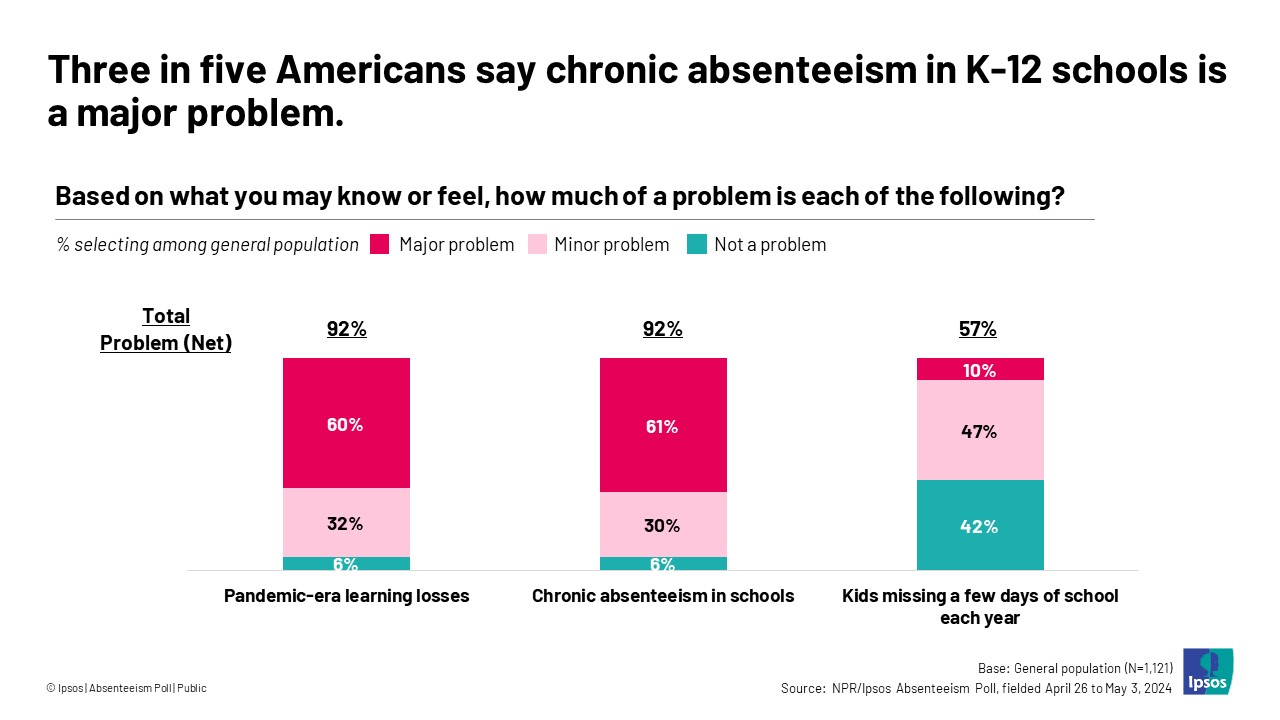
Three in five Americans say chronic absenteeism in K-12 schools is a major problem
The latest NPR/Ipsos poll explores chronic absenteeism—missing 18 or more days during the school year—in K-12 schools in the United States. While chronic absenteeism isn’t top of mind for most Americans or parents*, the majority say it is a problem and that it is important for children to attend school every day. Among parents who had child(ren) in school during the 2019-2020 school year, a bare majority say their child’s school attendance policy has not changed, but nearly one-third say these policies have gotten more relaxed since before the COVID-19 pandemic. As a whole, few parents can identify the correct definition of chronic absenteeism, but the majority say they are in support of various measures to improve attendance, such as requiring in-person meetings, implementing communication campaigns, or increasing state-level education funding. Ultimately, most Americans in general, as well as parents, support K-12 schools holding parents primarily responsible for their child(ren) missing school, regardless of their child’s age.
*Note: Data findings among parents in this study refer to parents of school-aged children in particular.
Where do Americans stand on the war in Gaza?
The war in Gaza has been going on for nearly seven months. But tensions have never been higher in the United States. With all this going on, where do Americans stand on the issue? Here are five charts on how Americans are feeling about Israel’s war against Hamas in Gaza.
Majority of Americans support FTC ruling that would ban non-compete agreements
A new Ipsos poll finds that majority of Americans say they support a new Federal Trade Commission rule that would ban non-compete agreements, which prevents workers from joining or starting a competing business, for most jobs. Support for this rule is highest among more educated and wealthier Americans. However, only around a third (29%) of Americans report being very or somewhat familiar with the ruling. Read more here.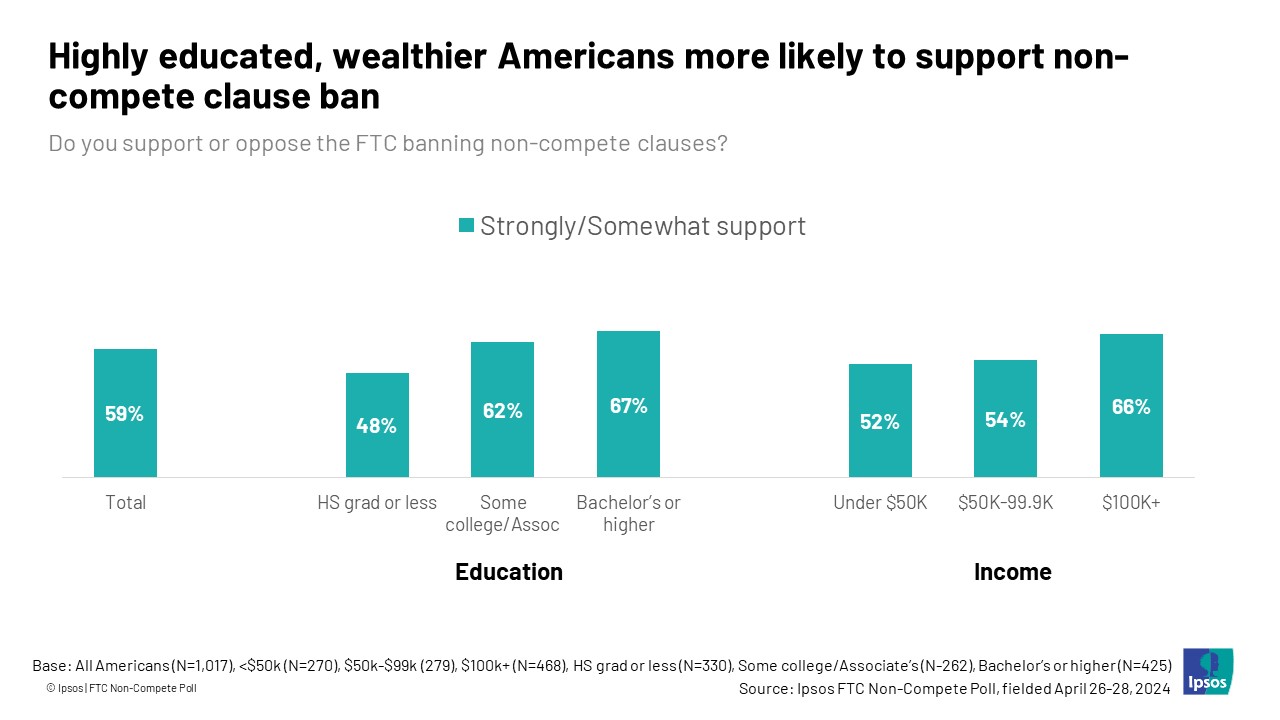
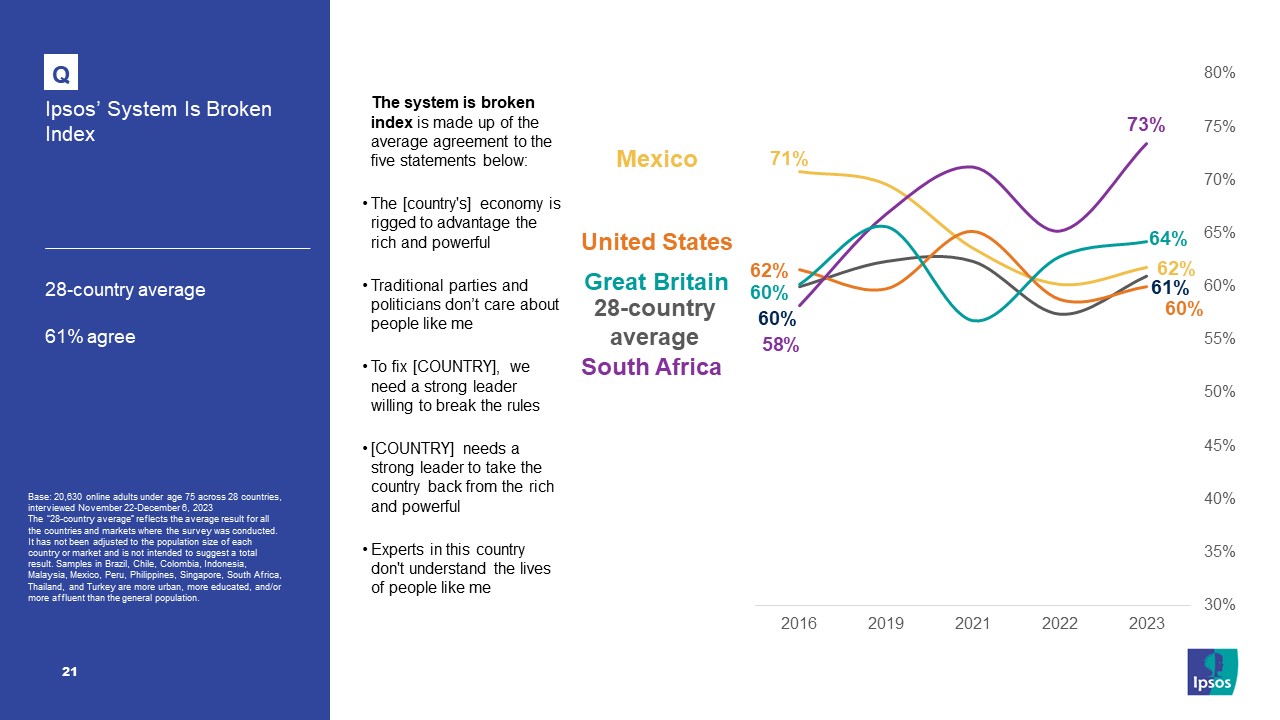
Populism remains strong
Ahead of a major global election year, many around the world back populist attitudes. Citizens across 28 countries feel that their country is in decline and their country’s society is broken, according to the findings of a new Ipsos poll conducted in late 2023. Anti-elite sentiment is widespread across most of the countries, while anti-immigrant sentiment is more divided. The poll also finds that the desire for strong leaders to “take the country back” is high across many of the 28 countries.
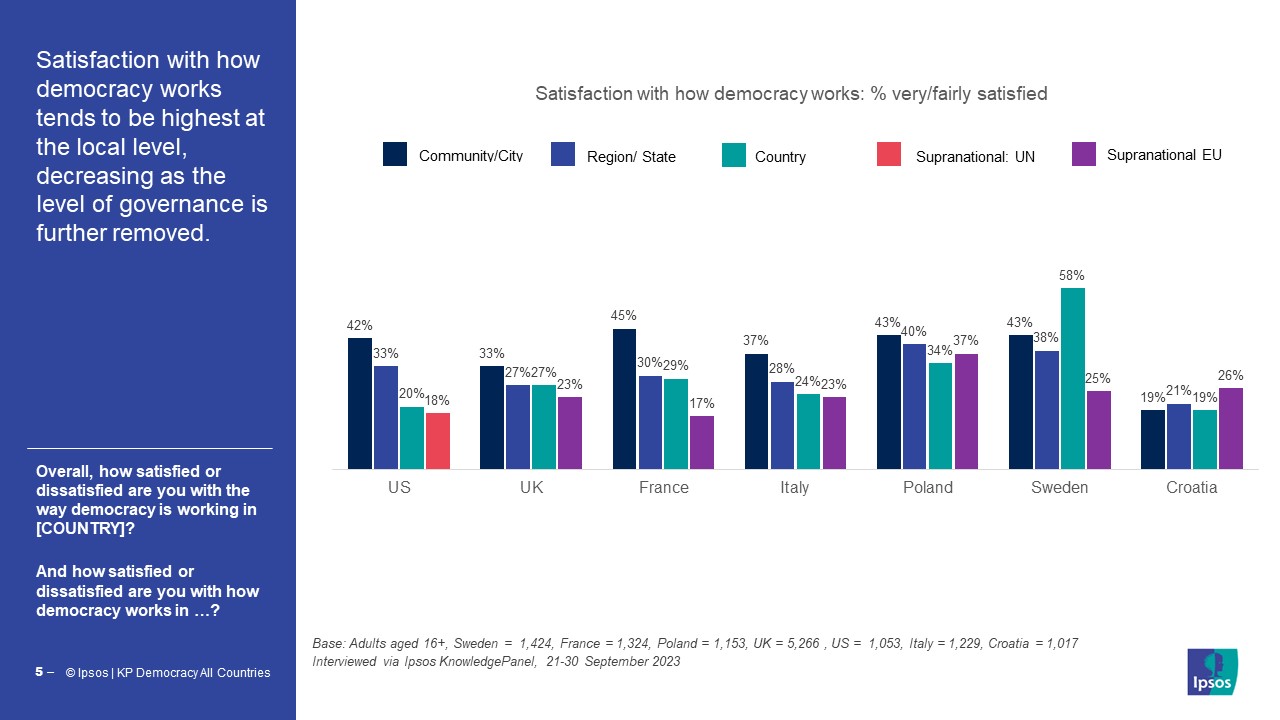
Heading into a presidential election year, satisfaction with democracy is low
An Ipsos survey conducted across seven countries – Croatia, France, Italy, Poland, Sweden, the UK, and the U.S. – reveals support for democratic principles such as voting, building consensus, diffusion of power, despite widespread dissatisfaction with a system perceived to favor the rich and powerful.