
Talking sustainability

The over-arching term “sustainability” has been used more and more often in recent years (see Figure 1). Buzzwords abound: net-zero, UN SDGs, LGBTQIA, DEI, climate justice, CSR, etc. But what meaning does it hold for global citizens and is it the same for everyone?
Across 34 countries, the top four associations link heavily to themes around energy, environment, waste, and climate change, with “‘affordable and clean energy’” coming top, chosen by almost third (28%) of global citizens.
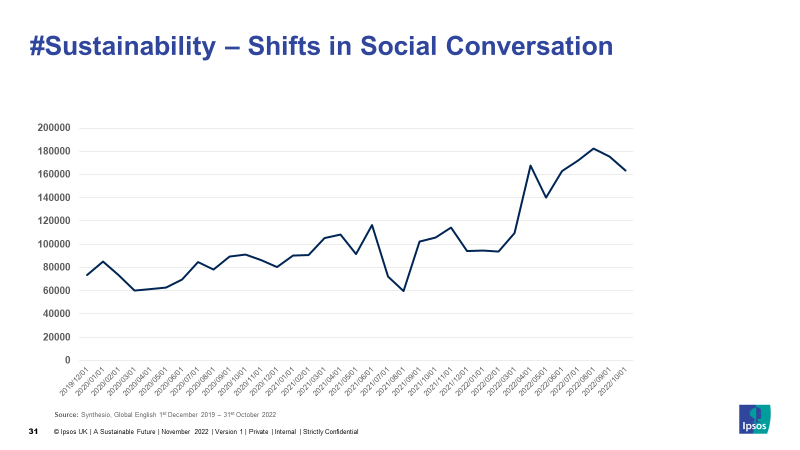
Figure 1 – mentions of #sustainability (English speaking markets)
Almost one in four global citizens associate the term with protecting, conserving, and restoring habitats for marine and wildlife. Interestingly, these environmental topics come ahead of more fundamental human needs around access to clean water and nutritious food and/or ensuring good health and wellbeing for all.
Even further down the list are more social issues like poverty, inequality, productive employment, inclusivity, education, peace and justice, with gender equality having the lowest association of all.
At a top line level, the environment-related topics are more clearly linked to the term "sustainability" than social issues
Figure 2: Associations with the term “sustainability”
However, this picture is not universal, and associations do vary greatly across the globe. This is likely driven by the very different political, environmental, and social backdrops in each country, as well as the cultural context.
Looking across the 34 countries, almost a quarter (24%) associate sustainability with “only producing and consuming what is needed and eliminating waste” but this is notably higher across European countries.
When it comes to more social issues, in Indonesia (37%), Argentina and Peru (both 29%) “full and productive employment and decent work for all” is much more strongly associated with the term “sustainability” than on average across the 34 countries (15%). And linkage to “inclusive and quality education for all” is much higher in Saudi Arabia (29%) and the United Arab Emirates (24%) than the global average of 12%.
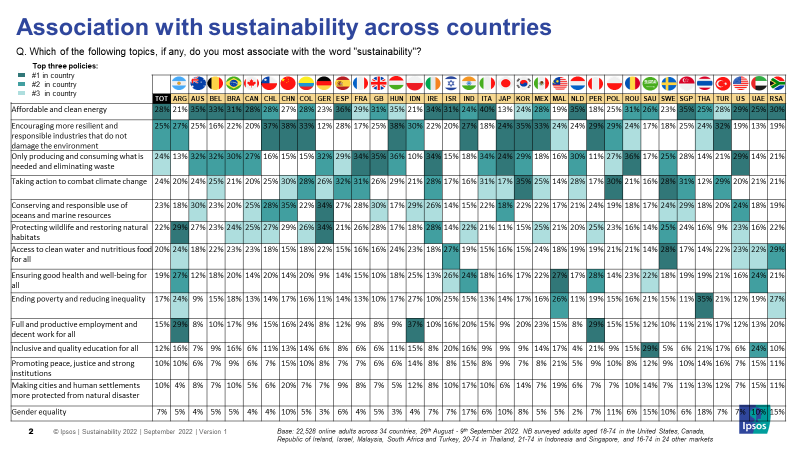
Figure 3: Associations with the term “sustainability” by country
What to prioritise?
On average globally, providing “affordable and clean energy” is the number one issue that citizens want their country to prioritise (26%). The focus then switches to core social topics, with “ending poverty and reducing inequality” and “ensuring good health and wellbeing for all” completing citizens’ top three priorities (both 23%).
This aligns with what we see in Ipsos’ global What Worries the World survey: people are most likely to focus on immediate concerns that impact them day-to-day. As may be expected, these two social issues are not as widely prioritised in developed economies as they are in developing economies.
Then focus switches back to tackling climate change, which comes in fourth place – hardly surprising given the extreme and record-breaking weather events of all forms that have been experienced across the globe in 2022.
Across the 34 countries, “full and productive employment and decent work for all” is the fifth most important topic that citizens think their country should focus on, but this is more important for citizens in Argentina (37%), Indonesia (36%) and Peru (30%) compared with the global average of 19%.
When it comes to desired action to create a sustainable future, it is important to note that the balance is more equally spread between environmental and social issues.
This reflects what we have seen elsewhere: citizens assign relatively equal priority to environmental, social and governance (ESG) topics when considering the responsibilities of multi-national companies[1]
Considering the strength of their association with the term “sustainability”, issues relating to nature are relatively low among the priorities that citizens want their country to address. That said, “protecting wildlife and restoring natural habitats” remains more of a priority for Australia (27%), Germany (26%), China (24%), and Great Britain (23%), compared with a global country average of 17%. Interestingly, work with EDF shows that citizens from Australia, Germany and the UK, are among the least likely across 30 markets surveyed to take part in protests to combat climate change (which directly impacts these habitats). Perhaps an air of the say-do or perhaps say-care enough gap?