Trustworthiness of the oil and gas sector
With concern about climate change remaining on the agenda across many markets, this article explores how the sector is maintaining its reputation when some would argue criticism is at an all time high.
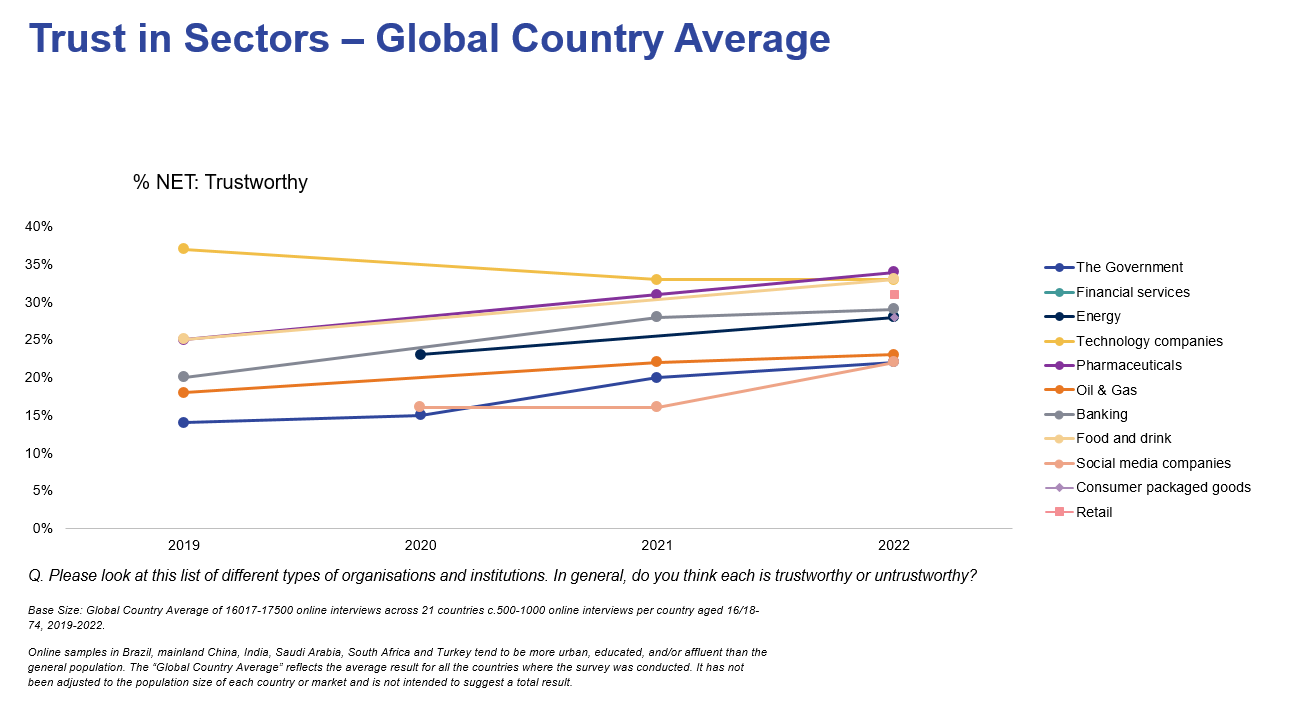
Albeit from a low level, trustworthiness in the oil and gas sector increases from 18% in 2019 to 22% in 2022. The proportion who considers the sector untrustworthy is higher – 37%; but this is not higher than in 2019 when it was at 41%. So – stability, and not huge changes for the sector.
And yet the world around the sector, the external context, is changing rapidly. From the COVID-19 pandemic, the war in Ukraine, plus ongoing efforts by the sector to shift to renewable sources, the sector has been put under a lot of pressure over this time period.
Considering what the sector does well (the building blocks of trustworthiness) provides the clues as to the minimal shifts seen in trustworthiness over the last few years. Getting the basics right; ‘it is good at what it does’ – has increased from 36% in 2019 to 40% in 2022, and ‘it is reliable/keeps its promises’ increased from 23% to 30% in the same time period. Continuing to provide products and services throughout significant shocks to the system will increase trustworthiness in the sector.
It is also worth noting the global aspect of this study. In Western markets, the oil and gas sector is often vilified for perceived lack of environmental credentials and current high profits. At a global level perhaps, it has more to offer to markets that are increasingly looking to its products and services to grow.
Focusing on climate change specifically, there are high levels of agreement in China (68%) and India (62%) that the sector is environmentally sustainable.
Markets that are looking to move away from coal to alternatives such as oil and gas, see the sector as ‘greener’ if not ‘greenest’. India has been promoting natural gas as a transition fuel to reduce emissions before the complete switch to fossil-free energy, which is essential to meet the net-zero emissions goal by 2070, potentially highlighting why the oil and gas sector is perceived to be environmentally sustainable.

Taking into account commitments of those operating in the sector to move towards renewable sources, there is potentially greater global recognition of this. There is increasing agreement that the sector ‘shares my values’ (19% to 27% 2019-2022), ‘it is open and transparent about what it does’ (23% to 29% 2019-2022).
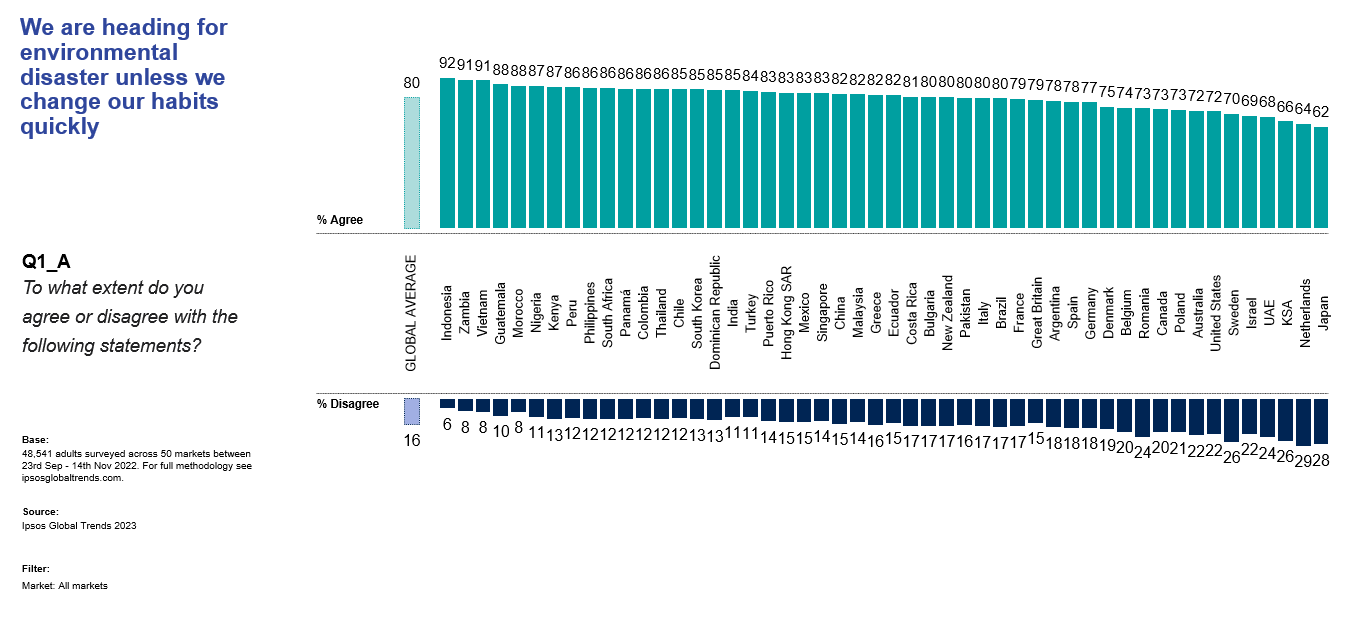
Commitments by multinational companies in the sector to transition to renewable sources of energy could be in line with desires and expectations of the public. Ipsos Global Trends research showed a global average of 80% agreed “we are heading for environmental disaster unless we change our habits quickly”. It could be responses by the oil and gas sector in demonstrating their environmental credentials and supporting customers to change their habits through things like EV charging, have chimed with public sentiment here.
Commitments on the transition that some of the world's biggest oil and gas companies are making and that we see advertised could be viewed as opening themselves up to transparency and therefore accountability. By stating plans such as size and timescale of change, the public can see how these companies are operating and assess for themselves if these are being achieved.
That is not to deny that the sector, and indeed many sectors, are starting from relatively low levels of trustworthiness globally.
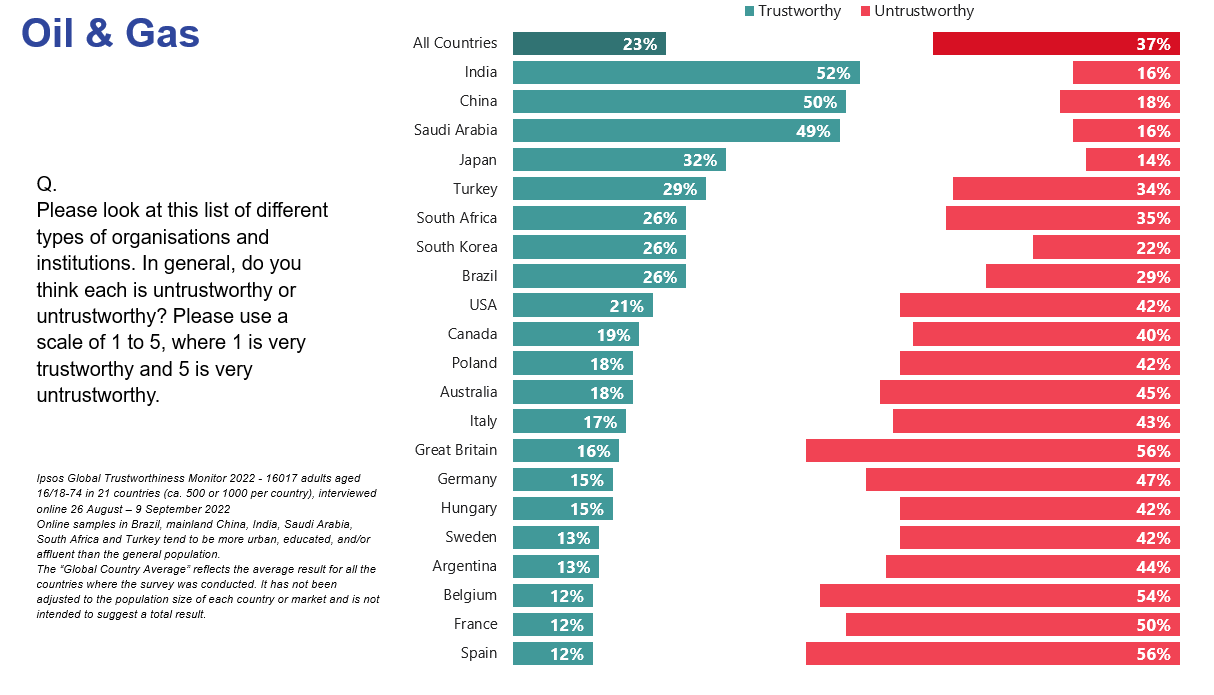
Around one in five of the public (22%) would say they thought the oil and gas sector was ‘trustworthy’ and, as mentioned, almost double that number consider it ‘untrustworthy’ (37%).
In the examples above, we have noted where perceptions are particularly positive (China and India), but there are also countries (Great Britain, Belgium, France and Spain) where the majority of the public are actively untrusting of the sector. The point to make is that, again, these have not changed significantly over the last few years. These views are relatively entrenched and the sector will need to take significant steps to change perceptions.
Leveraging the basic drivers of trust – it is good at what it does and it is reliable/keeps its promises – is key to building trust in the sector. The stand out sticking point for these markets is the perception of the sector’s reliability – the plurality, and in the case of Belgium – the majority, do not think the oil and gas sector keeps its promises. Therefore understanding the public’s expectations of the sector, and what they believe the sector has promised them, is the main way in which individual companies in the sector can start to build trust.