
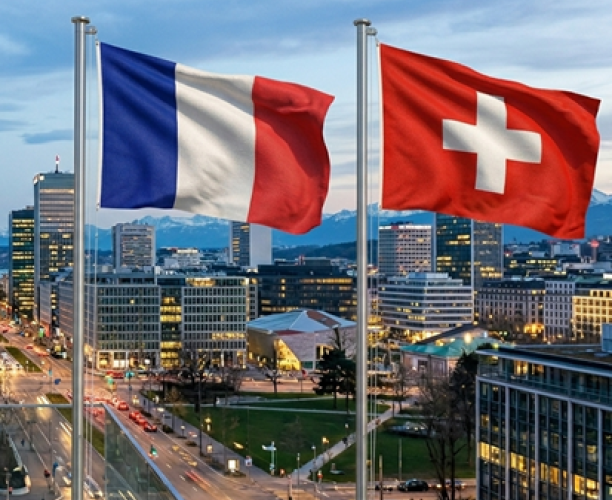
Mirror Views: How France and Switzerland See Democracy, State, and Each Other
Key findings
• A shared belief in direct democracy: a strong consensus in both Switzerland (86%) and France (79%) supports the use of regular referendums - a rare point of convergence despite different democratic traditions.
• The role of the states divides: 62% of French citizens demand more state intervention, a view shared by only 34% of the Swiss. A gap revealing opposite philosophies.
• 2 countries, 2 outlooks: The French are significantly more pessimistic, with 69% believing the next generation will be worse off, compared to 49% in Switzerland.
• Cross border crisis of confidence in politics: Politicians face deep mistrust, especially in France, where only 8% of people trust them to manage the economy, compared to a still low 21% in Switzerland.
• The French paradox: 63% want to reduce public debt while 62% simultaneously demand more state intervention - a contradiction largely absent in Switzerland.
The study reveals striking contrasts between the two nations.
While both countries strongly support direct democracy (79% in France, 86% in Switzerland value regular referendums), they diverge on fundamental questions of governance. The Swiss overwhelmingly prefer consensual leadership (72%), while France remains divided between those seeking strong authority (45%) and compromise (55%).
Perhaps most revealing is the gap in state intervention expectations: 62% of French citizens want more state involvement in daily life, compared to just 34% of Swiss, with 45% of Swiss satisfied with current levels versus only 17% of French. This reflects deeper value differences - France prioritizes solidarity (30%) as its top societal value, while Switzerland champions individual freedom (32%).
The survey exposes a French paradox: 63% want to reduce public debt while simultaneously 62% demand increased state intervention. Both nations share pessimism about the future - particularly the French, with 69% believing the next generation will have lower quality of life compared to 49% of Swiss. This pessimism extends to trust in politics, where 72% of French and 44% of Swiss mistrust politicians to address the economy challenges, leading both populations to turn to experts and academics for economic leadership.
Cross perceptions proved revealing: 77% of French admire Switzerland's economic performance, while only 21% of Swiss view France's economy positively. However, 56% of Swiss recognize France's rich cultural influence.

CEO of Ipsos Switzerland

The full PDF deck is available for download below. Please note that the findings are presented in French.
Contacts
 Celine PerroudAssociate Client Service Director, Ipsos Public Affairs, Ipsos in Switzerland
The author(s)
-
 Hana BaronijanPublic Affairs, Service Line leader, Ipsos in Switzerland
 -

-
Celine PerroudAssociate Client Service Director, Ipsos Public Affairs, Ipsos in Switzerland


