Three in four adults globally say they’d get a vaccine for COVID -19
In a new Ipsos survey of nearly 20,000 adults from 27 countries on behalf of the World Economic Forum, 74% say they would get a vaccine for COVID-19 if it were available. However, 59% do not expect this will be an option before the end of this year. The reason most commonly given by those who would not get a vaccine is worry about side effects (56%) followed by doubt about its effectiveness (29%).
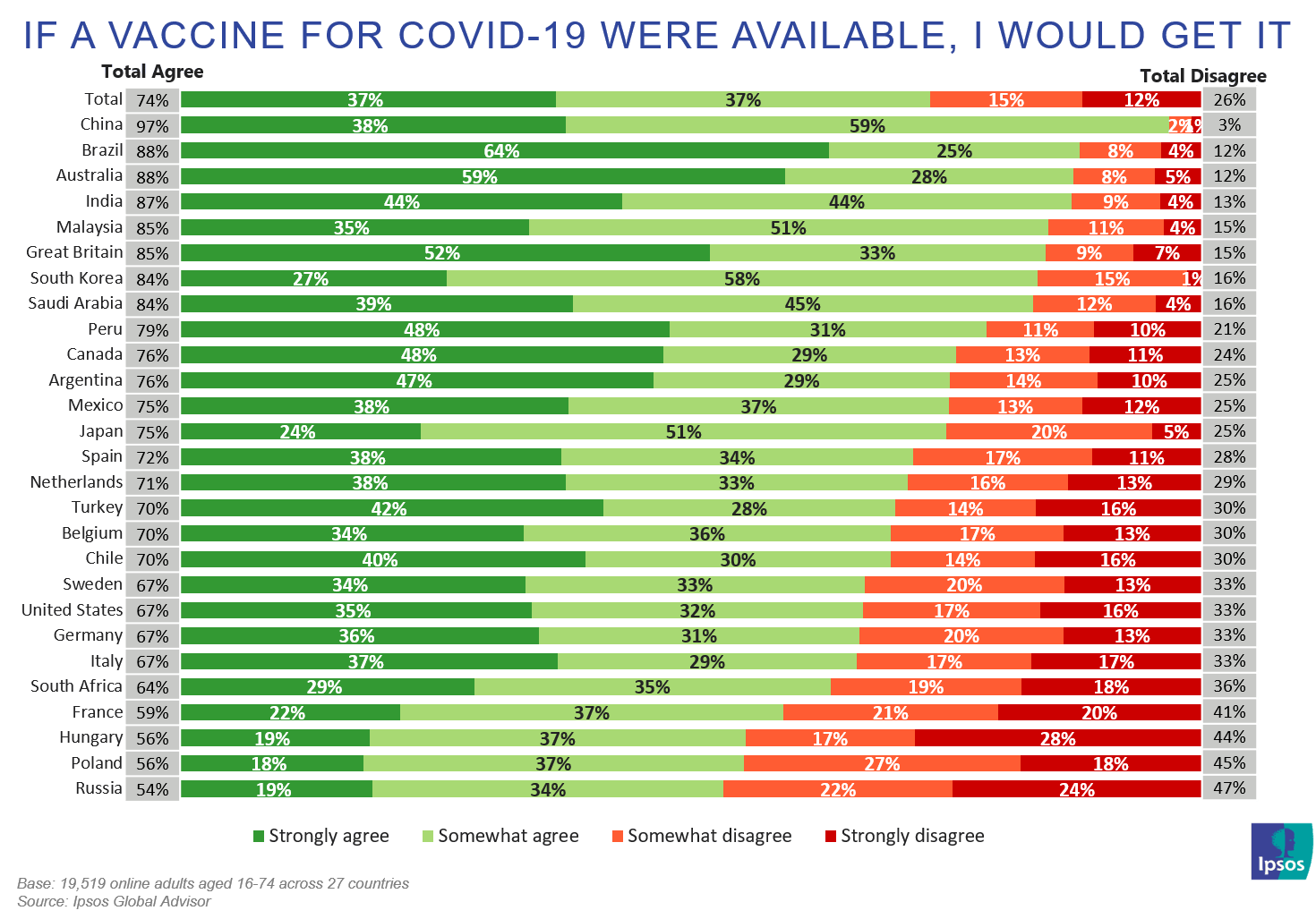
Intentions to get vaccinated against COVID-19
Globally, 74% of all adults surveyed agree that, “if a vaccine for COVID-19 were available, I would get it”. However, only 37% strongly agree while 37% somewhat agree. Overall, 26% disagree (15% somewhat disagree and 12% strongly disagree).
In most countries, those who agree outnumber those who disagree by a significant margin (more than 50 percentage points in 12 out of 27 countries).
- The countries where Covid-19 vaccination intent is highest are: China (97%), Brazil (88%), Australia (88%), and India (87%)
- Those where it is lowest are: Russia (54%), Poland (56%), Hungary (56%), and France (59%).
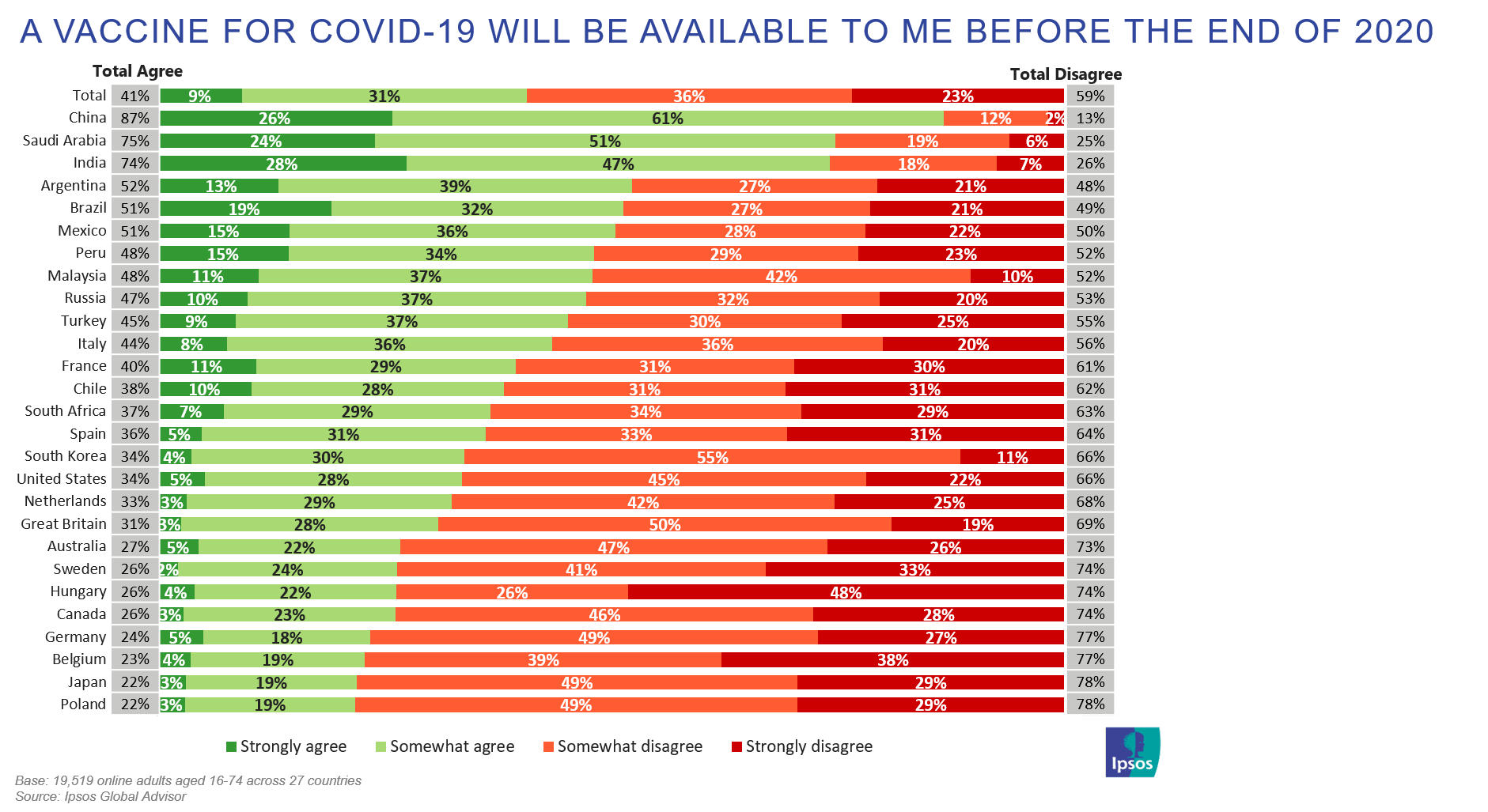
Expectation that a COVID-19 will be available this year
Across all 27 countries, 59% disagree that “a vaccine for COVID-19 will be available to me before the end of 2020” (23% strongly and 36% somewhat) while the other 41% agree (9% strongly and 31% somewhat).
- Again, China stands out for its optimism, with 87% of those surveyed expecting a vaccine will be ready this year. Agreement is also high in Saudi Arabia (75%) and India (74%).
- By contrast, skepticism prevails in Germany, Belgium, Japan, and Poland where fewer than one in four adults anticipate that a vaccine will be available at some point in the next four months.
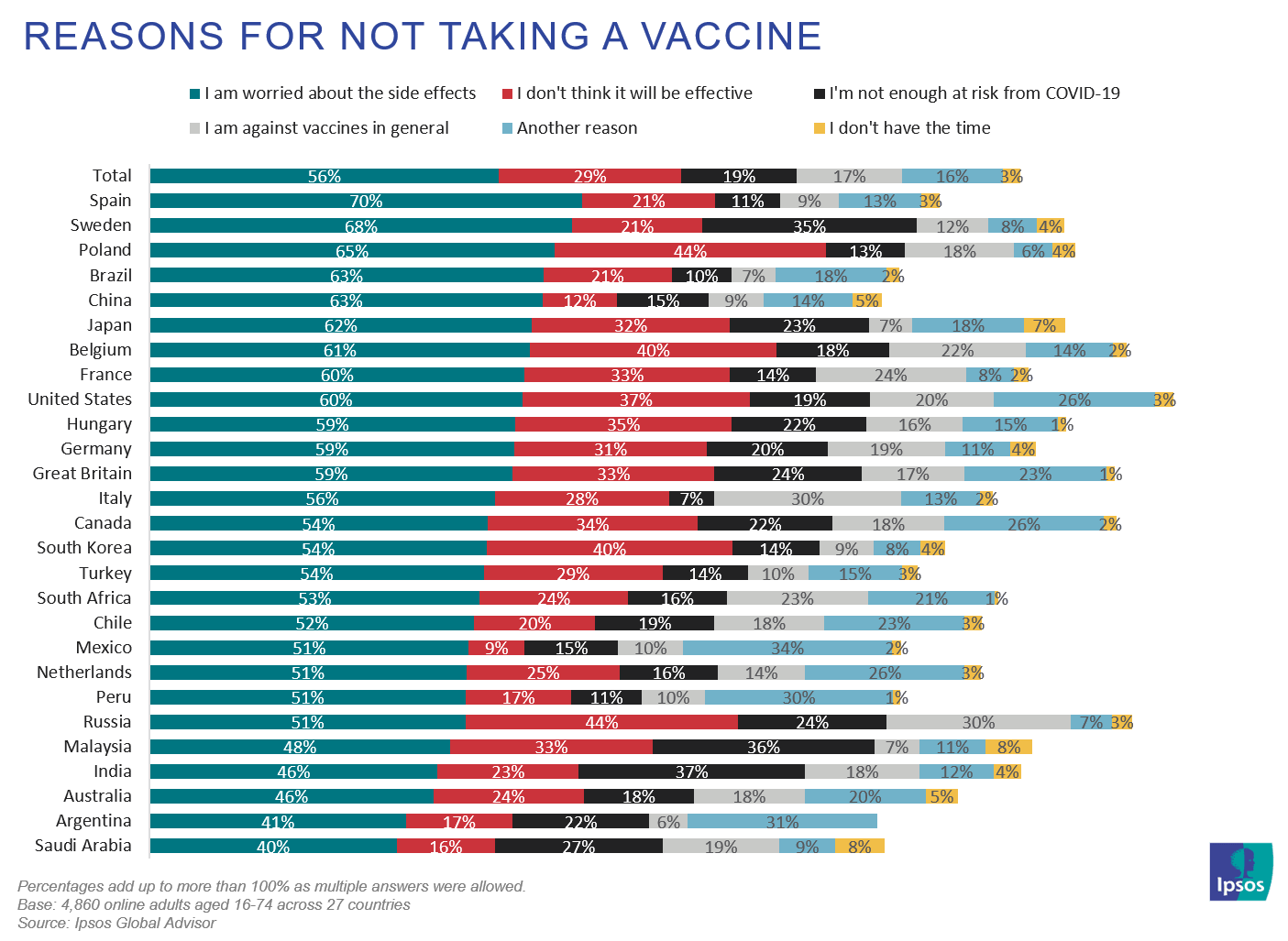
Reasons for not taking a vaccine
The nearly 5,000 adults surveyed who do not intend to take a vaccine for COVID-19 were asked why they would not do so. In every one of the 27 countries, the #1 reason is worry about the side effects, cited by 56% globally (from 70% in Spain and 68% in Sweden to 41% in Argentina and 40% in Saudi Arabia).
The second-most common reason for not wanting to take a COVID-19 vaccine is doubt about its effectiveness, cited by 29% globally (from as many as 44% in Russia and Poland to just 12% in China and 9% in Mexico).
The third most common reason is the perception of not being enough at risk from COVID-19, cited by 19% globally. Among those who are reluctant to be vaccinated, this view is most prevalent in India (37%), Malaysia (36%) and Sweden (35%), while it is least so in Italy (7%) and Brazil (10%).
General opposition to vaccines is cited by 17% of those who would not get a COVID-19 vaccine globally, but as many as 30% in Russia and Italy.