Health and Wellbeing Practices in Romania. An increasing number of consumers are investing in prevention, despite rising financial pressure.
Adoption of Proactive Health Becomes the Norm for the Majority of Consumers
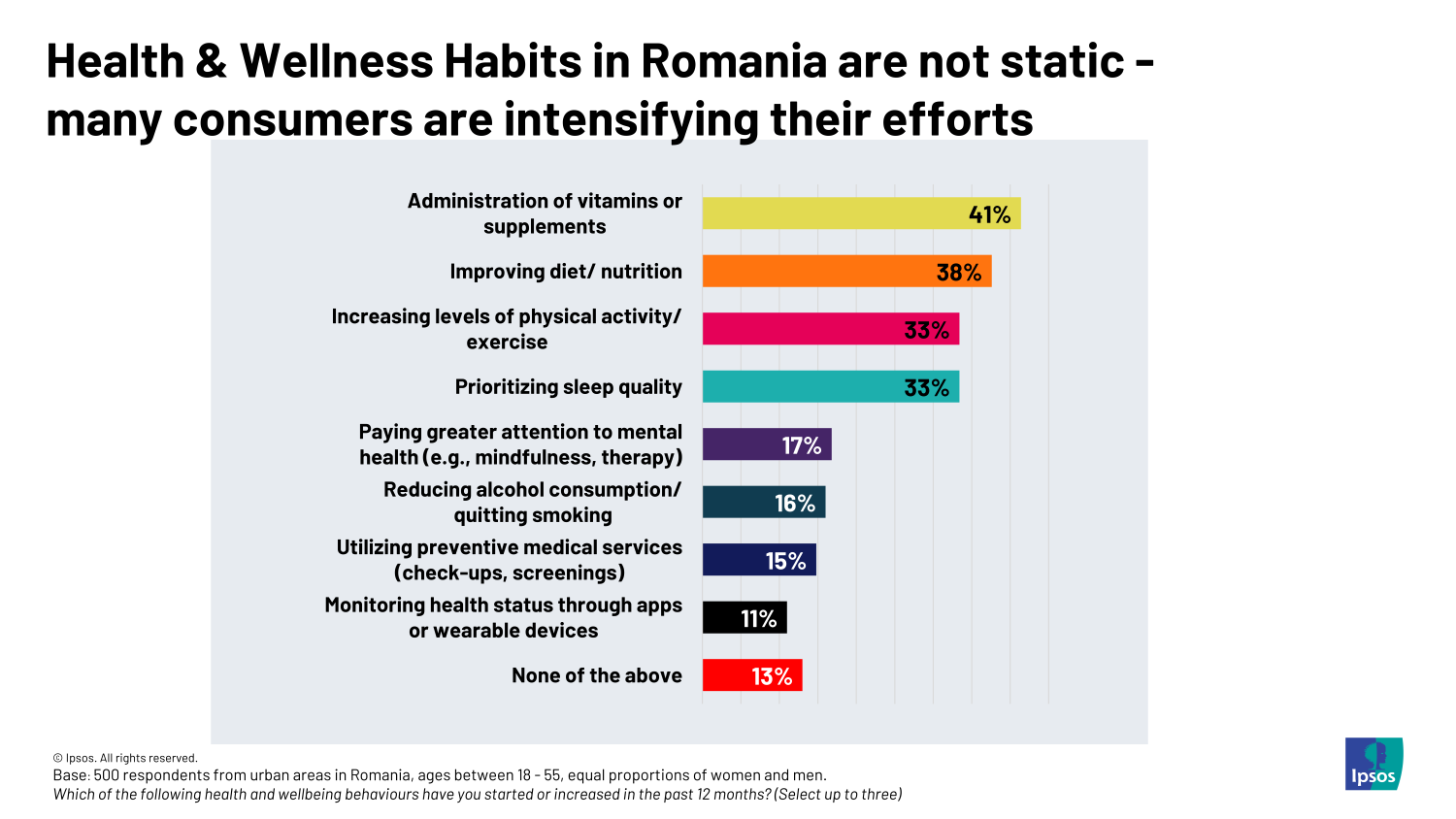
Only 13% of the respondents interviewed stated that they have not adopted or intensified any health or wellness-related habits in the past year, highlighting the widespread adoption of behaviors oriented towards maintaining wellbeing.
Health Remains a Priority, Despite Financial Pressures
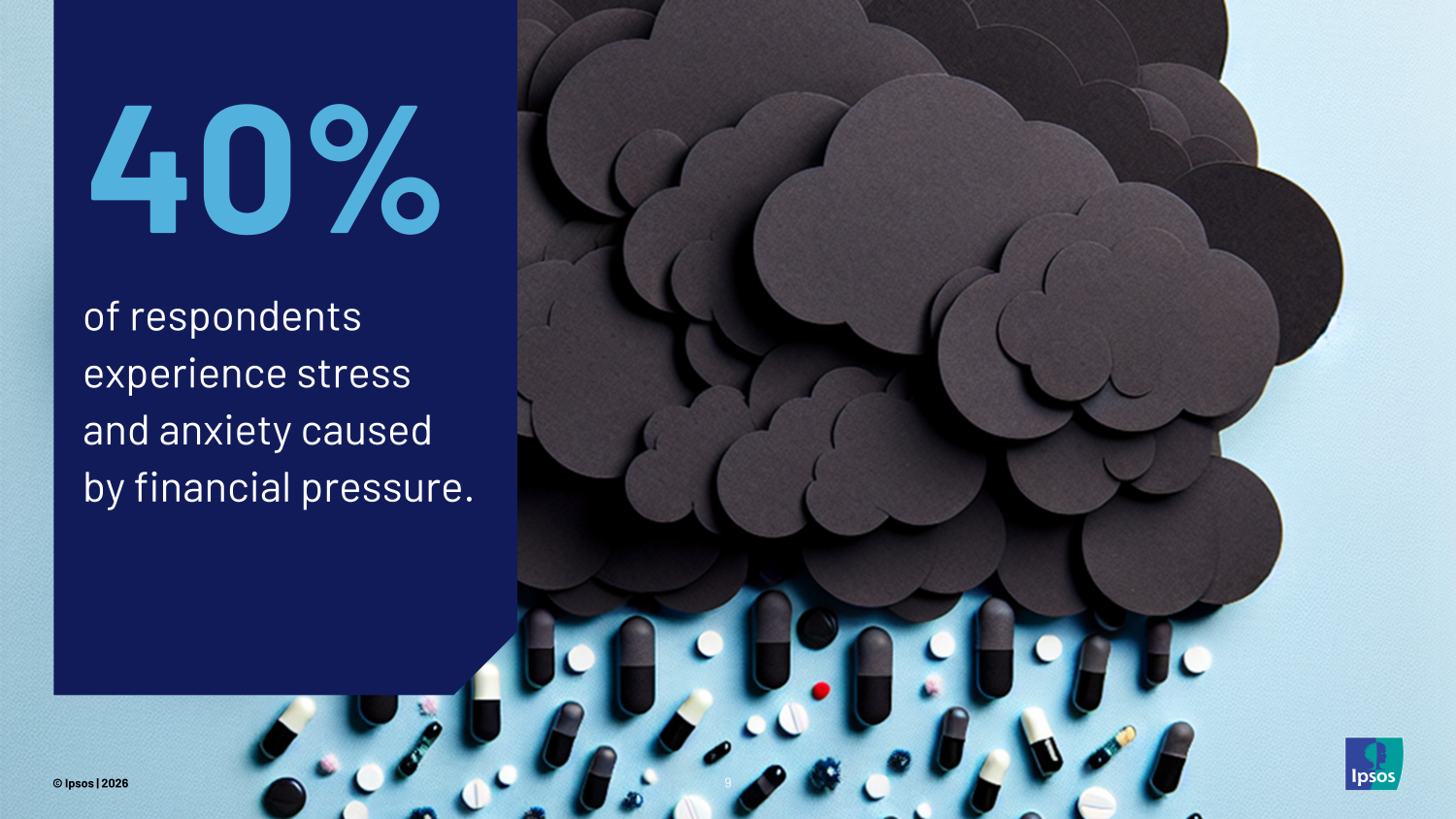
This trend emerges in a difficult economic context: 40% of respondents state they experience stress and anxiety caused by financial pressure. However, focusing on health remains a priority, even in the face of budget constraints. Ipsos data highlights a structural shift in how people manage their health: decisions are becoming more informed, proactive, and oriented towards prevention, not just treating conditions.
Today's patient is not a captive consumer. They have access to information, compare options, and make conscious decisions for their health.
It's essential for healthcare professionals to consider this reality and build relationships based on trust, dialogue, and relevance to the patient's real needs
states Irina Nicolaescu, Pharma Client Director at Ipsos Romania.
These developments underscore the need for an integrated approach in healthcare, where prevention, education, and easy access to effective solutions play a central role in improving quality of life.
Future-Oriented Mindset
Healthcare spending is increasingly perceived as essential, not optional. Consumers choose to invest in prevention and health rather than reacting only when health problems arise, underscoring a clear paradigm shift. Solutions that clearly demonstrate cost-efficiency, long-term savings, or preventive value will resonate the most.
This context is a clear call to action: consumers actively invest in prevention and make informed decisions, so success will depend on the ability to provide relevant, accessible solutions that are easy to integrate into everyday life, not just responding to needs that arise at the time of treatment
further declares Irina Nicolaescu, Pharma Client Director at Ipsos Romania.
About the study
The Ipsos survey was conducted via online interviews in April 2026, on a sample of 500 people living in Romania, aged 18 to 55, from urban areas, both women and men, in equal proportions.