Women politicians and business leaders perceived to be as capable as their male counterparts - Ipsos Global Attitudes towards Women’s Leadership Survey
March 8th is celebrated globally as International Women's Day. The theme in 2024 is #InspireInclusion. To mark the occasion, Ipsos conducted its annual global survey on Global attitudes towards women’s leadership in 31 countries.
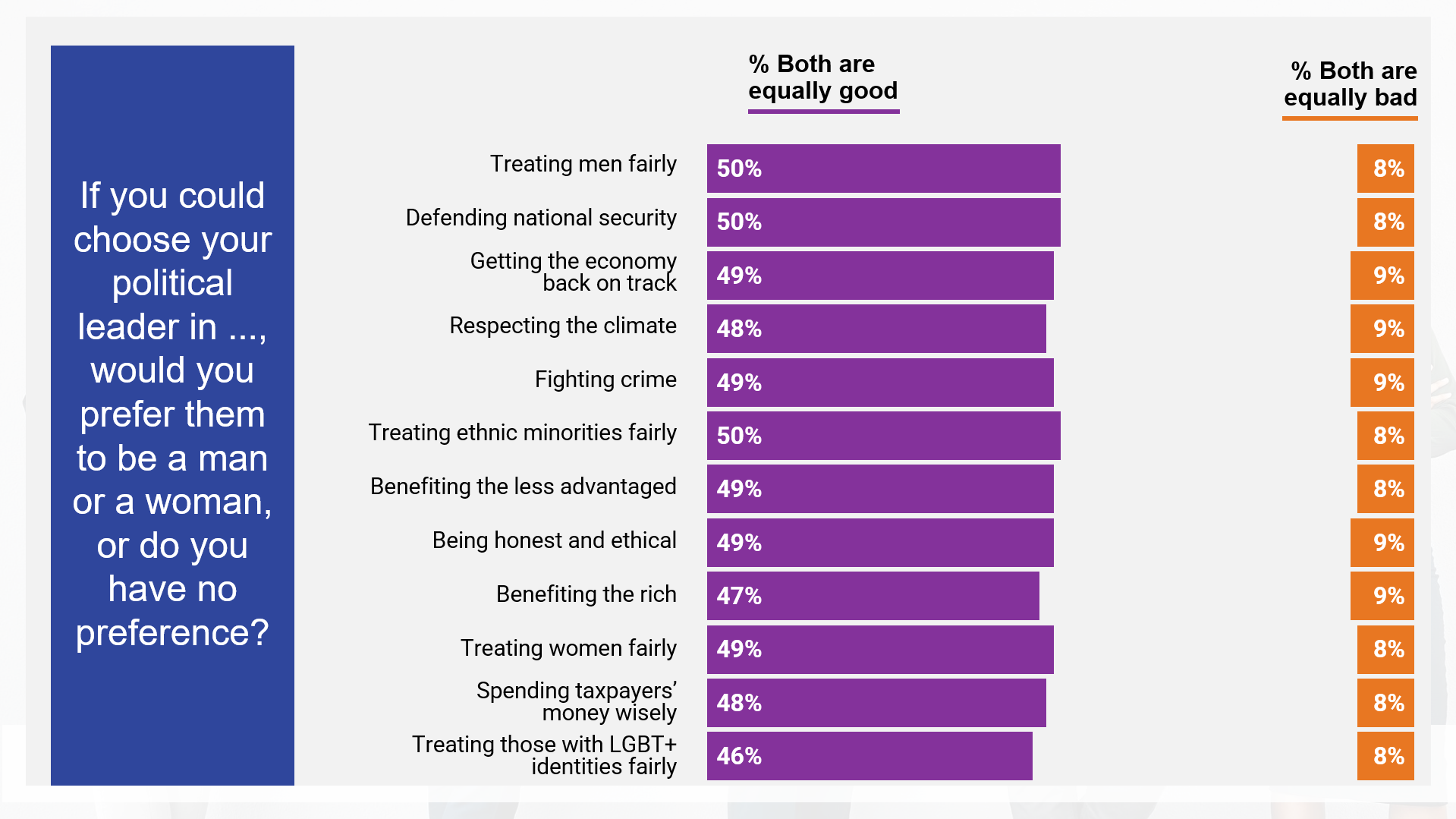
The survey shows, male political leaders and female political leaders are perceived to be equally preferred and are perceived to be equally adept at helming the role across issues.
Inclusion in Business
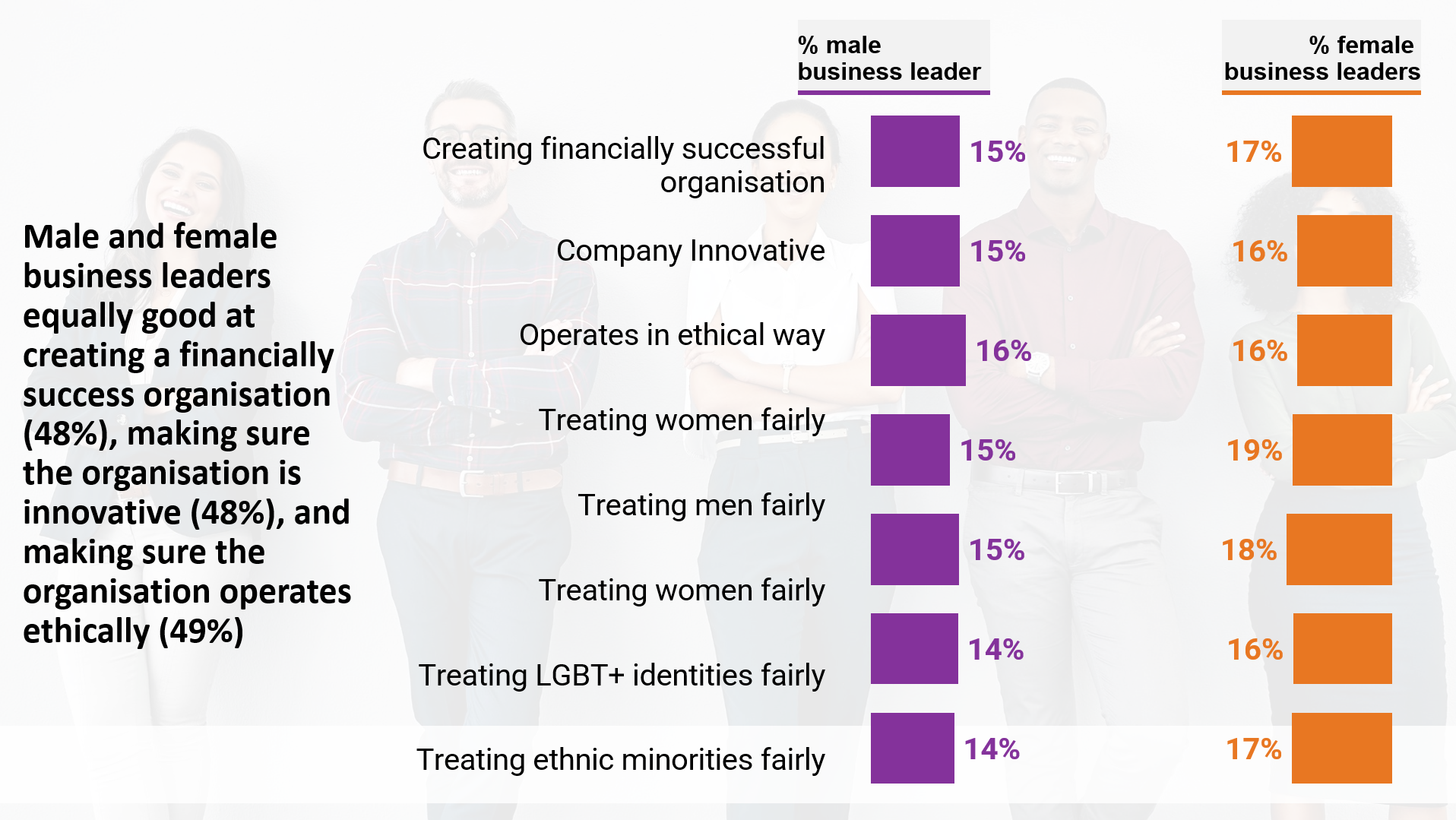
The survey also assessed how male business leaders are perceived vis-à-vis female business leaders. The survey shows, they were perceived to be at par.
 Interestingly, when the respondents were asked who they would prefer their boss at work, by gender, 35% preferred a male boss, 25% preferred a female boss, 29% had no preference and 13% were undecided.
Attitudes towards gender equality
Progressive views towards gender equality but gender stereotypes continue to persist – like a stay-at-home dad is unacceptable in India where gender roles are defined. Interestingly, 3 in 4 respondents polled (75%) believe, when it comes to giving women equal rights with men, things have gone far enough in the country. 73% respondents define themselves as a feminist (as someone who believes in giving women equal rights as men and stand for their rights); 76% urban Indians also say they are willing to take actions that promote equality between the two genders. Though there is onus on men, with 76% of Indians believing men are expected to do too much to support gender equality; though 67% feel that we have gone so far in supporting women’s equality, that we are discriminating against men; 62% urban Indians believe a man who stays at home to look after his children is less of a man; 74% believe women won’t achieve equality unless men take actions to support women’s rights; 65% respondents are scared of speaking out and advocating equal rights for women because of what might happen to them.
Summarizing on the findings of the survey, Mr. Parijat Chakraborty, Group Service Line Leader, Public Affairs, Corporate Reputation, ESG and CSR said, “Women have strong leadership traits both in the political arena and business and perceived to be as capable as men. Also there is a strong gender equality ecosystem. Though the common man is apprehensive of speaking out in support of women’s rights because of the consequences. And respondents are averse to men being house husbands or stay at home dads; they are respected in their conventional roles as providers and bread winners.”
Methodology
These are the results of a 31-country survey conducted by Ipsos on its Global Advisor online platform and, in India, on its IndiaBus platform, between Friday, December 22, 2023, and Friday, January 5, 2024. For this survey, Ipsos interviewed a total of 24,269 adults aged 18 years and older in India, 18-74 in Canada, Republic of Ireland, Malaysia, New Zealand, South Africa, Turkey, and the United States, 20-74 in Thailand, 21-74 in Indonesia and Singapore, and 16-74 in all other countries.
The sample consists of approximately 2,000 individuals in Japan, 1,000 individuals each in Australia, Brazil, Canada, China, France, Germany, Great Britain, Italy, New Zealand, Spain, and the U.S., and 500 individuals each in Argentina, Belgium, Chile, Colombia, Hungary, Indonesia, Ireland, Malaysia, Mexico, the Netherlands, Peru, Poland, Singapore, South Africa, South Korea, Sweden, Thailand, and Turkey. The sample in India consists of approximately 2,200 individuals, of whom approximately 1,800 were interviewed face-to-face and 400 were interviewed online.
Samples in Argentina, Australia, Belgium, Canada, France, Germany, Great Britain, Hungary, Italy, Japan, the Netherlands, New Zealand, Poland, South Korea, Spain, Sweden, and the U.S. can be considered representative of their general adult populations under the age of 75. Samples in Brazil, Chile, China, Colombia, Indonesia, Ireland, Malaysia, Mexico, Peru, Singapore, South Africa, Thailand, and Turkey are more urban, more educated, and/or more affluent than the general population. The survey results for these countries should be viewed as reflecting the views of the more “connected” segment of their population. The data is weighted so that each country’s sample composition best reflects the demographic profile of the adult population according to the most recent census data. India’s sample represents a large subset of its urban population — social economic classes A, B and C in metros and tier 1-3 town classes across all four zones.
“The 31-country average” reflects the average result for all the countries and markets where the survey was conducted. It has not been adjusted to the population size of each country or market and is not intended to suggest a total result.
Where results do not sum to 100 or the ‘difference’ appears to be +/-1 more/less than the actual, this may be due to rounding, multiple responses, or the exclusion of “don't know” or not stated responses.
The precision of Ipsos online polls is calculated using a credibility interval with a poll of 1,000 accurate to +/- 3.5 percentage points and of 500 accurate to +/- 5.0 percentage points. For more information on Ipsos' use of credibility intervals, please visit the Ipsos website.
The publication of these findings abides by local rules and regulations.