Why have some companies succeeded and others failed in Africa? International brands have extended their business models into Africa, and set up shop: investing in infrastructure by means of supply chains and distribution networks, creating employment, and relentlessly driving their brands on the market, only to close-up shop when great expectations floundered.
Welcome to Ipsos Update – our monthly selection of research and thinking from Ipsos teams around the world. April’s edition features our Flair France report, a global study on gender equality, a report on Russian outbound travel trends and a paper examining purchase decisions from a behavioural science perspective.
The average global economic assessment of national economies surveyed in 28 countries is down one point this wave with 47% of global citizens rating their national economies as ‘good’.
On Human Rights Day it is important that we look at how South Africans experience the practice of their human rights – and clearly, they feel as if equal human rights are still not within our grasp.
The most important issue facing women and girls in South Africa is sexual violence, a topic which both women and men agree. When the results of 28 countries are considered, this is the second most important issue (28%) in the world, while sexual harassment tops the international list (32%).
The average global economic assessment of national economies surveyed in 28 countries is down one point this wave with 48% of global citizens rating their national economies as ‘good’.
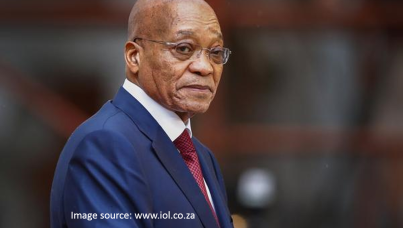
“I resign as president of the Republic with immediate effect. Even though I disagree with the decision of the leadership of my organisation.” These words of ex-president Jacob Zuma brought to end nine difficult years in the short history of the South African democracy.
The African middle class are thriving, and with that brings new opportunities. But who exactly are the African middle class? And how can we understand more about them?