Little trust in current Local Governments as South Africans demand better service delivery
For many South Africans, local government is experienced through the realities of daily life rather than political debates. Whether water comes from the tap, roads are maintained, infrastructure functions and communities remain safe, all influence how residents judge the performance of their municipalities.
As South Africans head to the polls on Wednesday, current local governments face a significant challenge in earning public trust, while incoming municipal administrations will need to demonstrate that they can deliver visible improvements rather than simply make promises.
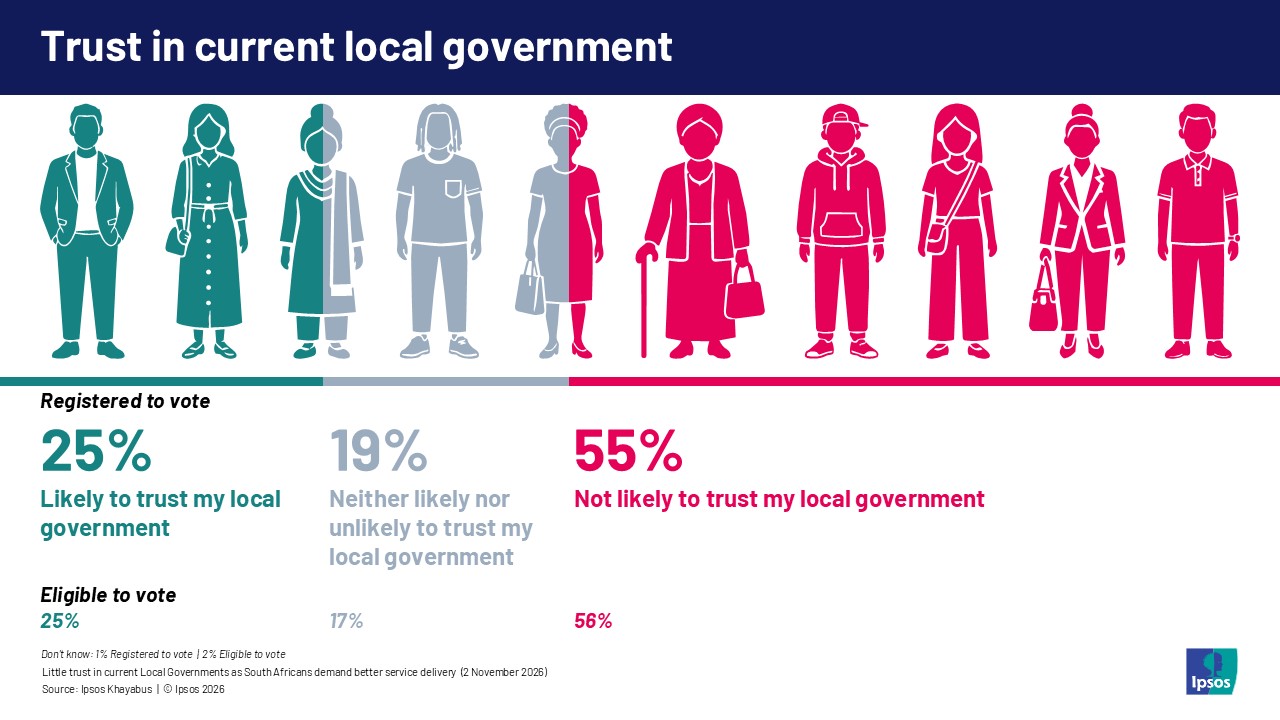
“Whether we look at registered voters or the broader adult population, the message is largely the same, that confidence in local government remains limited. Trust ultimately is earned through visible performance, making a difference to citizens lived reality,” says Mari Harris, Political Analyst at Ipsos in South Africa. “Residents often judge local governments through their everyday experiences of municipal services, infrastructure and community conditions. When these aspects of daily life are perceived to be deteriorating or failing, public trust becomes difficult to sustain.”
Ipsos conducted the second 2026 wave of its regular Khayabus “Pulse of the People” study from 12 September to 13 October 2026. A total number of 3,454 randomly selected South Africans over the age of 18 were interviewed face-to-face in their homes and home languages. The study is designed to provide insight into the views of South Africans from all provinces, settlement types and backgrounds. Results were weighted and projected to the population of South Africans aged 18 years and older who are eligible to vote.
The group who confirmed that they were registered to vote were filtered from this total and can be analysed separately. The rest of this press release will concentrate on the views of registered voters, but it should be mentioned that the views of all eligible South Africans in most cases did not vary more than 2 percentage points from those of registered voters only.
Key service delivery is not up to standard
Many South Africans are concerned about whether municipalities are fulfilling some of their most basic responsibilities. Infrastructure maintenance and reliable water and sanitation services emerged as significant concerns, two areas that directly affect residents’ daily lives and are often viewed as visible indicators of municipal competence.
More than two-thirds (68%) of registered voters agree that poor sanitation resulting from water interruptions poses a serious health risk in their communities. Similarly, 66% believe current local governments do not sufficiently understand the importance of maintaining infrastructure required for reliable service delivery.
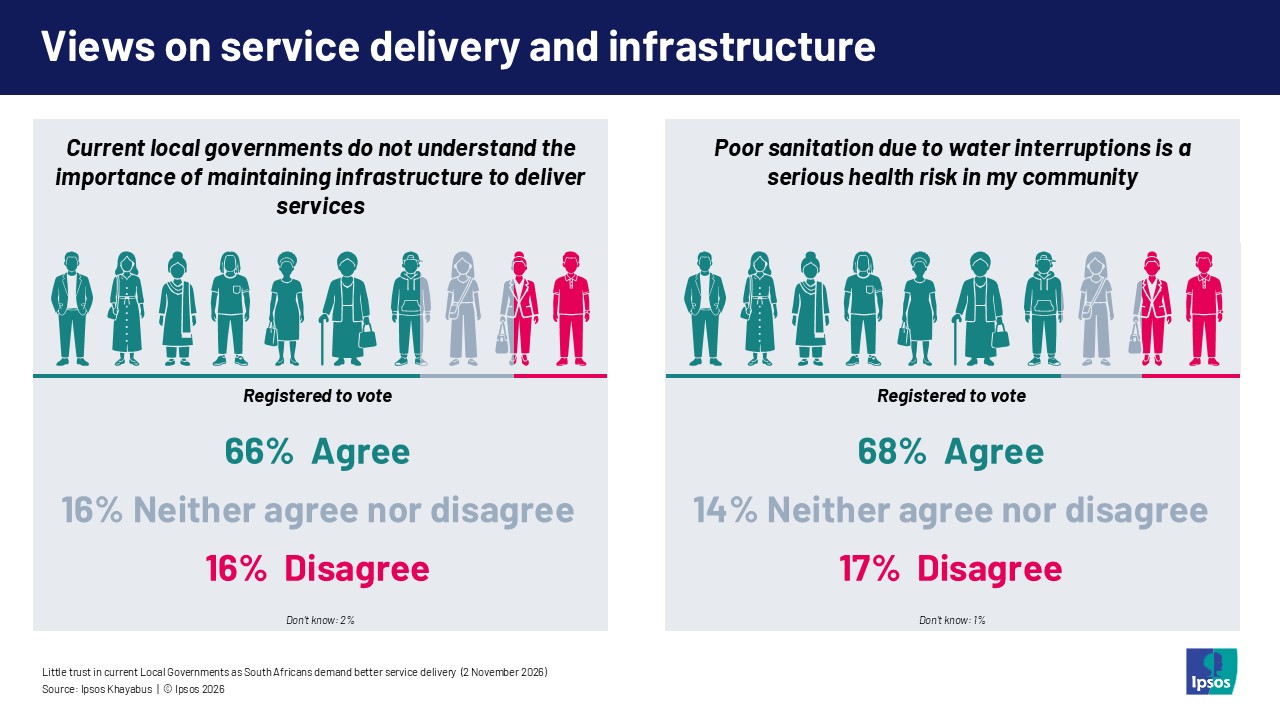
“Infrastructure maintenance often receives less attention than new development projects, but voters clearly recognise its importance,” says Harris. “When water interruptions become frequent and unpredictable, sanitation systems fail or community infrastructure deteriorates, residents may begin to question whether municipalities are prioritising the long-term maintenance needed to sustain service delivery.”
Concerns about governance extend beyond basic services to lawlessness
Many registered voters also express concern about what they perceive to be declining adherence to rules and regulations within their communities, with two-thirds of registered voters (66%) agreeing that South Africans increasingly disregard traffic regulations such as traffic lights and speed restrictions.
While all local governments are not responsible for traffic law enforcement, the finding points to wider concerns about governance, accountability and the functioning of systems that affect daily life.
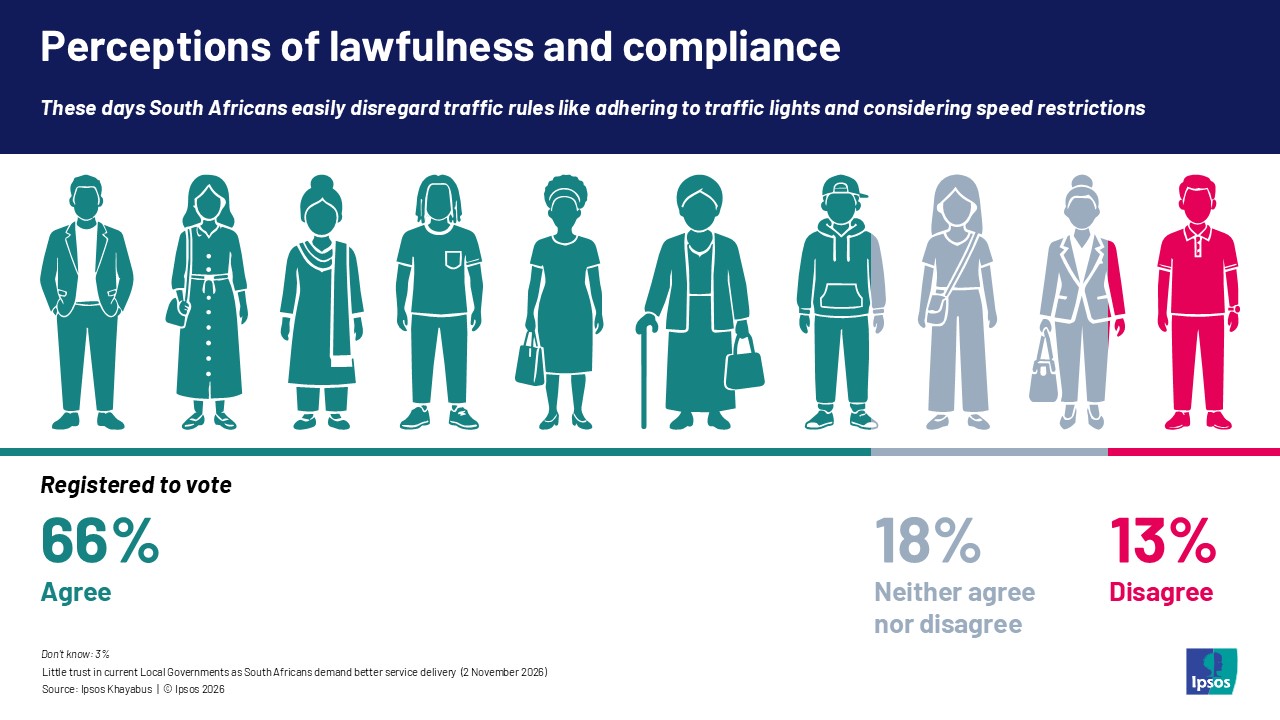
“This finding about adherence to traffic rules is important because it speaks to broader perceptions of governance and accountability,” explains Harris. “For many residents, issues such as non-functioning traffic lights, deteriorating roads, dangerous driving behaviour and limited enforcement of bylaws are among the most visible ways they experience local governance in practice. These everyday experiences become indicators of whether local systems are functioning effectively.”
“While each issue may seem relatively minor in isolation, collectively they influence how residents assess the capacity of local institutions and local governments. If visible problems remain unresolved, people may begin to question whether more complex challenges are being addressed effectively,” notes Harris.
Voters want competence and technical expertise
Despite widespread dissatisfaction with current performance, voters appear to have clear expectations for future local governments. Nearly seven in ten registered voters (69%) agree that newly elected local governments should prioritise appointing skilled and experienced local artisans and technicians after the elections.
The finding suggests that voters increasingly associate improved service delivery with municipal capacity and technical expertise rather than messaging from political appointees.
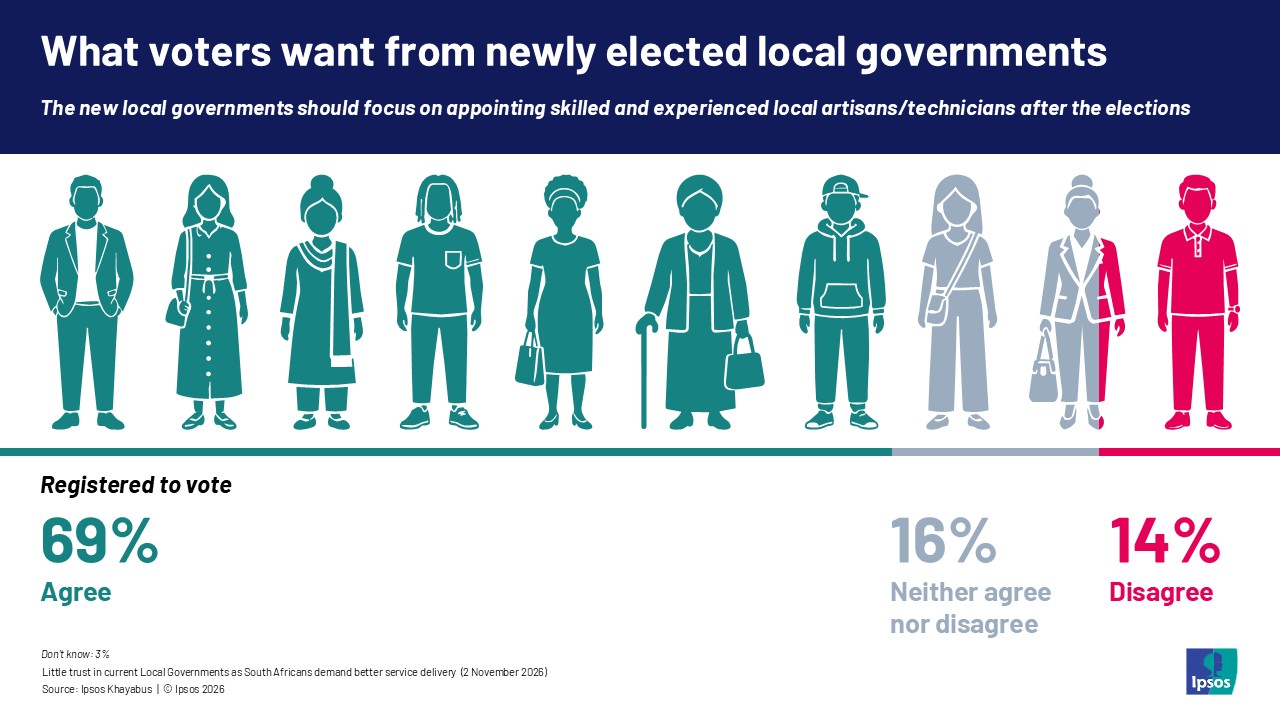
“Trust is not rebuilt through promises alone,” says Harris. “For many voters, confidence in local government will depend on whether they see tangible improvements in the services and infrastructure they rely on every day. Voters appear to have fairly straightforward expectations of local government: maintain infrastructure, improve service delivery, strengthen accountability and ensure that municipalities have the technical capacity required to deliver essential services. Ultimately, confidence in local government will depend on what people experience in their communities after the election, not on what they heard during the political campaigns.”
About the study
Khayabus:
Interviews were conducted by trained Ipsos interviewers in the homes and home languages of respondents. Interviews were conducted from 12 September to 13 October 2026. A scientific process of multi-stage stratified random selection distributed interviews in all areas of the county, including deep rural areas. This methodology ensured that the results are representative of the views of the universe (adult South Africans) and that findings can be weighted and projected to the universe. All results were collated and analysed in an aggregate format to protect the identity and confidentiality of respondents. In data processing filters were applied to isolate the group of respondents who are registered to vote. All sample surveys are subject to a margin of error, determined by sample size, sampling methodology and response rate. The margin of error, dependent on sample size, response rate and sampling methodology, at a 95% confidence level and a response rate of 50% is a maximum of ±1.67% for the sample of registered voters as a whole.