A third year begins

Two years on from the first confirmed case of Covid-19 in China and a myriad of unprecedented changes to our daily lives later, by the end of 2021 many had thought the worst was over. But the emergence of the Omicron variant meant that, instead, we entered the New Year with renewed anxiety, with the number of Covid-19 cases hitting 376 million globally in January 2022.
The first Ipsos What Worries the World release of the year saw Covid tightening its grip on the number one spot in the global public’s list of concerns, singled out by 35% as one of the most worrying topics facing their country, up three percentage points on December’s figure.
Since then, the dynamic has of course changed, and elsewhere in our Almanac we reflect on different aspects of the emerging polycrisis that we are now living through.
Throughout the pandemic period, Ipsos’ research programme has sought to keep us close to how people around the world were feeling and behaving. Here we take stock and look at what we learned about Covid (and its legacy) this year.
Covid-19 was still causing sleepless nights in January
Despite some fleeting optimism in 2021, Covid-19 was still at the epicentre of global concern in January 2022, even if it was not quite as prominent as it had been a year previously.
South Korea was the most worried country, with concern up 11 points from December 2021. Meanwhile, there were also double digit increases in concern in Argentina (+12pp), Great Britain and Saudi Arabia (both +10pp). Japan and France also joined the list of 11 countries where Covid-19 placed first on the public’s worry list.

Transition time?
Fast forward just one month and, while Covid-19 was still the primary concern for people around the world, certain countries were beginning to transition from surviving Covid-19 to living with Covid-19.
The UK announced its “Living with Covid” plan and Australia, Israel, and the Philippines reopened for vaccinated and unvaccinated tourists. The WHO also acknowledged Africa's transition out of the pandemic period.
Our Ipsos Global Trends survey found that attitudes towards vaccinations were still volatile. We also saw a wide disparity in support for making a Covid-19 vaccine “mandatory for anyone eligible to receive one”. More than three-quarters supported this in India, China, Malaysia, Singapore, and every Latin American country surveyed. But majorities opposed this across much of Central and Eastern Europe, as well as in the US.

Covid-19 no longer the top global concern
By March 2022, Covid-19 had been knocked off the top spot of our ranking of global worries, dropping out of the top five and recording its lowest score (24%) since it was introduced to our monthly What Worries the World survey back in April 2020.
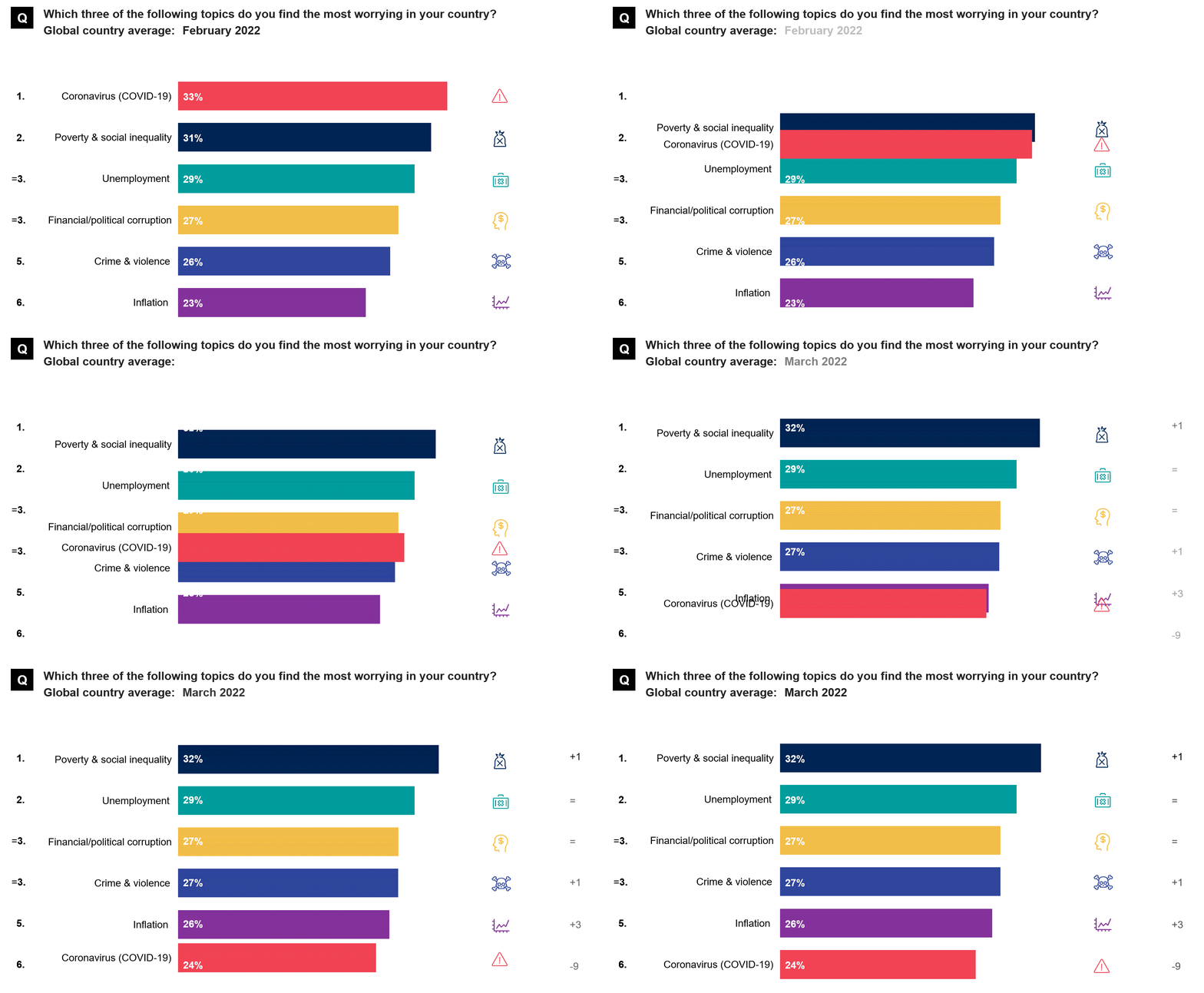
This was the month where inflation entered the top five of world worries for the first time, with 26% of people globally fearing its growing impact.
Although the fear of Covid-19 may have been starting to wane by March, the April wave of Ipsos Essentials was a stark reminder of the impact it’s already had on our lives.
54% of people acknowledged either a close friend or family member had been diagnosed with Covid-19 since the pandemic began
Worry has continued to drop throughout the year and the November wave of our What Worries the World survey finds concern at its lowest recorded level, with only 10% selecting it as one of the top problems facing their country. It is now no longer a number one concern in any of the 29 countries surveyed and globally concern is now 25 points lower than at the start of the year.
Three years on, what have we learnt?

Mental Health is as equally important as physical health
It had already become clear by the tail end of 2021 and the beginning of 2022 that as one global public health crisis was starting to decrease in momentum, another was revealing itself.
The full extent of the impact of Covid-19 on mental health will take some time to become fully apparent. But, already, almost four in ten across 29 countries (37% on average), expect worse mental health and wellbeing among children and young people to be a long-lasting outcome of Covid-19.
To further compound this, in Ipsos’ 2022 World Mental Health Day report, 76% of people now consider mental health as important as physical health.
Yet, investment in mental health services is still only a small fraction of overall healthcare spend – a balance which may now have to shift.

Inequality continued to rise
The pandemic has left us with all our old problems — and added some new ones. It exacerbated existing inequalities and disparities across age, gender, ethnicity, and geography. These have perhaps never been as visible as they are today.
These inequalities have been further aggravated this year by the cost of living crisis, which impacts those at the bottom much more than those at the top.
An important question emerging from the pandemic experience: How can we do more to bring people together in today’s difficult dynamic, when we have got so used to spending time apart from each other?


The future of work: an open question
It may be too early to tell how “sticky” many of our adaptive pandemic behaviours will be, and particularly difficult to predict the future of remote working.
Leaders want to see more employees back in the office, but employees now expect greater flexibility
It remains to be seen how this conflict will resolve itself. See our global report for the current state of play and recommendations on the path forwards. Are we on the road to a “new normal” or will we settle back into old habits? Our Two Years On: Lessons From Covid Times report reflects in more detail on what the pandemic has revealed and what it has concealed.
Table of content
- January - A third year begins
- February - War returns to Europe
- March - Antarctic heatwave
- April - A populist year?
- May - Cost of living crisis
- June - Women's rights
- July - A cruel summer
- August - A new Cold War?
- September - National identities
- October - Green Transport
- November - Peak population
- December - World in motion
|
|
|