National identities

The monarchies
One of 2022’s key moments was the death of Queen Elizabeth II on 8th September. Just three months earlier, she had reached the milestone of being on the throne for 70 years, making her the second longest-serving monarch in history after France’s Louis XIV (who became king at the age of four).
The passing of any long-standing leader can raises questions about a country’s identity: who are we, and who do we want to be? Here we share perspectives from five countries which still have a monarchy as head of state.
Britain
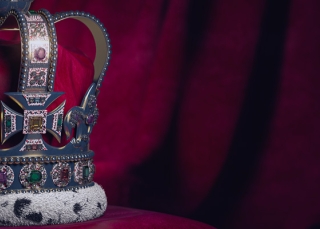
If 2022 is remembered for anything in the future in Britain, it seems quite likely to be as The Year The Queen Died. It is, quite literally, the end of an era. And yet, paradoxically, it does not seem likely to be a moment at which significant changes were made, whereas the seventy years of Elizabeth’s II reign have been ones in which the Monarchy was constantly evolving, reflecting big changes to British society and big changes to Britain’s place in the world. One of the most remarkable achievements of the Queen’s reign was keeping the Monarchy and the Royal Family relevant throughout that period.
One of the most remarkable achievements of the Queen’s reign was keeping the Monarchy and the Royal Family relevant throughout that period
As the monarchy has changed, so has its relationship with the media, and journalists today report, investigate and often challenge all aspects of its role; one consequence of this is that they seek to understand public opinion about the monarch, the Royal Family and the institution, and so opinion polls on the subject, almost unknown in 1952, are now frequently conducted.
So far as we are aware, the first polls in this country about support for the Monarchy were commissioned by the BBC in the late 1960s; it must have felt a daring venture at the time. But by the 1990s, when many newspapers were openly criticising or questioning the Queen, the Royal Family and many aspects of the way they performed their duties and the usefulness of the institution, polls had become taken for granted as part of the reporting. And among the things they consistently showed was that a substantial majority of the public continued to support the Monarchy and believed that Her Majesty personally was doing her job well.
This has continued to be the case into the 21st century. At its peak, support for the Queen came as close to unanimity as almost any subject on which we have measured public opinion. In 2012, 90% of people said they were satisfied with the way that she was doing her job, and only 7% dissatisfied; even among those who said that they would prefer to abolish the monarchy and make Britain a republic, only a minority were dissatisfied with the Queen herself. Earlier this year, with differently-framed question, we found that 69% had “favourable… opinions and impressions” of the Queen, while 12% had unfavourable ones. While that is not quite unanimous, it is an impressive margin of approval.
And the first signs are that this will not immediately change under King Charles III. Both our polls and those of other companies after his accession show no fall in support for the Monarchy; some indeed, suggest a slight strengthening. Three in five, 61%, now expect him to do a good job as King. If they are right, expect further evolution in the monarchy – but no revolution.
Roger Mortimore

Canada and the Monarchy – a Complicated Relationship
With the death of Queen Elizabeth II, Canadians are conflicted on the role of the monarchy in Canada
Canadians loved the Queen, with 82% believing she did a good job in her role as monarch – an approval rating that is the envy of every Canadian politician. But now that her late Majesty has passed, half (54%) believe that Canada should end its formal ties to the monarchy.
Support for the continuation of the monarchy in Canada tends to ebb and flow based on the behaviour of our royals. During times of scandal or disfunction, support dips; during times of fanfare and jubilee, support rises. There is a great generational divide in attitudes. Older Canadians are closer to the monarchy than younger Canadians. Regionally, Quebecers – many of whom believe Quebec is a conquered nation – are much more likely to harbour republican sentiment than English Canadians.
Compounding the conflicted nature of Canadians on the monarchy are the many compelling arguments on both sides. Canadians acknowledge that the constitutional monarchy helps to define Canada, that it makes us different from the United States (the eternal Canadian struggle), that it is important to the heritage of Canada and helps to define who we are.
However, Canadians also believe that the royal family shouldn’t have any formal role in Canadian society, that the monarchy is too linked to the history of colonialism and slavery to have a place in Canadian society, and that Canada won’t be truly independent until it ditches the monarchy.
The jury is still out on King Charles III. He has baggage. Only a slim majority (56%) believe he will do a good job, given the big shoes he has to fill. But a stronger majority believes that William and Kate will keep the monarchy relevant to Canadians – and those adorable children of theirs may secure its future for longer, provided they remain positively-contributing members of the Firm.
In order to enact constitutional reform, it must receive the approval of the House of Commons, Senate, and at least seven of the ten provincial legislatures representing at least 50% of Canada’s population. This is a high bar. While anti-monarchist sentiment prevails in Quebec, it does not in the nine other predominantly English-speaking provinces wherein a majority supports the current form of government. Even though a majority of us, overall, believe we should end ties, the reality is that the proportion who want to sever ties would need to be well into the 70s nationally in order to meet the required threshold for constitutional change. Most Canadians support holding a referendum on the future of the monarchy, but such an act would be mere optics given the challenges of constitutional reform.
And so, King Charles III will continue to be the King of Canada. William will be the next, and we might even see George on the throne. This likely secures the monarchy in Canada for the next 50 years, until such time as demography and immigration inevitably changes Canada to the point where having a head of state in the United Kingdom becomes completely untenable.
And so, in the meantime, God Save the King.
Sean Simpson
Netherlands
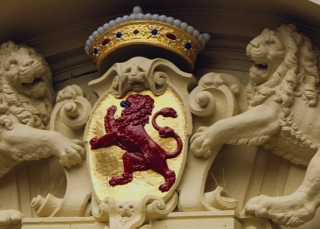
Trust in the King has declined even further
Ipsos’ polling in April 2022 paints a bleak picture for the Dutch royal family.
Trust in the King is now at 47%, a record low since we first started tracking the extent to which the Dutch trust their head of state in 2014. In 2020, trust in the King was still at 77%.
A series of scandals and incidents caused trust to fall by a whopping 30 percentage points
In the midst of a lockdown, and while the governing coalition urged citizens to postpone travel plans, the royal family flew to their vacation resort in Greece, only to come back a few days later to publicly apologise.
Although bad publicity is the main driver of the eroding of trust in the King, support for the monarchy as a system of governance has been under pressure in the Netherlands as well. Almost six out of ten Dutchies (58%) say they want to keep the monarchy in place, a 16-point decline compared to 2020, when 74% supported the system. Our poll suggests that it’s mostly the youngsters that oppose the monarchy. Almost a third (32%) of those aged 18-34 say they would rather have a republic in the Netherlands. Only half of them (47%) support the monarchy, while support among the over 55s is much higher (68%). Now, the interesting question is whether this reflects an age-effect – which would suggest that people become more inclined to support the monarchy as they grow older (and become a bit more conservative); or whether this reflects a generational shift in attitudes towards the system of governance in the Netherlands. In the latter case, the royal family does need to worry…
Sjoerd van Heck

Norway: Strong support for the monarch – across all sections of the population
Since 2003, Ipsos’ socio-cultural survey, the "Norwegian Monitor", which interviews 3,500 people every other year, has asked what form of government Norwegians would prefer. During these twenty years, support for the Norwegian Royal House has only increased. In the latest wave, 66% answered that they prefer a monarchy, while only 20% favour a republic.
Norwegian monarchists will be happy to note that support is evenly distributed across the population
It is just as high among the youngest as it is among the oldest, just as it is among men and women, in town and rural areas, etc.
In contrast to several other European royal families, there have never been any scandals connected with Norwegian regents since Norway regained its sovereignty and got its own royal family back in 1905. The first two Norwegian kings in modern times were both much loved. The same applies to today's regent. His Majesty King Harald is perceived as wise, warm and having a great sense of humour. Together with Her Majesty Queen Sonja, they always seek to be present to share joys and sorrows with the Norwegian people. They always quickly react and show they care when major events happen in Norway, both in case of natural disasters or terror, as in the Utoya attack in 2011. The future looks promising for the monarchy with regard to the next generation. Crown Prince Haakon, heir of the throne, is also seen as wise and warm, followed by Princess Ingrid Alexandra.
The only disturbing element in the Norwegian Royal House could be the Crown Prince's only sister, Princess Marta Louise, with her “alternative” view on life. But, as pragmatic as Norwegians are, the Royal House has let her step back from frontline duties and it has not so far had an impact on Norwegians’ enduring affection for their Royal family.
John Spilling
Nathalie Warembourg
Spain: a partial recovery in the Monarchy’s popularity
The strength of a democracy comes from the strength of its main institutions. And one of these is the Monarchy. The image of, and public confidence in, the Crown, which had enjoyed good health since the restoration of democracy in our country, suffered a strong erosion a decade ago due, among other things, to cases of corruption linked to the monarch and some of his relatives.
It is the head of the institution that confers legitimacy on the Monarchy, and not the other way around. With the abdication of Juan Carlos I and the arrival of Felipe VI as head of state, both the image of and confidence in the Monarchy on the part of citizens recovered, but without reaching pre-crisis levels. Currently, supporters of a parliamentary monarchy continue to prevail in Spain.
The gap with those who would prefer a Republic has narrowed
A majority of Spaniards now favour holding a referendum on the form of government. And, among young people and left-wing voters there are even more who would opt for a Republic rather than a Monarchy.
Jose Pablo Ferrandiz
Table of content
- January - A third year begins
- February - War returns to Europe
- March - Antarctic heatwave
- April - A populist year?
- May - Cost of living crisis
- June - Women's rights
- July - A cruel summer
- August - A new Cold War?
- September - National identities
- October - Green Transport
- November - Peak population
- December - World in motion
|
|
|