

From Betting to Participation
Culture Has Become Marketing's Most Powerful Force - Read our latest POV
Marketing used to be about reaching the right people with the right message. Today, success increasingly comes from understanding which cultural currents your audience is swimming in, and more importantly, which ones they're swimming against.
Many brands still assume culture is singular and moving in one direction. The reality is different. Culture has fragmented into multiple simultaneous movements, each with its own values, identities, and social rules. The tactical sports analyst and the emotional superfan are not competing for dominance. Both are thriving. The data obsessive can also trust intuition. Contradictory identities now comfortably coexist.
We've shifted from what historians describe as a literate society to a symbolic society. Institutions no longer control how ideas spread. Stories move peer-to-peer at digital speed. Being memorable often matters more than being consistent. Consumers absorb hundreds of emotionally charged signals every day, while competing subcultures flourish side by side.
For marketers, the implication is profound. Consumers increasingly want brands that help them express identity, find belonging, and reinforce beliefs.
For sports betting operators, this creates a significant opportunity. Sports betting sits at the intersection of several powerful cultural forces:
- the democratization of expertise,
- the rise of participation culture,
- the gamification of everyday life, and
- a growing belief that status can be earned through knowledge rather than institutions.
Understanding these dynamics is becoming the difference between brands that feel native to sports culture and those that feel like outsiders trying to buy their way in through excessive advertising.
The Cultural Trinity: Ipsos' Framework for Modern Marketing
Traditional research asks what consumers want. Cultural research asks who consumers are becoming.
At Ipsos, we've developed the Cultural Trinity framework to decode how culture operates in fragmented markets.
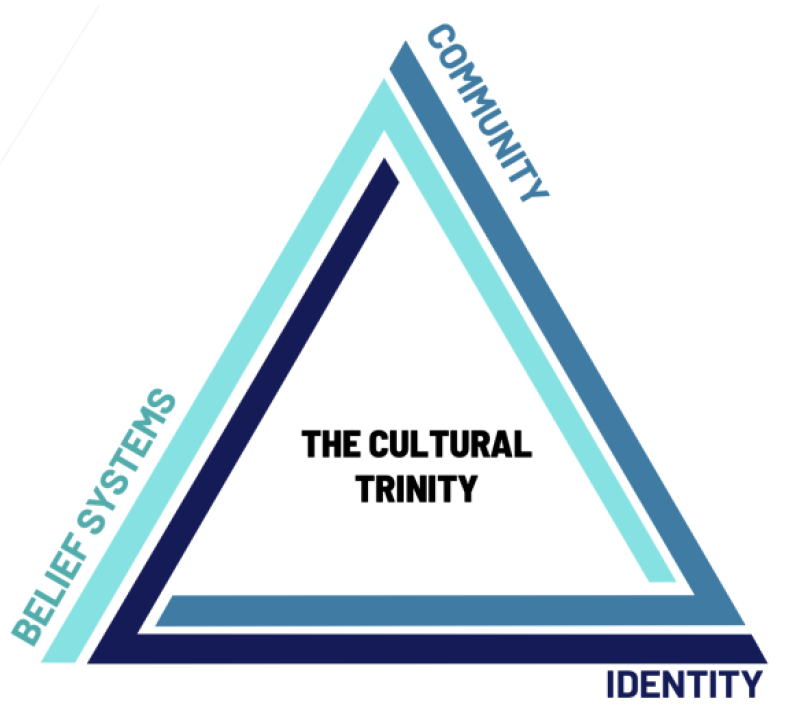
Identity
Identity is who people become through their choices.
In sports betting, identity increasingly revolves around competence. When someone places a micro-bet on the next corner kick during a World Cup match, they are often doing more than seeking financial reward. They are making a statement:
I understand what's happening here.
Community
Community is how people create belonging and recognition.
The group chat during a match. The betting pool at work. The post-game debate. The screenshot of a winning prediction.
Community today is not simply about being part of something. It is about participating in ways that others can recognize and reward.
Belief Systems
Belief systems are the hidden rules that shape how people interpret the world. They influence what feels fair, authentic, and meaningful. They help determine which brands people trust and why.
When someone believes expertise should matter, that information creates advantage, or that knowledge can outperform conventional wisdom, those beliefs influence how they engage with sport, prediction, and betting.
Something powerful happens when all three dimensions align. Consider retail investing:
- Identity: "I'm financially savvy."
- Community: "We're taking on Wall Street together."
- Belief System: "Access to information should level the playing field."
Sports betting increasingly operates in the same space. The most successful platforms are no longer facilitating wagers alone. They are helping fans perform expertise, participate in communities, and express beliefs about understanding the game.
The Cultural Architecture of Sports Fandom
Our World Cup research revealed sports fandom as one of the most sophisticated cultural systems in modern life: a complete framework for identity, community, and belief systems that rivals religion in psychological importance.
Identity
Sports fans anchor identity in origin stories. The first match with dad. The moment Messi scored. La remontada. These are not simply memories. They are explanations of how people became who they are.
Modern fandom has evolved beyond simple loyalty into recognizable fan identities: the tactical analyst, the stats expert, the emotional superfan, the historian, the optimist, and the skeptic. Fans do not simply support teams. They perform a role within the culture of fandom itself.
Community
Community operates at multiple scales simultaneously. Family watching together. Friends in a group chat. Entire nations united around a single event. Major sporting moments create something increasingly rare: a shared experience that connects both intimate circles and millions of strangers.
As one of our research participants described it:
"Soccer gives me a sense of collective belonging. In a world where we are often focused on our individual businesses or studies, the 90 minutes of a match are the only time I feel like I am breathing in unison with millions of other people."
Belief Systems
The belief systems run even deeper:
- Sport represents meritocracy in an unfair world.
- Individual brilliance should be rewarded.
- Comebacks prove fate can be reversed.
- Underdogs validate that hope has meaning.
Increasingly, fans derive status not only from loyalty but from knowledge. Understanding tactics, reading momentum, debating selections, and predicting outcomes have become cultural assets in their own right. Modern sports culture rewards interpretation as much as passion.
This is why sports betting has become so culturally significant. It does not create a new relationship with sport. It builds on an existing one. The same forces that make fandom powerful - identity, community, and belief - also create fertile ground for prediction, analysis, and participation.
How Sports Betting Transforms the Cultural Game
When betting enters the picture, it doesn’t replace fandom. It changes the role the fan plays within it.
Traditional fandom asks a simple question: Who do you support?
Sports betting introduces a second question: What do you understand?
That shift from loyalty to interpretation is one of the most important changes reshaping modern sports culture.
For decades, the category has described itself through the language of risk, odds, wagers, and winnings. Yet consumers increasingly describe it differently. Many fans see betting less as a way to make money and more as a way to engage more deeply with sport. Researching injuries. Studying tactics. Tracking form. Comparing opinions. Predicting outcomes. The wager often becomes the final expression of a much larger process of participation.
This helps explain why financial reward often plays a secondary role to something more powerful: validation.
Across our research, players consistently describe sports betting as an opportunity to put knowledge to work, test judgement, and demonstrate expertise. Winning becomes more than a financial outcome. It becomes evidence that their understanding of the game was correct.
As one participant explained:
"For me, it deepens the way I understand the game through thorough analysis in a bid to predict the outcome of the game."
Throughout our research, we’ve identified three distinct motivational domains that map perfectly onto the Cultural Trinity.
Affirmation (Identity)
Successful bettors do not simply win money. They build identities around being knowledgeable, insightful, or ahead of the crowd. They want to be the friend who called the upset, the colleague who predicted the result before kickoff, the person others turn to for advice.
One respondent captured this perfectly:
"Fans validate their football IQ when they bet. When a fan spots a tactical shift before it hits the scoreboard, they want to lock in a prediction to prove they read the game correctly."
In this context, betting becomes a performance of expertise. Success reinforces identity. Even failure can create opportunities to learn and improve.
Connection (Community)
One of the most interesting findings from our research is that betting often strengthens rather than replaces fandom communities. Prediction creates new reasons to interact before, during, and after games.
- Predictions become conversation starters.
- Leaderboards create friendly competition.
- Successful picks become stories worth sharing.
- Even losses generate debate and discussion.
Traditional fandom creates community through shared emotion. Betting adds another layer: shared interpretation.
The strongest betting experiences complement fandom rather than compete with it. The most resonant brands deepen engagement with sport instead of distracting from it.
Control (Belief Systems)
Traditional sports fandom often operates on faith: fans remain loyal even when evidence suggests they shouldn't. Betting introduces a parallel belief system built around understanding. In research, players talk about patterns, probabilities, matchups, research, and learning. They believe uncertainty can be navigated through knowledge.
The most engaged bettors rarely describe themselves as gamblers. They describe themselves as students, strategists, analysts, and competitors. For them, betting creates a sense of agency within an uncertain environment. It transforms sport from something they watch into something they actively interpret.
Taken together, these forces point toward a larger category shift. The future of sports betting may belong less to brands that facilitate wagering and more to brands that facilitate participation.
Strategic Imperatives for Sports Betting Leaders
If betting is increasingly becoming a form of participation rather than simply a transactional activity, operators should rethink how they define growth, loyalty, and competitive advantage. Here are six practical recommendations coming out of our research.
1. Stop Optimizing for Bettors. Start Optimizing for Fan Motivations.
Many sportsbooks segment customers by behavior:
- High-value bettors
- Casual bettors
- Live bettors
- Parlay bettors
- Frequency of play
These are outcomes. They are not motivations.
Beneath those behaviors sit deeper drivers:
- Affirmation and recognition
- Connection and belonging
- Control through learning and mastery
The opportunity is to build experiences around why people engage, not simply how they engage.
Ask:
- Which customers are trying to become smarter?
- Which are seeking recognition?
- Which are looking to connect with others?
- Which are using betting to participate more deeply in sport?
Those answers may be more valuable than understanding product preferences alone.
2. Treat Expertise as a Product Feature.
Many bettors derive value from becoming more knowledgeable. The opportunity is not simply to make betting easier. It is to make expertise easier.
Educational content, AI-assisted insights, prediction tools, personalized recommendations, and performance tracking can all strengthen engagement by helping fans feel smarter and more confident.
The question shifts from: How can we help people place more bets?
to: How can we help people feel smarter?
3. Build Recognition Systems, Not Just Reward Systems.
The industry has become highly effective at rewards. Yet many bettors are seeking something different: recognition.
They want to be right. They want to be respected. They want acknowledgement for their understanding of the game.
This creates opportunities beyond traditional loyalty mechanics:
- Prediction rankings
- Expertise badges
- Achievement systems
- Public streak tracking
- Shareable forecasts
- Community recognition
The future of loyalty may be built as much on reputation as it is on rewards.
4. Own More of the Fan Journey.
Most sportsbooks concentrate their experience around the wager itself, yet fans engage long before and long after a bet is placed.
- Before the event: research, debate, prediction.
- During the event: analysis, discussion, and interpretation.
- After the event: reflection, learning, and storytelling.
The strongest brands will participate across the entire journey through content, social engagement, performance tracking, and community experiences.
The wager may be the shortest part of the customer journey.
5. Measure Participation, Not Just Transactions.
Deposits, handle, wagers, and revenue remain essential metrics, but they may no longer tell the full story. If sports betting is evolving into a participation platform, operators should also consider:
- Predictions shared
- Content consumed
- Community participation
- Educational engagement
- Social interactions
- Return visits not tied to wagering
These behaviors may provide earlier signals of future value than wagering activity alone.
6. Build Cultural Intelligence as a Competitive Advantage.
Transaction logs reveal what customers did. They rarely explain why customers did it.
Understanding whether a fan is seeking mastery, status, connection, validation, entertainment, or belonging requires a different lens - one rooted in culture, motivation, and human understanding.
As products, promotions, and odds become increasingly similar, cultural insight may become one of the few remaining sources of sustainable competitive advantage.
Planning for the Future
The sports betting industry is entering a new phase of maturity. Growth will increasingly come not from creating more bettors, but from creating more participants.
Technology, regulation, and AI will continue to evolve, but the underlying human motivations will not. Fans will continue to seek identity, belonging, recognition, and understanding.
The Cultural Trinity reminds us that every prediction is an expression of identity, every shared pick is an act of community, and every bet reflects a belief about how the game works. Operators that thrive will be those that recognize a simple truth:
They are not simply facilitating wagers.
They are facilitating participation.
And in a category increasingly defined by expertise, recognition, and connection, that distinction may shape the next generation of sportsbook leaders.
About Us
World Cup research featured in this POV was conducted by Ipsos Understanding Unlimited (IUU), Ipsos' qualitative research practice.
IUU helps organizations uncover the motivations, cultural forces, and emotional drivers that shape behaviour. They collect and analyze human-centric stories through ethnography, in-depth interviewing, online communities, co-creation, digital journaling, and behavioural science.
In a marketplace where products increasingly look alike, IUU helps brands move beyond simply measuring behaviour to unearthing the motivations behind it – placing human understanding at the heart of better decisions.
![[WEBINAR] Ipsos Reputation Council 2026: Life After Predictability](/sites/default/files/styles/list_item_image/public/ct/event/2026-09/thumbnail-templates%20demo_1.png?itok=wgA7L90n)

![[WEBINAR] Ipsos Global Trends 2026: The Canadian Edition](/sites/default/files/styles/list_item_image/public/ct/event/2026-08/thumbnail-gt-26.png?itok=kAF_s5h8)