India Ranks #3 Globally on Ipsos Quality of Care Perception Index, Reflecting Positive Views on Trust and Access
At a time when healthcare systems across much of the world are under mounting pressure, India stands apart.
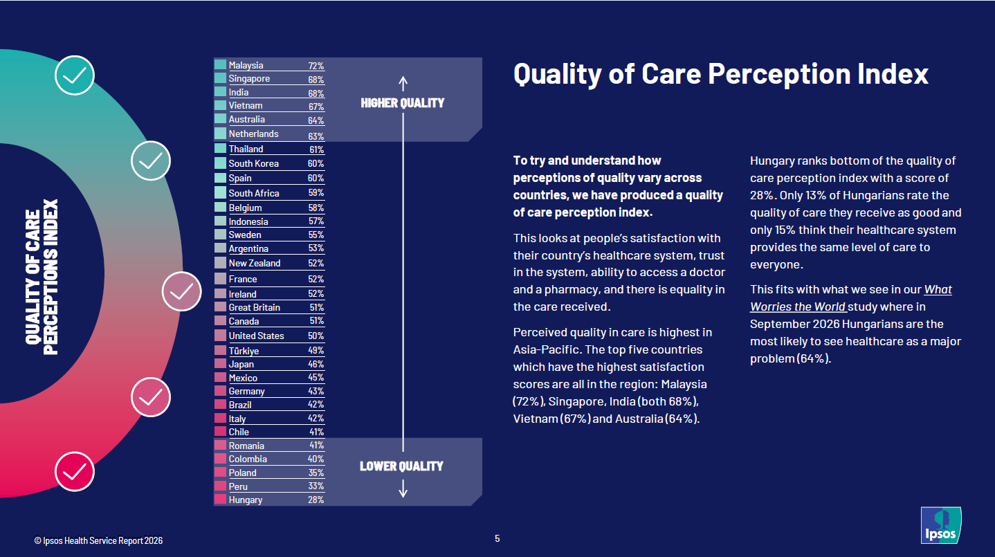
The latest Ipsos Health Service Report 2026 finds India ranking third globally on the Ipsos Quality of Care Perception Index, placing it among the world's best-rated healthcare systems and ahead of many advanced economies on measures of public confidence, healthcare access and trust.
The findings reveal a striking contrast with the broader global healthcare landscape. Across many countries, healthcare debates are increasingly dominated by concerns over lengthy waiting lists, overstretched health services, workforce shortages and declining confidence in care. In India, however, citizens are significantly more likely to say healthcare is accessible, improving and worthy of their trust.
Yet the report also identifies a challenge that could shape the next phase of healthcare development in India: affordability. While Indians are among the most positive globally about the healthcare system, many remain concerned that quality healthcare remains financially out of reach for large sections of the population.
India Joins the World's Healthcare Leaders
India ranks #3 globally on the Ipsos Quality of Care Perception Index, alongside Singapore and behind only Malaysia. Nearly seven in ten Indians (68%) positively rate the quality of healthcare available to them, while 64% trust the healthcare system to provide the best treatment when they need it.
At a time when confidence in healthcare systems is under pressure in many developed markets, India is among the countries with the highest levels of confidence in healthcare quality and treatment outcomes. The findings underscore the strength of public perceptions around India's healthcare system and its ability to meet citizens' needs.
Leading the World on Healthcare Access
India records the highest score among all 32 countries surveyed for ease of obtaining a doctor's appointment, with 73% saying they can secure care when needed. Access extends beyond physicians: 81% report easy access to pharmacies, reinforcing India's position as one of the most accessible healthcare markets globally.
This is particularly noteworthy given that waiting times emerge as the leading healthcare-system concern globally. While healthcare access remains a challenge in many markets, Indians are considerably more likely to view accessibility as a strength of the healthcare system.
Belief in Healthcare quality further improving
More than half of Indians (54%) expect healthcare quality in their local area to improve over the coming years, compared with a global average of 31%. The finding places India among the most optimistic countries surveyed and points to a strong belief that healthcare services will continue to improve.
This confidence in the future reflects positive experiences with the healthcare system today and reinforces India's standing as one of the world's most future-positive healthcare markets.
Biggest problems facing healthcare systems in 2026
42% identify the cost of accessing treatment as a major healthcare-system challenge, The issue resonates widely, with 74% agreeing that many people in India cannot afford good healthcare.
Some of the other problems cited included poor quality treatment (36%), low standards of cleanliness (28%) and poor safety (25%) – poor safety for the most pronounced for India.
Top Health Priorities by Markets
The survey also identified top healthcare priorities for key markets.
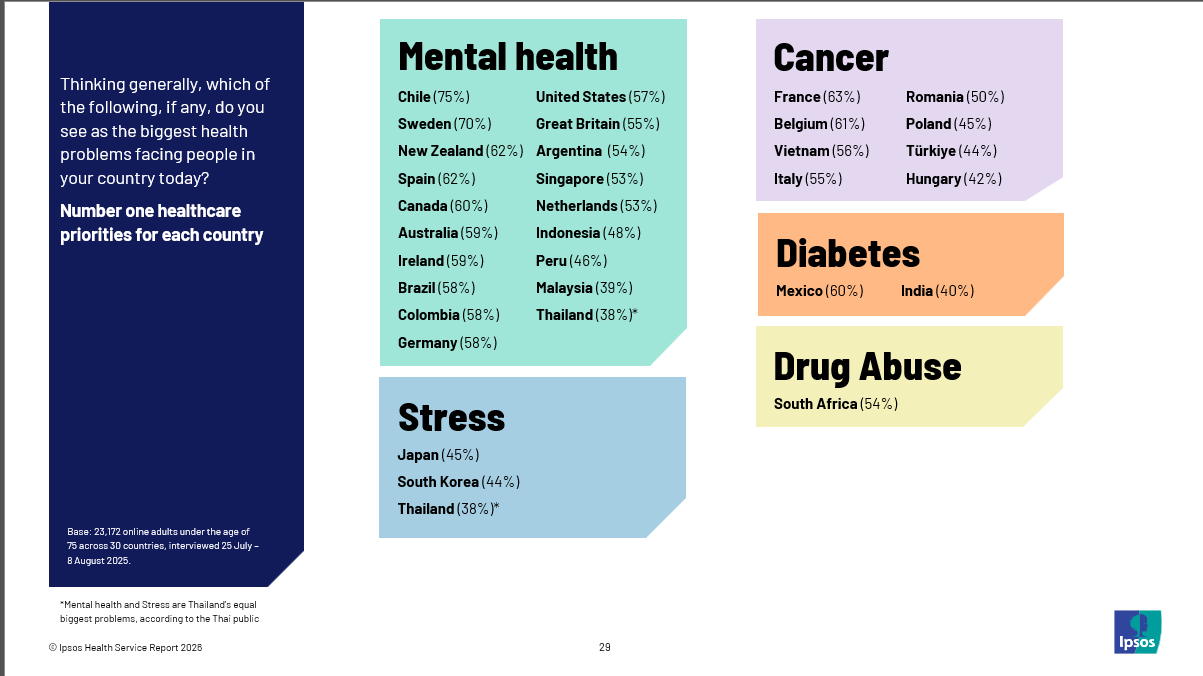
Diabetes (40%) emerged the top health priority for India, followed by mental health (37%), stress (33%), obesity (20%) and drug abuse (14%) among others, reflecting the growing prominence of non-communicable diseases and mental wellbeing as key public health concerns.
Attitudes to Healthcare
Indians are taking an increasingly active role in managing their health. With 76% frequently thinking about their mental wellbeing and 78% supporting mandatory vaccination against serious infectious diseases, there is clear evidence of strong public engagement with both prevention and overall wellbeing. Yet this growing health consciousness exists alongside concerns about system capacity and access. While 59% view the healthcare system as overstretched and 62% report long waits for doctor appointments, 74% believe many people still cannot afford good healthcare. As a result, 70% say people often rely on over-the-counter medicines or home remedies without professional consultation, highlighting how affordability and accessibility continue to shape healthcare behaviours in India.
Gauri Pathak, Chief Commercial Officer & Healthcare Research Lead, Ipsos India said, “India stands out for strong public confidence in healthcare quality, trust and access at a time when healthcare systems globally face mounting pressure. The opportunity now is to build on these strengths by improving affordability, addressing concerns around safety and cleanliness, and meeting rising expectations around prevention, mental wellbeing and chronic disease management. Together, these findings signal a shift towards a more holistic and patient-centred vision of healthcare in India.”