Public Transport, Mobikes and Walking Lead India’s Mobility Choices: Ipsos Mobility Report 2026
Public transportation, mobikes and walking have emerged as India’s most preferred and enjoyed modes of mobility, according to the inaugural Ipsos Mobility Report 2026, a 31-country Global Advisor survey that maps mobility choices, safety perceptions, sustainability attitudes and brand preferences.
Public transport leads with a 24% share, followed by mobikes and walking at 18% each. Cars and traditional taxis account for 7% each, while bicycles stand at 6% and ride-hailing at 2%. Notably, these modes are also the most enjoyed, mirroring the same order of preference. India stands out globally for its low reliance on cars as a primary mode of mobility, even as a majority of the 31 markets surveyed continue to favor cars, led by New Zealand, the US, Australia, Canada and Italy.
Public transportation
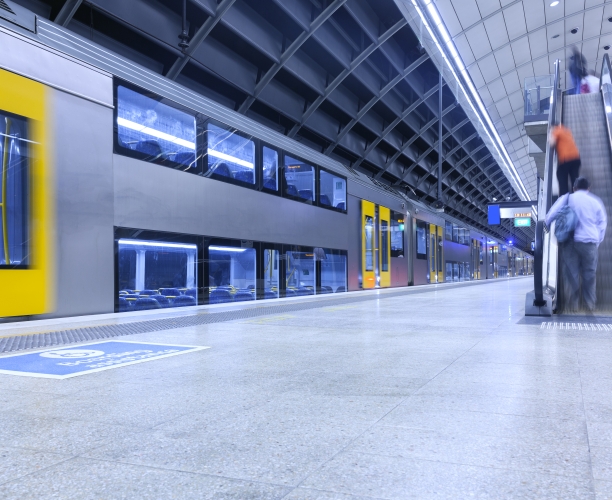
Markets such as Singapore, Peru and South Africa report the highest preference for public transportation. While it is also the most enjoyed mode in these regions, the narrower gap between preference and enjoyment indicates that usage is, in part, driven by necessity. Accessibility remains a key factor, with 64% of Indians reporting access to public transport options in their area, compared to 80% in Singapore.
On safety, 66% of Indians rate public transportation in their area as safe, placing India in the mid-tier globally. China leads with 82%, followed by Singapore at 80% and Indonesia at 75%. Public transport is also perceived as the most affordable option, although it adds pressure on household budgets. At the same time, 6 in 10 Indians say they prefer public transport over personal vehicles for environmental reasons, signaling a shift toward more sustainable mobility choices.
“Public transport emerging as the top choice in India is not surprising. A strong ecosystem of metro rail and buses, increasingly electrified and air-conditioned, supports daily commuting and forms the backbone of urban mobility. Motorcycles or mobikes complement this with their ability to navigate dense traffic. The government is also emphasizing public transportation as a sustainable alternative to personal vehicles,” said Balaji Pandiaraj, Head of Automotive & Mobility Development (AMD) and Customer Experience (CX), Ipsos India.
Strong love for cars
Despite its low share in daily mobility, the car continues to hold strong aspirational value. Three in ten Indians say it is impossible to imagine life without a car, while 46% say they prefer owning one even if it is not essential. After all, cars in India continue to be viewed as a strong symbol of status and social mobility. Though car penetration in India remains low at 26-34 cars per 1,000 people, with only 7.5–8% of households owning a car. In contrast, around 50% of households own a two-wheeler. Globally, China has approximately 183 cars per 1,000 people, while the US has 596 cars per 1000 people. Even so, India is already the third-largest automobile market and is projected to have 500 million vehicles on the road over the next 25 years.
Ownership levels vary significantly across states, from 45.2% in Goa to just 2% in Bihar.
Electric Vehicles
Interest in electric vehicles is gaining traction, with 40% of Indians saying driving an EV is appealing.
Current EV penetration stands at 8.36%, including 6.4% for two-wheelers and 4.3% for four-wheelers, while India targets 30% penetration by 2030. Encouragingly, 63% of Indians say they are likely to adopt an EV within the next five years. However, expectations from policymakers remain high, with 56% calling for faster government action and 66% supporting a reduction in road user charges such as tolls to accelerate EV adoption.
Globally, interest in EVs is highest across emerging markets such as Indonesia, Chile, China, Thailand, Colombia and Peru, while it remains subdued in developed markets including Japan, Belgium, France, Germany, Canada and the US.
Driverless Cars
Perceptions of self-driving cars in India remain relatively positive, with 47% of respondents saying they would feel safe riding in one. This places India among the more accepting markets, alongside Thailand and Malaysia, while skepticism is more pronounced in European countries and Canada.
Technology, trust and geopolitics
Car buying decisions are increasingly influenced by technology, trust and geopolitics. A majority of Indians, at 62%, say they have no preference between technology-led brands and traditional automakers, while 22% prefer established brands and 16% lean toward tech-driven players. At the same time, 62% express interest in new in-vehicle technologies, even as there is a perception that modern cars may already be overly complex.
As vehicles become more connected, concerns around data privacy are growing, with most consumers expecting the government to enforce regulations to safeguard personal data. While 6 in 10 Indians say the country of origin does not influence their purchase decisions, geopolitical considerations still play a role. Globally, consumers indicate reluctance toward cars from China, India and the US, and Indian consumers themselves express hesitation toward both domestic and Chinese brands.
“Badge value continues to matter in India, with consumers exposed to a wide array of global brands. However, this is evolving as Indian automakers such as Maruti Suzuki, Tata Motors and Mahindra & Mahindra introduce technologically advanced products tailored to local needs,” Pandiaraj added.
India’s mobility landscape remains defined by public transport-led and two-wheeler-driven practicality, even as cars retain aspirational appeal and electric vehicles emerge as the next major growth opportunity.
Technical note: For this survey, lpsos interviewed a total of 23,722 adults aged 18 years and older in India, 18-74 in Canada, Republic of Ireland, Malaysia, South Africa, Türkiye, and the United States, 20-74 in Thailand, 21-74 in Indonesia and Singapore, and 16-74 in all other countries.
The sample consists of approximately 1,000 individuals each in Australia, Belgium, Brazil, Canada, mainland China, France, Germany, Great Britain, Italy, Japan, New Zealand, Spain, and the U.S., and 500 individuals each in Argentina, Chile, Colombia, Hungary, Indonesia, Ireland, Malaysia, Mexico, the Netherlands, Peru, Poland, Singapore, South Africa, South Korea, Sweden, Thailand, and Türkiye. The sample in India consists of approximately 2,200 individuals, of whom approximately 1,800 were interviewed face-to-face and 400 were interviewed online.