Ipsos Generations Report 2026 - Continuity Vs Rupture - Redefines Generational Thinking
The Ipsos Generations Report 2026 explores one of the defining tensions shaping societies and economies today: continuity versus rupture. The report highlights major demographic, workplace and behavioural shifts that are redefining growth assumptions for governments, businesses and employers worldwide.
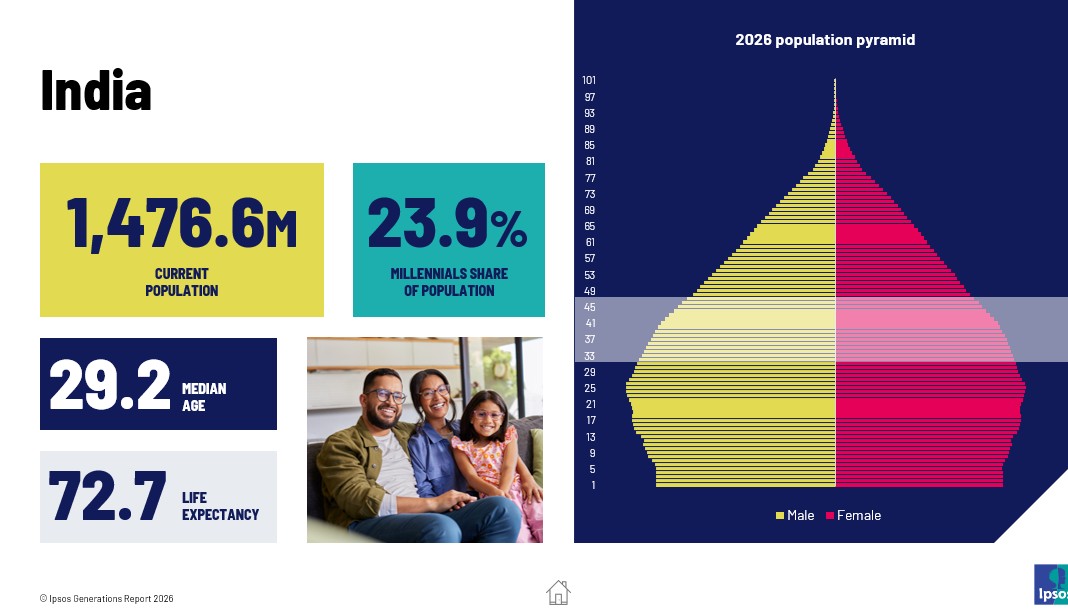
One of the report’s central findings is the emergence of population decline as a structural global reality. In 10 of the 20 economies studied, fertility rates have fallen sharply, with women having significantly fewer children than previous generations. India reflects this shift as well, with fertility rates declining from 5.19 in 1975 to 1.9 in 2025.
The report argues that businesses can no longer rely on population expansion alone to drive growth and consumption. Instead, organisations must rethink how they build loyalty, unlock new spending opportunities and stay relevant to evolving consumer realities.
Ipsos also challenges the widespread use of generational stereotypes. While public discourse often focuses on labels such as Gen Z, Millennials or Gen Alpha, the report finds that age bands and life stages are often more meaningful indicators of attitudes, behaviours and needs.
The study identifies two major emerging economic groups shaping the future:
The Dormant Economy: Older populations whose spending power and participation remain underutilised and need to be re-engaged.
The Endurance Economy: Consumers who increasingly view traditional milestones such as home ownership and retirement savings as unattainable.
India continues to present a relatively positive outlook, supported by a median age of 29 years, a large consuming population and a life expectancy of 73 years.
Suresh Ramalingam, CEO, Ipsos India, said: “The biggest questions marketers should be asking are: as populations decline, do strategies shift towards building loyalty and maximising share of wallet? Does my brand have the potential to unlock spending in the Dormant Economy? Does our tone of voice resonate with people’s realities in enduring economic times?
“The biggest shift for businesses is recognising that growth driven purely by population increase and rising consumption is slowing globally. India, however, remains distinct because of its young demographic profile and expanding consuming class.”
First-Time Workplace Segmentation Reveals Emerging Workforce Realities
For the first time, the Ipsos Generations Report 2026 identifies workplace cohorts based on defining behaviours, attitudes and experiences, providing a fresh lens for employers navigating a multigenerational workforce.
The five workplace segments identified are: The Optimists (16–25 years) -
This cohort demonstrates the highest pride in and advocacy for their organisations yet feels the least sense of belonging. They are also more likely to report loneliness and boredom at work, alongside disengagement from conventional workplace structures.
The Realists (26–35 years) -While career optimism softens compared to younger cohorts, intent to stay with employers rises significantly. Six in ten are comfortable using AI and digital tools. They are viewed as innovative, collaborative and dependable contributors.
The Squeezed Middle (36–45 years) - This group experiences the greatest pressure balancing work and personal responsibilities. While 51% prioritise work-life balance, many continue responding to emails outside working hours, take on responsibilities beyond their role and frequently work unpaid overtime.
The Stable (46–55 years) - Intent to remain with employers peaks among this cohort. Deeply embedded within organisations, they also report some of the highest levels of sustained workplace strain.
The Selectively Positive (56–65 years) - Nearly four in ten feel disrespected by other age groups, highlighting concerns around ageism and inclusion in the workplace.
The report also examines the growing role of AI in the economy. While AI can improve efficiencies and reduce production costs, Ipsos notes that it does not directly create consumer demand. As the report points out, “robots do not buy lunch, clothes or go to a party.”
Ramalingam further said, “The Ipsos Generations Report 2026 challenges long-held assumptions about growth, generations and the workforce. As populations slow across many markets, businesses can no longer rely only on new consumers for growth. The future will belong to organisations that build deeper relevance across changing life stages, evolving workforce realities and emerging segments such as the Dormant Economy and the Endurance Economy. India remains relatively well positioned with its young demographic profile and expanding consuming class.”
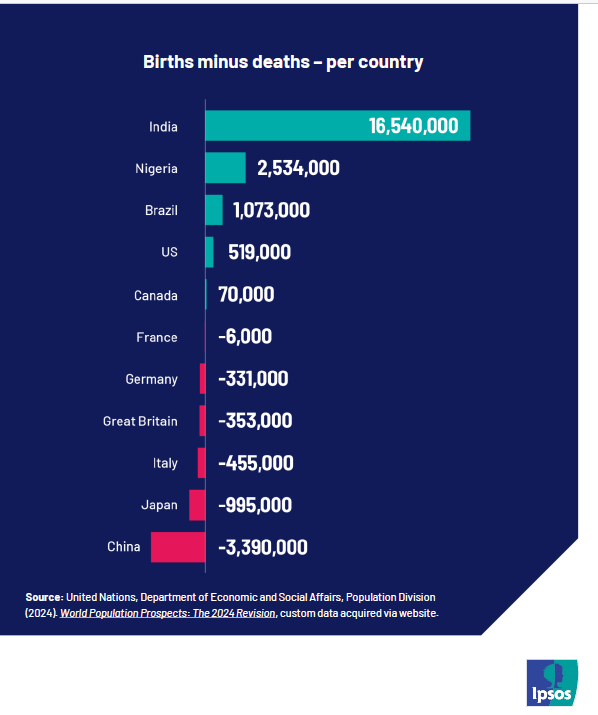
Darrell Bricker, Ipsos Canada Chairman and co-author of Empty Planet: The Shock of Global Population Decline , shed light on underpopulation, overpopulation and fertility rates, "Essentially, it's just maths: how many people are being born and how many are dying. If you look at those two figures, you can make a fairly accurate prediction about the future population size. What we've seen is that the number of people entering the population has been in rapid decline. The number of people leaving the population has increased more slowly, but this will accelerate, so combining these two figures indicates nothing but population decline. The only variable is time: it's happening at different rates in different parts of the world, but the general trend is the same everywhere.”
“There are so many theories people point to, such as technology and its impact on dating, the cost of raising children etc. I would say there are three things that matter the most: urbanisation, capitalism and culture.”
About Ipsos Generations
Generational analysis has become deeply embedded in research, marketing and workplace conversations. Terms such as Gen Z and Boomers often provide a convenient shorthand for understanding societal change.
However, Ipsos believes the discourse around generations has increasingly become oversimplified. Stereotypes often overshadow evidence, while geography, life stage and lived experiences frequently matter more than belonging to a broad generational label.
The Ipsos Generations Report 2026 aims to cut through this noise and provide a deeper understanding of how people think, feel and behave across different stages of life, and how these behaviours evolve over time.
To source a copy of the report, click below.
https://resources.ipsos.com/AccessTheGenerationsReport2026.html