Theories about how COVID-19 spreads varies with emerging markets more likely to believe myths
Theories about how the coronavirus can spread varies across 16 countries with some myths holding more prominence in regions like emerging markets, according to the latest survey by Ipsos.
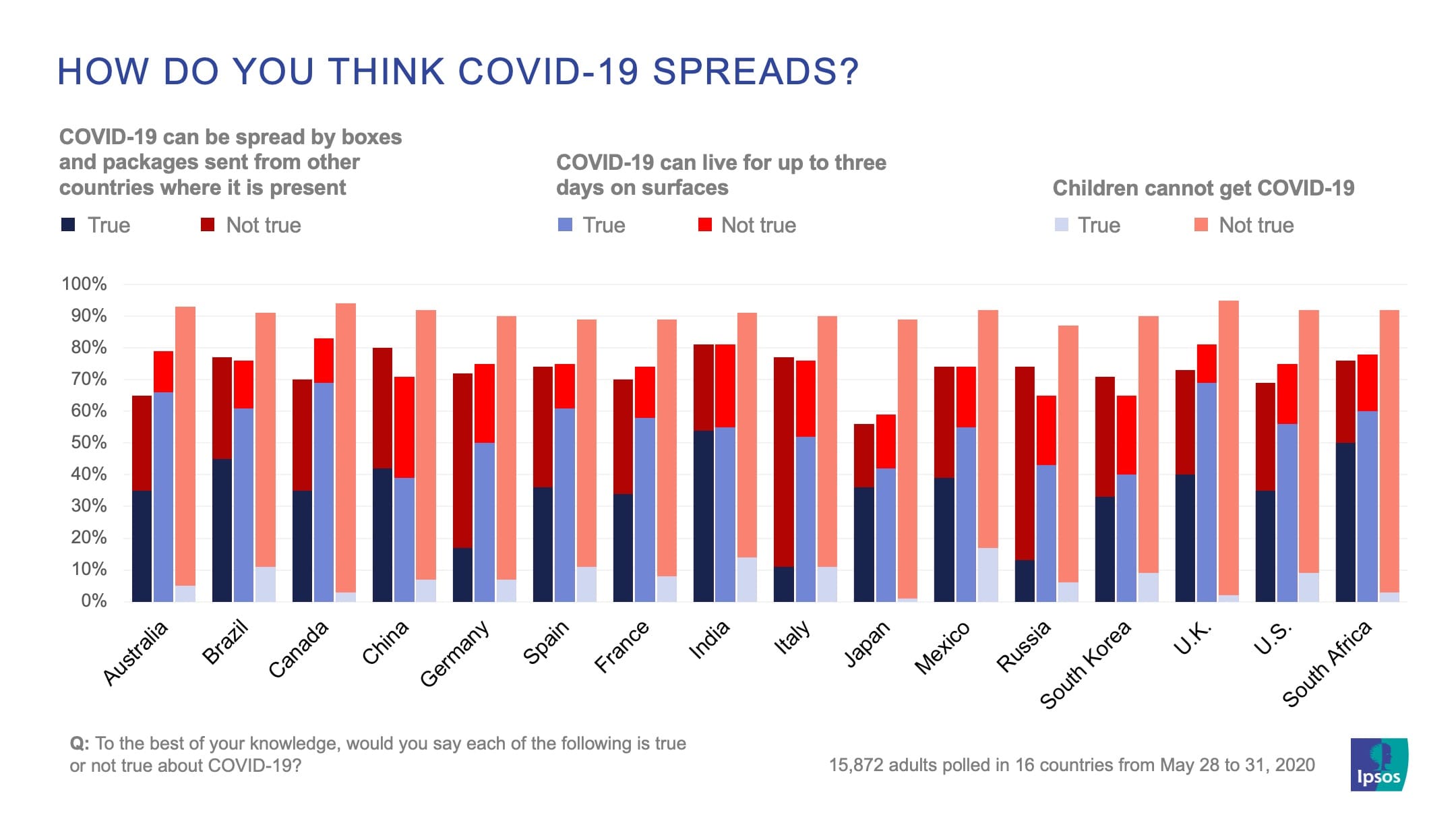
In global poll of nearly 16,000 people conducted from May 28 to 31, more people believe COVID-19 can live up to three days on surfaces over all other theories presented with a majority of respondents saying this is true in 11 of the countries.
People in Canada and the United Kingdom (69%), Australia (66%), Spain and Brazil (61%) are most likely to believe this, while those in China (32%), India (26%), Germany and South Korea (25%) and Italy (24%) are most likely to say it’s false.
But at the same time, people are more divided on whether COVID-19 can be spread by boxes and packages sent from other countries where the virus is present.
Respondents in emerging markets of India (54%), South Africa (50%), Brazil (45%) and China (42%) are most likely to believe this, while those in Italy (66%), Russia (61%) and Germany (55%) are most likely to disagree.
Exposure to drugs and temperature
In terms of treatment for COVID-19, a majority of people in 11 countries do not believe that hydroxychloroquine is a cure for the virus with those in Canada and the U.K. (80%), Australia (73%), the United States (69%) and Spain (67%) most likely to say this is false.
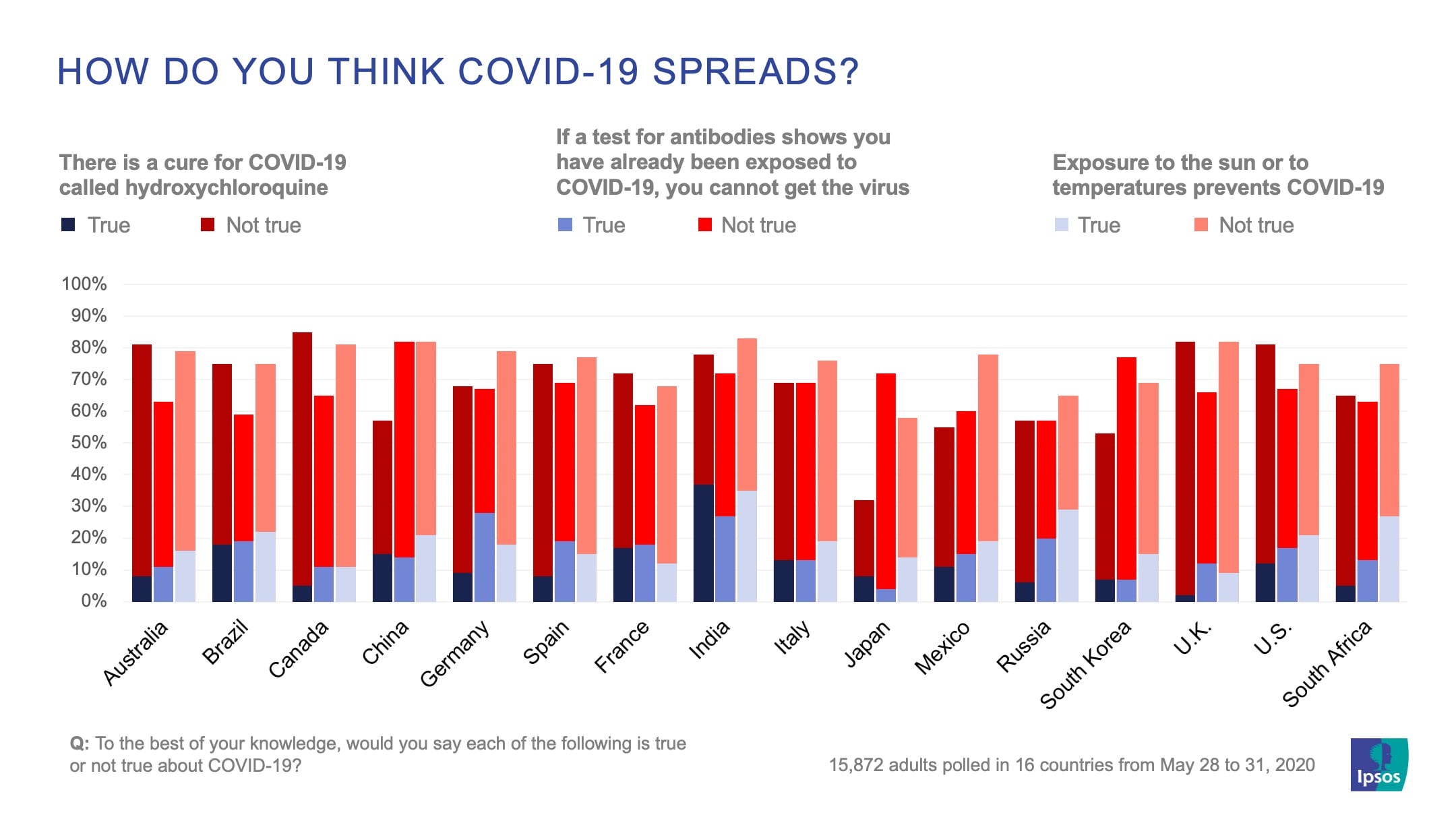
But people in India (37%) are mostly likely to believe the drug is a cure for the illness. Indians are also among the most likely to say that if a test for antibodies shows you have already been exposed to COVID-19, you cannot get the virus again. Those in Germany are also mostly like to say this is true at 28%, followed by 20% in Russia.
Meanwhile, those in South Korea (70%), Japan and China (68%) are most likely to say this is false.
When it comes to myths around exposure to the sun and temperatures to prevent contraction of COVID-19, people in India (35%), Russia (29%) and South Africa (27%) are most likely to believe this, while those in the U.K. (73%), Canada (70%) and Australia (63%) are most likely to say this is false.
Children, animals, food and technology
In terms of human transmission, a majority of people in all the countries disagree with the theory that children cannot get COVID-19 with this sentiment highest in the U.K. (93%) and Canada (91%). Mexico is the only country where nearly one in five (17%) say this is true.
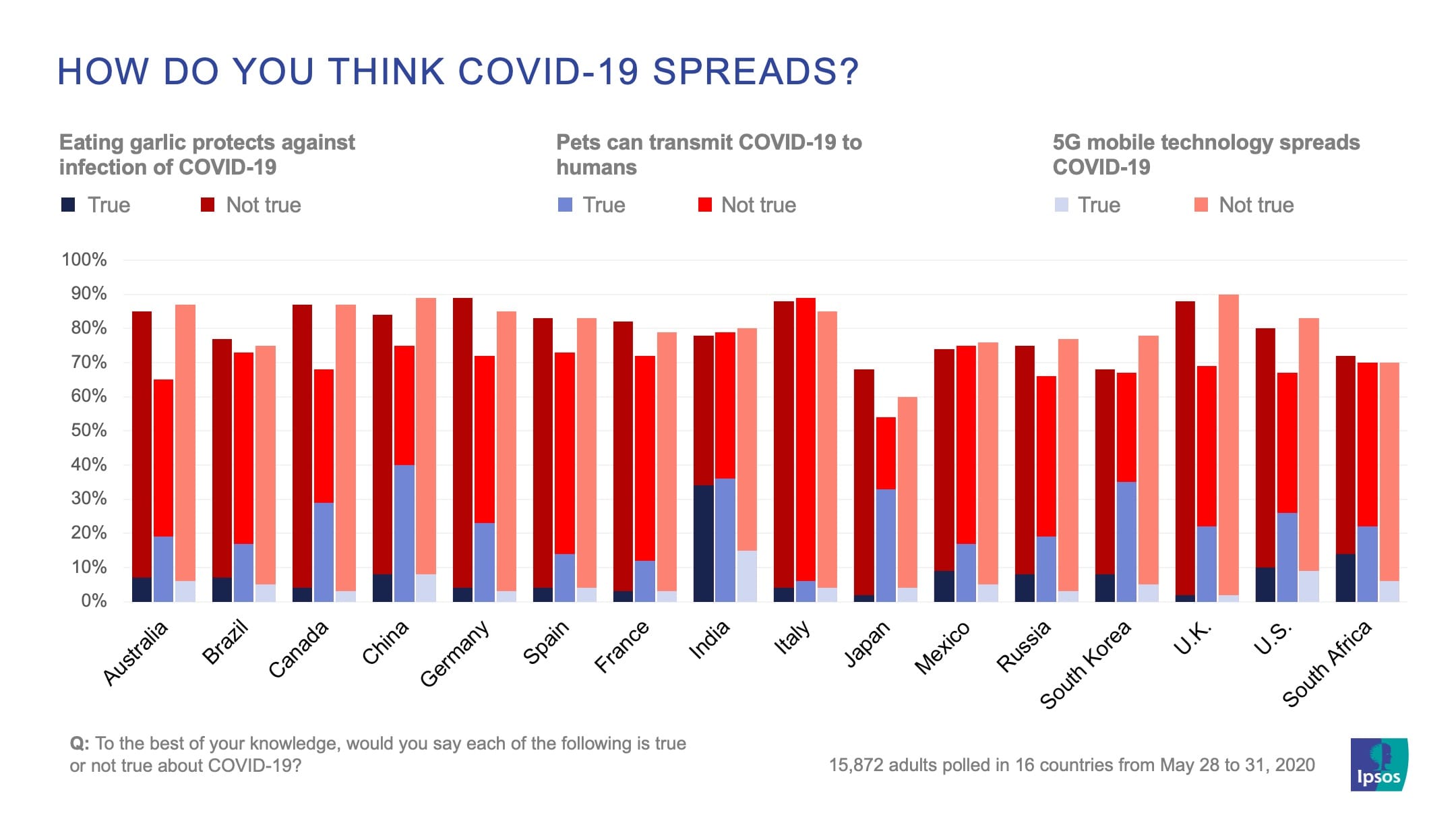
People are more divided on whether pets can transmit the virus to humans. Those in hard-hit countries like Italy (83%), France (60%) and Spain (59%), followed by Mexico (58%) and Brazil (56%) are most likely to say this is false, while more than a third of respondents in Asian nations of China (40%), India (36%), South Korea (35%) and Japan (33%) said it is true.
When it comes to what you can eat to prevent infection, people in India (34%) and South Africa (14%) are most likely to say that eating garlic protects against infection of COVID-19. But, a majority of people in 15 countries said this is not true.
Lastly, there is consensus that 5G mobile technology cannot spread COVID-19 with a majority in all 16 countries saying this is false. People in the U.K. (88%), Canada (84%) and Germany (82%) top the list on this.