One year into the Trump 2.0 era
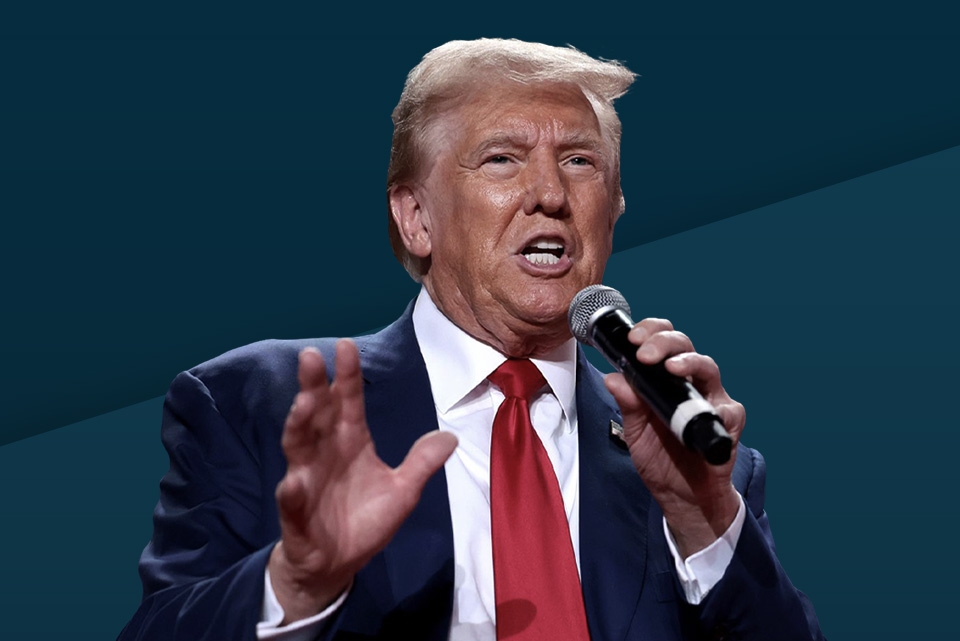
On a frigid day last winter U.S. President Donald Trump promised "a new golden age of America".
During his inaugural address on January 20, 2025, as he stood in front of a giant red-white-and-blue flag, with a smaller one attached to his lapel, he said he wouldn’t let his country "be taken advantage of any longer", pledging to "very simply put America first".
He has been a man of action.
The Trump administration has pursued the president's vision with its global tariff war. And during the first twelve months of his second, non-consecutive, term his government has also helped broker an Israel-Gaza peace deal and is still trying to bring an end to the full-scale invasion of Ukraine. The Trump administration has also captured Venezuela’s leader and expressed interest in gaining control of Greenland, Canada and the Panama Canal.
The 45th and 47th U.S. president’s brash style on the buttoned-up international stage has ruffled some feathers.
Meanwhile, his domestic policies focused on Making America Great Again (MAGA) have mostly drawn cheers from his Republican base and jeers from Democrats across the aisle.
Below we look back at how Trump’s MAGA strategy has shook out and what may lay ahead one year after his inauguration on a frigid January day.
High floor, low ceiling
Despite Trump’s many big swings in his first year back in the White House his approval rating has stayed relatively steady.
On the immediate heels of his bold inauguration speech last January almost half (47%) of all Americans approved of the way he was handling his job as the 47th U.S. president.
As his eventful year unfurled his approval rating dipped a bit and now sits at 41%. This is generally in line with his first term (from 2017-2021) when his approval rating dropped from 49% in January 2017 to 38% by January 2018.
“In our deeply polarized society, presidential approval ratings are characterized by a high floor and low ceiling. Trump is kept afloat by a remarkably loyal base, but his equally fervent opposition means ratings don't move much,” says Mallory Newall, Vice President of Public Affairs for Ipsos in the U.S.
“For the most part, Trump was confined to this range in his first term. U.S. President Joe Biden was too. A lot has changed over the past eight years, from Trump’s first year in the White House to now. However, what stands out is how little his approval rating has really changed.”
Elbows (and backs) up
The MAGA leader’s protectionist policies have seemingly rubbed some people around the world the wrong way, both in 2017-2021 and today.
During his first term the proportion of people (on average across 20 countries) who said America would have a positive impact on world affairs fell 11 percentage points year-over-year to 55% in late 2017, bottoming out at 48% in late 2018. The reputation of America ticked back up under Biden’s term from 2021-2025, though it trended downward over time. Last fall the proportion who think the U.S. will have a positive impact dropped to a new low of 46% from 59% a year earlier.
The Canadians are notably annoyed.
America’s northern neighbors were the least likely of all 30 countries to think the U.S. will have a positive impact in 2025 with just 24% of Canadian saying so, down a whopping 28pp compared to 2024.
“The late 2025 slide in views of America’s global impact reflects the accumulation of trade brinkmanship, alliance frictions and policy spillovers into daily life. Headlines and comments from U.S. and Canadian officials alike showed that the trusted relationship had become fragile,” says Gregory Jack, Senior Vice President of Public Affairs for Ipsos in Canada.
“That said, sentiment is responsive to behavior: predictable, rules based engagement that delivers visible consumer benefits could improve perceptions, but absent a clear reset, the negative outlook is likely to persist through Trump’s second term.”
Not buying what America is selling?
In the wake of Trump’s so-called Liberation Day tariff war on April 2, 2025, some consumers around the globe were worried and angry.
Just a few months later in May/June 2025 Ipsos in the U.S. asked consumers across 10 countries about the impact of brands being perceived as American and found it had a negative impact on purchasing and trust intent in all countries, except the U.S.
In the intervening months consumer anger looks to have eased a bit.
Early last year Trump’s Liberation Day and America First policies, paired with the ongoing cost-of-living crisis, "turned U.S. brands into convenient targets for symbolic pushback. In Canada, this collided with questions of sovereignty and identity, fueling a short, sharp surge in ‘Buy Canadian’ behavior as a way to assert control", explains Jack.
“Similar frictions with Europe and Asia reinforced a global narrative of U.S. unilateralism, so the sentiment traveled across markets. Through the year, emotions in Canada cooled and consumer behaviour settled back toward value first choices, but the attitude shift proved sticky: distrust, diversification and an expectation of prolonged disputes remained. Into 2026, expect fewer performative boycotts and more pragmatic skepticism — from elbows up to eyes open".
Though, "this could quickly change if a fresh flashpoint reignites consumer activism", warns Jack.
People across the pond in the U.K. have also had a strong reaction to Trump during the first year of his second term, with two-thirds (66%) of Brits now saying they don’t like the U.S. president while 27% say they do like him.
"America’s standing in the world is undergoing change, and brands are being caught in the crossfire. People around the globe are unsure if they can trust the U.S. in the same way they have done in years past. Here at home, significantly fewer Americans see the U.S. as the moral leader in the world compared to eight years ago", says Newall.
“But this sentiment is highly volatile. It’s too early to tell if these changes in trust will be a short- or long-term issue and what the impact on brands will be. For now, it's critical for brands to understand the tense political landscape and perceptions of America in any given market.”
The divided state of America
Back at home Trump also elicits strong reactions.
The perceived state of America continues to run down party lines.
Before the U.S. election in November 2024 almost two in three Democrats (62%) said their country was heading in the right direction. But when Trump won and the Democrats lost the White House their perception of their country plummeted, hitting a low of 13% in October 2025.
The pattern is inverse for Republicans.
As Biden’s one-term presidency wound down a mere 10% of Republicans thought their country was heading in the right direction. These days 70% of Republicans think things are going well.
"There’s a lot of distance on the issues between Republicans and Democrats. They have differing views on what the biggest problems facing the U.S. actually are, and different ideas on how to solve them", says Newall.
“Trump has been effective in bringing some of his campaign promises to life. However, that means that Americans who don’t share the Trump worldview continue to feel frustrated over how the country is changing. These attitudes will be critical to monitor during the midterm elections in November, and if Democrats can capitalize on this and rally a broad coalition to the polls.”
The price of leading
The Biden administration’s inability to get the cost-of-living crisis fully under control significantly hobbled then-U.S. Vice President and Democratic Presidential nominee Kamala Harris’ chances at becoming America’s first female president.
Trump bested Harris, in part, due to his promises to "make America affordable again".
In the view of a slim majority he has failed to make good on this pledge, so far.
Just over half (56%) of all Americans disapprove of the way Trump is handling their cost of living.
And Trump’s tariffs are now seen as a key reason for inflation, even after what he’s called his many "steps to restore Affordability". A slim majority of Americans don’t seem to think one of his big steps hasn’t helped much, with 56% saying cutting existing tariffs on importing goods would lower the cost of living in the U.S.
The midterms this November will be a chance for the Democratic Party to gain more control in Congress, but each party's proposals to solve the affordability issue will be key. Currently the main parties approach to the cost of living are seen as neck-and-neck with 34% preferring the Democratic Party’s strategy (34%) and 32% opting for the Republican Party’s.
Weathering the storm
When Trump held up his poster of reciprocal tariffs in the White House Rose Garden last April it sent shivers down the spines of many.
There were fears of a global economic downward spiral.
Those fears were unfounded.
Ipsos’ What Worries the World monitor finds by the end of 2025 national economic sentiment stayed the same or went up year-over-year in 20 of 29 countries.
There are signs of continued personal economic strain for many, though.
The Ipsos Cost of Living Monitor 2025 found almost three in five (59% on average across 30 countries) say they are just about getting by or finding it very/quite difficult to manage financially these days. That barely budged from the 61% who said the same in late 2024.
Among Americans, polling done in October/November 2024 found 52% said they were just about getting by or finding it very/quite difficult to manage financially. By August/September 2025, that hadn’t budged, with 53% of Americans reporting feeling financially strapped.
Of course, the global cost-of-living crisis started well before Trump re-took office, but his tariffs don’t appear to have helped those who’ve been feeling the pinch during the Uneasy Decade.
As the U.S. readies to celebrate its 250th birthday this July, the MAGA leader will have ample opportunities to prove he’s ushering in a new golden age of America.
And this November will be the first big test of whether American voters believe Trump has kept that and many other promises he made on January 20, 2025. Stay tuned.
Melissa Dunne is a senior data journalist with Ipsos and is based in Canada.

![[Webinar] KEYS: The Ipsos Generations report](/sites/default/files/styles/list_item_image/public/ct/event/2026-04/ipsos-keys-webinar-generations.webp?itok=WSKMxViW)
![[Webinar] KEYS: Battle For Attention](/sites/default/files/styles/list_item_image/public/ct/event/2026-02/keys-webinar-battle-for-attention-carousel.webp?itok=zWgfSYaM)