

Is Life Getting Better for Thais?
Thailand has seen a dramatic transformation from its agricultural roots to a bustling industrialized nation over the past five decades, with marked improvements in healthcare, education, and living standards. Despite these advancements, many Thais nostalgically recall a simpler, safer past. While this nostalgic sentiment is strongest among Baby Boomers and Gen X, the younger generations, like Gen Z, are more open to today's opportunities for innovation and progress, though they too hesitate to declare the present superior. This nuanced perspective, balancing heritage with the demands of modernity, significantly impacts Thai society and consumption patterns.
The Ipsos report, '1975 vs 2025 Is Life Getting Better?', reveals that for many Thais, the balance has tipped: progress has come at a price.
The Preference for 1975
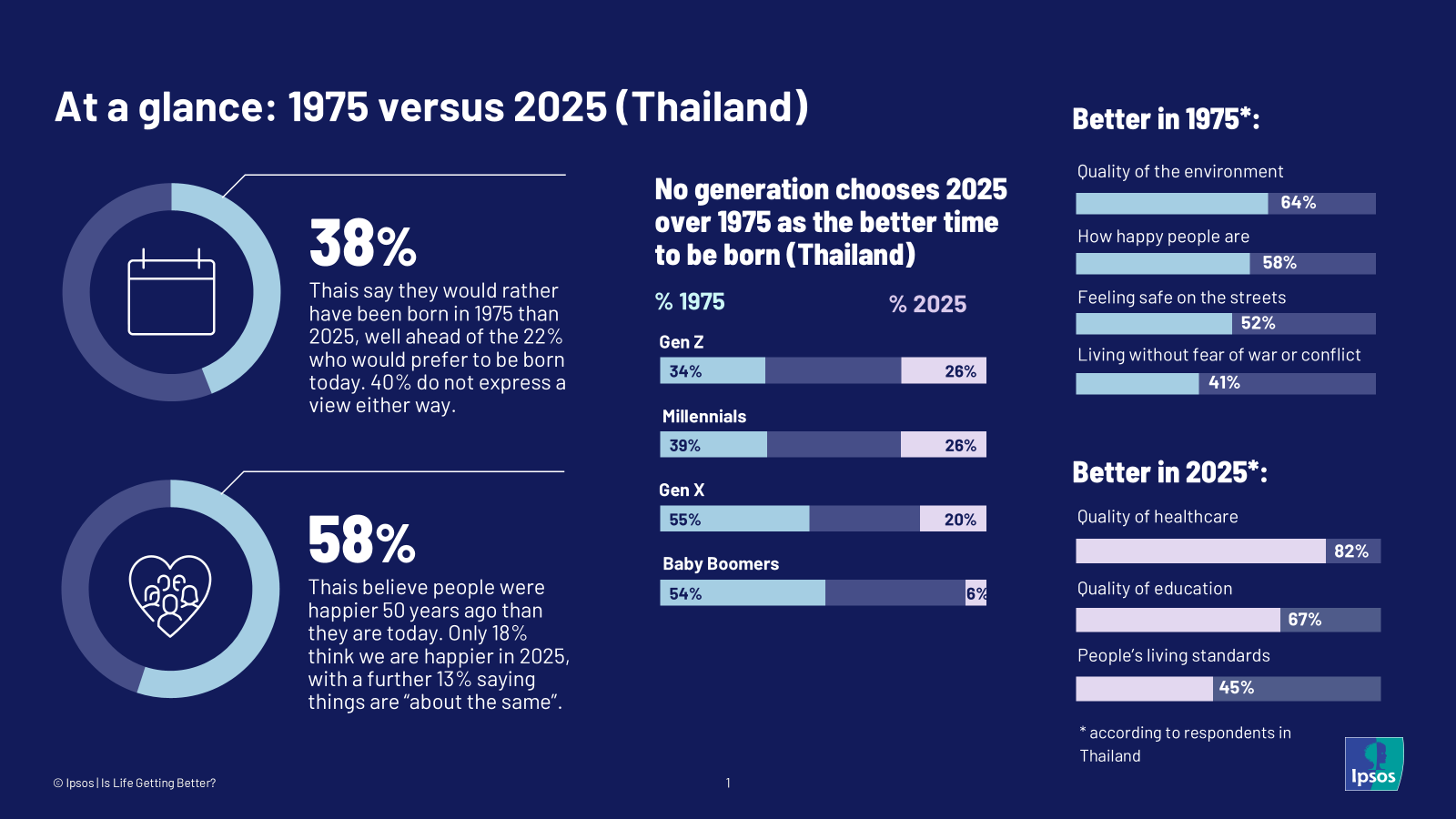
The core finding in Thailand aligns with a powerful global trend of widespread nostalgia. Globally, 44% prefer to have been born in 1975. In Thailand, a strong 38% of respondents prefer to have been born in 1975, vastly outnumbering the 22% who choose 2025 (the global average is 24%). This puts Thailand firmly in the camp of nations questioning whether modern advancements have truly delivered a better life.
Crucially, the Thai findings present a unique challenge: No generation chooses 2025 over 1975 as the better time to be born. While worldwide, Generation Z is the only age group that just manages to break the mould by showing a slight preference for the 2020s, in Thailand, this preference for the past is consistent across all ages. This multi-generational consensus underscores the depth of the national concern over quality of life.
Material Gains vs. Emotional Losses
Thai respondents clearly recognise the massive improvements in physical infrastructure and public services. Our optimism regarding development is often stronger than the global average:
- Quality of Healthcare: 82% say it is better now, significantly higher than the global average of 55%.
- Quality of Education: 67% say it is better now, indicating high confidence in the modernisation of our education system.
- People's Living Standards: 45% feel living standards are better now, though this view is tempered by the overall preference for the past.
However, these material gains are overshadowed by a perceived deterioration in critical non-material areas that define well-being and security. The factors where 1975 is preferred define the national anxiety, and Thailand’s concerns are more intense than the global average:
- Quality of the Environment: 64% say it was better in 1975, compared to the global average of 61%.
- How Happy People Are: 58% believe people were happier in 1975, slightly higher than the global 55%.
- Feeling Safe on the Streets: 52% say safety was better in 1975, reflecting a concern shared globally.
This persistent gap signals a collective feeling that Thailand has traded its natural environment, community cohesion, and personal sense of security for the benefits of industrialisation and technological convenience.
What does this mean?
This powerful dichotomy—where convenience is embraced but happiness is missed—has profound implications for consumer engagement in Thailand. Unlike markets that celebrate an "Innovation Narrative" based purely on achievement, Thai consumers require a more sophisticated story. The consumer is asking for a future that is materially advanced but emotionally grounded.
The Thailand of today is a land of contrasts, where the past and future are in active debate. The key to success lies in achieving a delicate balance: honouring the traditional values and communal well-being of the past while driving the necessary modernisation of the future.


