

Globalisation Fractures
The world order is shifting as new areas of conflict emerge and others flare up in new ways. That’s affecting how people view brands and products as well governments. The strongest organisations will combine global expertise with an authentic understanding of local markets, communities
and values.
and values.
The Full Ipsos Global Trends Report | Trend: Despite geopolitical tensions, trade disputes and growing nationalism, belief that globalisation is good for the country remains surprisingly resilient: agreement is up 8 percentage points in China and the US, and +14 in Great Britain and France since 2013. How it has CONSOLIDATED: The nature of globalisation is changing. Across many emerging markets, the belief that global brands and products are higher quality than local competitors has eroded. Consumers increasingly express confidence in domestic products, local innovation and national institutions. The result is not a rejection of globalisation, but a rebalancing between global influence and local identity. | 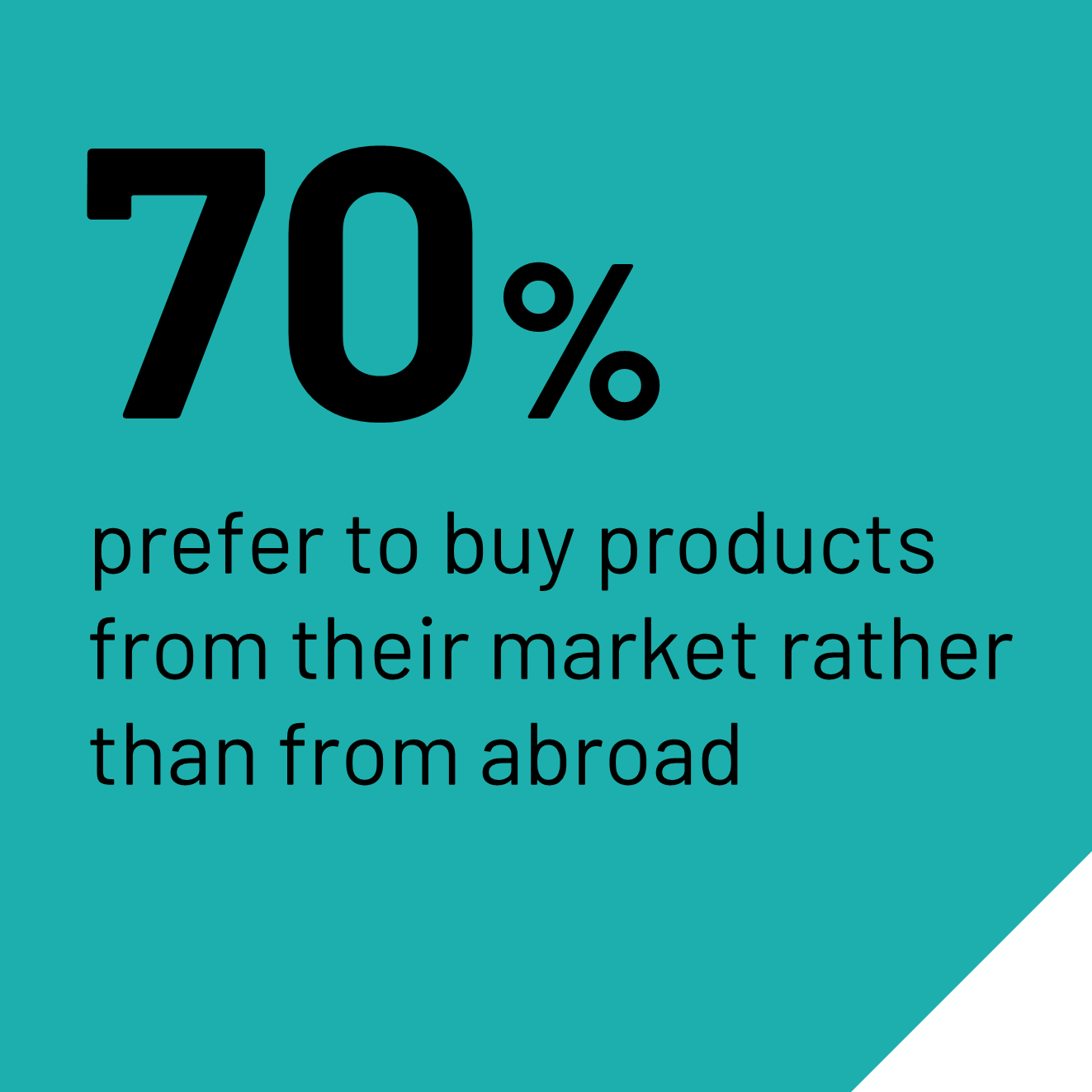 |