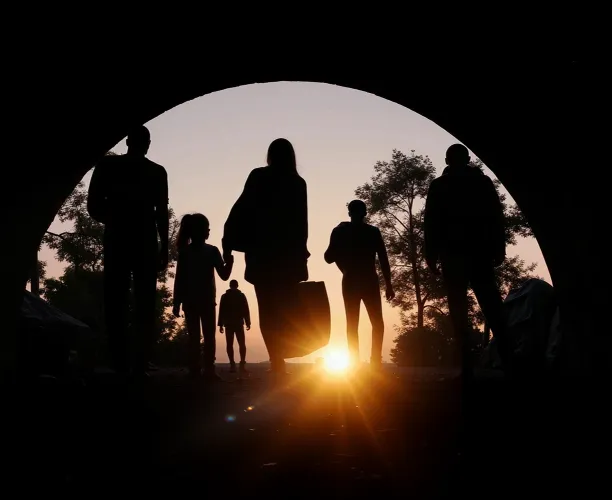
Conflict Abroad, Caution at Home: Indians Back Rule-Based Support for Refugees, But Remain Deeply Sceptical of Refugee Claims
As conflicts continue to displace populations across regions such as Iran and Lebanon, Indians believe support for refugees should be guided primarily by established Domestic Refugee Policies, while also drawing on international and regional cooperation. At the same time, public opinion reveals a complex and often contradictory outlook towards refugees, combining humanitarian concern with deep scepticism about who qualifies as a genuine refugee and how much responsibility India should bear.
According to the latest Ipsos Global Attitudes Towards Refugees survey conducted across 29 countries, 63% of Indians believe governments should support people displaced by the ongoing conflict in Iran and Lebanon by following existing Domestic Refugee Policies, making India one of the strongest proponents of a rules-based approach, alongside South Africa (63%) and Malaysia (61%). A nearly equal proportion of Indians (61%) favour working with international and regional partners to address the crisis, while 38% support foreign policy interventions aimed at addressing the root causes of displacement.
The findings come as the world marks 75 years of the 1951 Refugee Convention, a landmark international agreement defining the rights of refugees and the responsibilities of nations towards them.
International Organisations Seen as Key to Refugee Funding
When asked who should bear the primary responsibility for funding refugee assistance amid growing global funding pressures, Indians placed the greatest trust in multilateral institutions.
Four in ten Indians (40%) believe international organisations such as the United Nations and World Bank should take the lead, while 37% say foundations and non-governmental organisations should shoulder the burden.
Support for government-led funding is more measured. Just 28% feel the Indian government should provide support, while 26% believe wealthier countries should contribute more. Fewer Indians see businesses and corporations (18%), individual donors and volunteers (13%), or faith-based organisations (12%) as leading sources of support.
The results suggest that while Indians recognise the humanitarian needs of refugees, they largely expect global institutions and international aid mechanisms, rather than national taxpayers, to carry the biggest share of the responsibility.
Indians View Refugees Through a Lens of Scepticism
Despite sympathy for those fleeing conflict and persecution, Indians display considerable caution regarding refugee claims.
A striking 74% of Indians believe that most foreigners entering India as refugees are not genuine refugees but are instead seeking economic opportunities or taking advantage of welfare systems. This perception is among the strongest globally and mirrors sentiment in South Africa (78%), Thailand (75%) and Indonesia (75%).
The reasons behind this scepticism are varied. Nearly half of Indians (46%) say their views are influenced by information reported in traditional media such as television, newspapers and radio. Others point to the belief that genuine refugees would seek refuge in the first safe country they reach (44%), while 40% cite observations that many asylum seekers appear to possess financial resources, including paying smugglers or owning smartphones.
Social media also plays a significant role, influencing 39% of respondents. Additional factors include the belief that asylum seekers are disproportionately young (37%), statements from governments and ruling parties (35%), discussions with family and communities (34%), comments by opposition politicians (31%) and direct personal experiences (27%).
Humanitarian Values Coexist with Border Concerns
The survey highlights a significant tension in Indian attitudes.
On one hand, 63% of Indians agree that people should be allowed to seek refuge in other countries, including India, to escape war and persecution. Only Sweden and the Netherlands, at 78% each, express stronger support for offering refuge.
Yet simultaneously, 74% of Indians agree that India should close its borders to refugees and cannot accept any more at this time. This sentiment is exceeded only by Malaysia (78%) and is also widespread in Turkiye (71%) and Thailand (70%).
The findings reflect a public that supports the principle of asylum but remains cautious about expanding refugee admissions in practice.
Confidence in Integration, But Divided on Contribution
Interestingly, concerns about refugee authenticity do not necessarily translate into fears about integration.
Nearly two-thirds of Indians (65%) believe that most refugees who come to India will successfully integrate into society. Shared cultural traits, similarities in appearance, language familiarity and geographic proximity may contribute to this confidence.
However, Indians are sharply divided on whether refugees ultimately benefit the country. While 48% believe refugees make a positive contribution to India, 44% disagree, indicating an ongoing debate about the economic and social impact of refugee populations.
Summarising the findings, Suresh Ramalingam, CEO, Ipsos India said, “This study highlights a defining characteristic of Indian public opinion: a belief that humanitarian action is most effective when compassion is matched by clarity and accountability. Indians support helping people displaced by conflict, but they favour doing so through Domestic Refugee Policies, international cooperation and shared global responsibility. At a time when refugee movements are becoming increasingly complex, the findings suggest that public confidence is built not simply on good intentions, but on transparent systems, credible institutions and a clear sense of who is responsible for delivering support."
How Does India's Refugee Landscape Look?
India's refugee landscape is shaped by a unique mix of humanitarian tradition, regional geopolitics, and migration pressures. Unlike many countries, India is not a signatory to the 1951 UN Refugee Convention and manages refugee populations through case-by-case administrative arrangements rather than a unified national refugee law.
Today, India is home to an estimated 200,000 to 250,000 refugees and asylum seekers, primarily from neighbouring countries. These include 73,000 to 100,000 Tibetans who arrived following the 1959 uprising, 90,000 to 100,000 Sri Lankan Tamils, around 60,000 to 80,000 people displaced from Myanmar, and approximately 11,000 Afghan refugees registered with UNHCR.
India's approach has historically focused on providing protection and support to specific refugee communities. Tibetan refugees have been able to establish settlements and institutions that preserve their cultural identity, while Sri Lankan Tamil refugees in Tamil Nadu continue to receive government-supported welfare benefits, education and financial assistance. More recently, communities fleeing instability in Myanmar have found refuge in India's northeast, often supported through strong ethnic and cultural ties.
At the same time, the refugee conversation in India is closely intertwined with concerns around undocumented migration. Government estimates and public discourse frequently point to millions of undocumented migrants, particularly from Bangladesh, making border management and migrant identification politically salient issues. As a result, public attitudes towards refugees are often shaped not only by humanitarian considerations but also by concerns around security, governance and migration management.
The Indian experience therefore reflects a dual reality: a long-standing willingness to provide sanctuary to people fleeing persecution and conflict, alongside an ongoing debate about managing irregular migration in one of the world's most populous and geographically complex countries.
India's humanitarian engagement extends far beyond its borders. Over the years, the country has provided food assistance, medicines, vaccines, emergency supplies, disaster relief and development support to countries affected by conflicts, natural disasters, economic crises and public health emergencies. Increasingly recognised as a first responder during times of need, India has combined rapid relief efforts with longer-term assistance, reflecting a humanitarian approach grounded in solidarity, resilience and a belief that global challenges require collective action and shared responsibility.
Methodology
These are the results of a 29-country survey conducted by Ipsos on its Global Advisor online platform, between Friday, April 24, and Friday, May 8, 2026. For this survey, Ipsos interviewed a total of 21,521 adults aged 18 years and older in India, 18-74 in Canada, Republic of Ireland, Malaysia, South Africa, Türkiye, and the United States, 20-74 in Thailand, 21-74 in Indonesia and Singapore, and 16-74 in all other countries.
The sample consists of approximately 1,000 individuals each in Australia, Belgium, Brazil, Canada, France, Germany, Great Britain, India, Indonesia, Italy, Japan, Spain, Türkiye, and the U.S., and 500 individuals each in Argentina, Chile, Colombia, Hungary, Ireland, Malaysia, Mexico, the Netherlands, Peru, Poland, Singapore, South Africa, South Korea, Sweden, and Thailand.
Samples in Argentina, Australia, Belgium, Canada, France, Germany, Great Britain, Hungary, Italy, Japan, the Netherlands, Poland, South Korea, Spain, Sweden, and the U.S. can be considered representative of their general adult populations under the age of 75. Samples in Brazil, Chile, Colombia, India, Indonesia, Ireland, Malaysia, Mexico, Peru, Singapore, South Africa, Thailand, and Türkiye are more urban, more educated, and/or more affluent than the general population. The survey results for these countries should be viewed as reflecting the views of the more “connected” segment of their population.
India’s sample in particular is heavily urban, and with higher education and affluence than the general population. For this reason, the trended data for India is not included on the charts.
The data is weighted so that the composition of each country’s sample best reflects the demographic profile of the adult population according to the most recent census data.
The precision of Ipsos online polls is calculated using a credibility interval with a poll where N=1,000 being accurate to +/- 3.5 percentage points and of where N=500 being accurate to +/- 5.0 percentage points. For more information on Ipsos' use of credibility intervals, please visit the Ipsos website.
The publication of these findings abides by local rules and regulations.