India Mobility Report 2026
The 31-country Ipsos Mobility Report 2026 reveals interesting patterns for India - a market defined by "productive contradictions," where public transport is a preference rather than a last resort, and where digital trust far outpaces developed markets.
Unlike the car-centric models of the United States (64% car dependency) or Australia (61%), India’s mobility is built on a foundation of public and shared transport. Public transport leads with a 24% share of daily choices, supported by a robust ecosystem where motorcycles and walking each capture 18%. With 65% of Indians rating public transport as affordable—drastically higher than in European markets like the Netherlands (29%)—and 22% stating they actively enjoy their commute, we are seeing the results of significant investment in "metro-fication" and electrified bus fleets. An impressive 62% of Indians prioritise public transport, nearly double the sentiment found in Canada or the US.
However, the industry must remain sensitive to the affordability strain. 61% of Indian households report that transport costs impact their budgets, compared to a global average of 44%. This economic pressure, while reinforcing public transport usage, creates a high barrier to entry for personal vehicles, even as the aspirational value of car ownership remains potent for the 46% who desire a vehicle even when it isn't essential.
One of our most striking findings is the "Boycott Paradox." Despite a global rise in "automotive nationalism," 39% of Indians say they are willing to avoid domestic brands. The reasons for this trend can be categorised into three strategic pillars: Quality Perception Gap, Gold Standard of Reliability, and a "Fractured Globalisation" Trend.
Download the report to read more on India's mobility landscape.
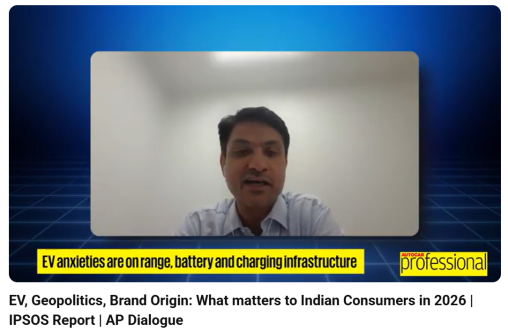
Ipsos India expert, Balaji Pandiaraj in conversation with Autocar Professional
Autocar Professional speaks with Balaji Pandya Raj, Executive Director at Ipsos India, about the findings of the Ipsos 2026 Mobility Report, one of the largest mobility surveys ever conducted, covering 23,722 respondents across 31 countries. This interview explores what the data reveals about Indian consumers and their relationship with cars, EVs, and mobility at large. From the growing importance of brand origin and geopolitics in purchase decisions, to the persistent infrastructure gap slowing EV adoption, Balaji breaks down what the numbers really mean for India's automotive future.
Key topics covered:
- Why brand origin is increasingly influencing car-buying decisions in India and globally
- India's EV optimism vs. the real-world barriers holding adoption back
- The role of hybrids and flex-fuel vehicles as a bridge to electrification
- How public transport and car ownership coexist in urban India
- What the data means for Indian OEMs with international ambitions
Autocar Professional is India's foremost B2B automotive publication, bringing you in-depth analysis, expert interviews, and the latest developments from across the automotive industry.
Read India Report 2026
- India Mobility Report 2026 - Ipsos India