India ranks No. 3 in Global Optimism as Citizens Back Stability Today and Innovation for Tomorrow
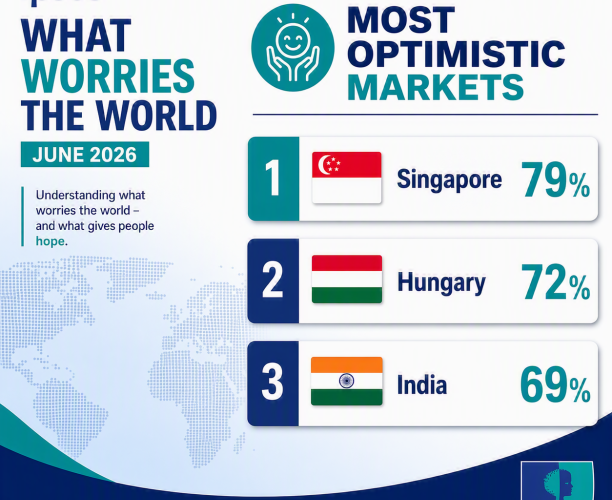
The June wave of the Ipsos What Worries the World report places India among the world's most optimistic nations, with 69% of urban Indians believing the country is headed in the right direction.
Only Singapore (79%) and Hungary (72%) rank higher, while optimism remains low across much of the developed world, with France (10%), Peru (12%), and Germany (13%) among the least optimistic markets. Against a global average of just 38%, India's confidence stands out as a powerful vote of faith in the country's direction.
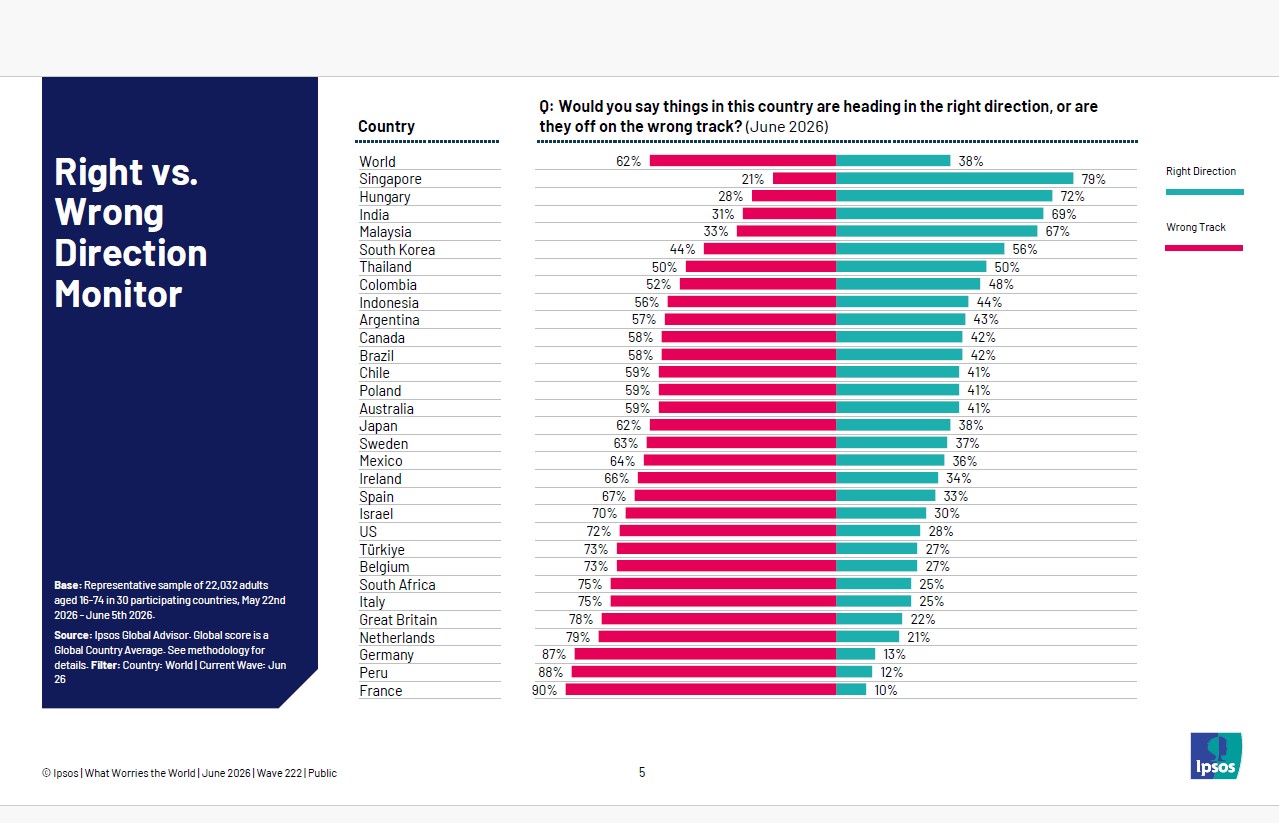
Source: Ipsos Global Advisor | Current Wave: June 26. See Methodology
Singapore's optimism stems from confidence in a well-run nation, underpinned by efficient governance, economic stability, strong public services, and continued investment in the future.
Many Hungarian citizens are optimistic because the new government led by Péter Magyar and the TISZA Party has pledged to reduce corruption, strengthen democratic institutions, improve public services, and rebuild relations with the European Union. Supporters hope these reforms will boost economic growth, increase transparency, and improve living standards after years of political polarization.
In case of India, Suresh Ramalingam, CEO, Ipsos India, said: "Citizens expect their country to run like a well-oiled machine, delivering stability, continuity, and progress even amid global disruptions. Despite a slowing global economy, oil price shocks, trade uncertainties, tariff pressures, and geopolitical tensions, India has weathered these challenges with resilience, supported by policy measures that have helped mitigate risks, safeguard economic stability, and sustain growth."
"What further strengthens public confidence is the belief that India is not merely responding to today's challenges but actively shaping tomorrow's opportunities. Through investments in sovereign AI, digital public infrastructure, EV ecosystems, and other next-generation technologies, alongside a push towards sustainable alternatives that reduce dependence on fossil fuels, citizens see a country building for the future while remaining resilient in the present."
Further, economic optimism in India remains strong, with 75% of urban Indians confident about the economy, compared to just 36% globally.
What worries Indians and global citizens
Indians remain deeply concerned about the challenges that affect their day-to-day lives. Unemployment continues to be the country's foremost worry, followed by financial and political corruption, poverty and social inequality, and crime and violence. Inflation has also re-entered the top five concerns, pushing education down to sixth place.
Globally, citizens share many of the same anxieties, with crime and violence emerging as the leading concern, followed by inflation, unemployment, poverty and social inequality, and financial and political corruption. While Indians and global citizens are worried about a similar set of issues, the order of priorities reflects the distinct economic and social realities shaping each market.
"The findings reflect a nuanced public mood. While Indians remain optimistic about the country's direction and economic prospects, they are equally clear-eyed about the issues that need attention. Concerns around unemployment, corruption, inequality, crime, and inflation underscore citizens' expectations for inclusive growth and better quality of life."
"What stands out is that optimism and concern are not mutually exclusive. Indians are expressing confidence in the country's future while also calling for stronger action on the issues that impact everyday life. This combination of hope and accountability is often the hallmark of an engaged and aspirational society," stated Ramalingam.