Asia's EV moment is here. The question is who captures it
The Mobility Monitor 2026 exposes a divergence the industry continues to underestimate. France, Germany and the US are net-negative on electric vehicles (EV) appeal. China, Indonesia and Thailand sit well above the global average. This is not a policy-driven gap, it is a structural shift in consumer orientation. What makes this particularly significant is that the survey was conducted before the Iran conflict began reshaping global energy markets. The sentiment captured here is therefore a pre-disruption baseline. The structural gap between Asia and the West on EV appetite was already widening before oil price volatility entered the equation.
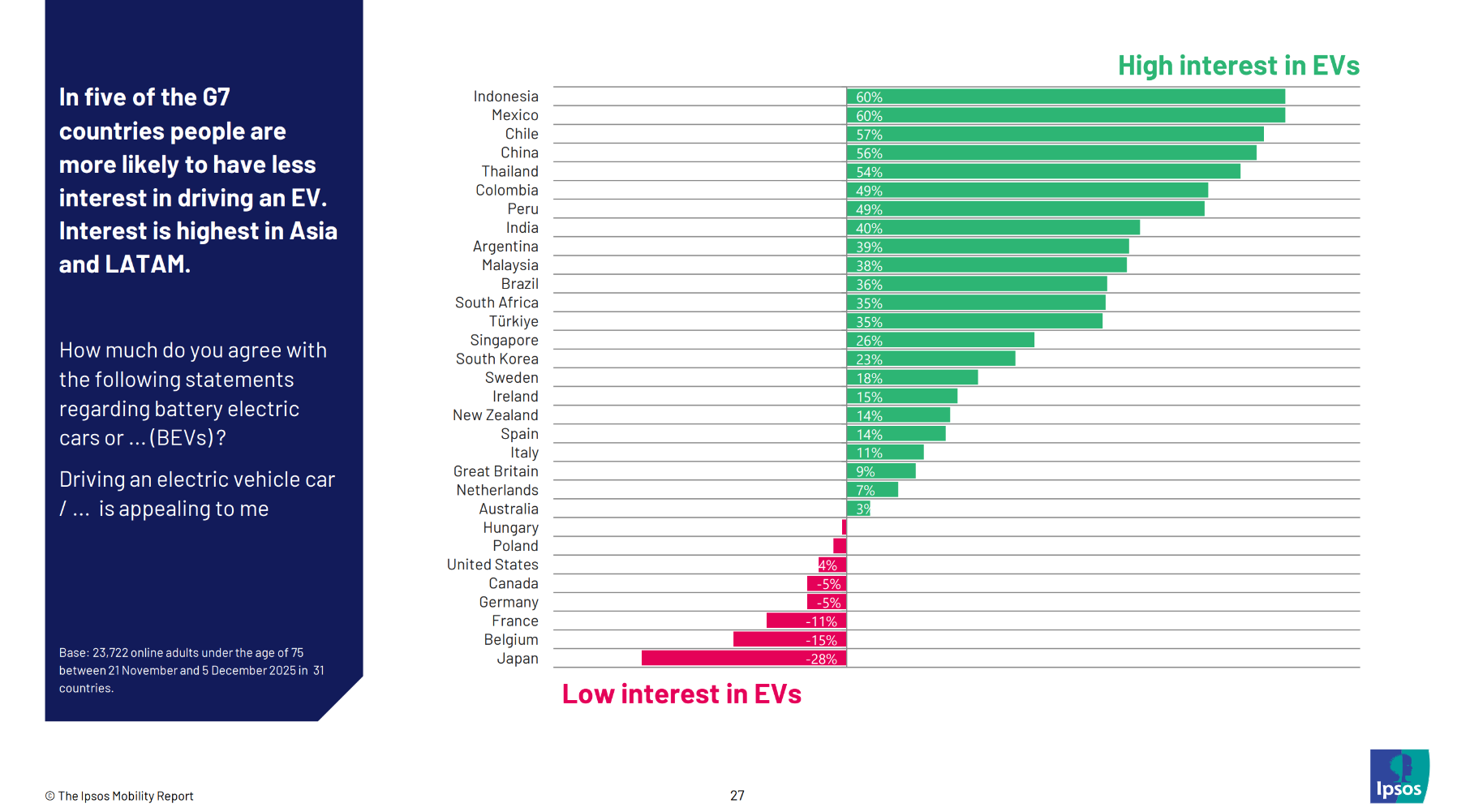
Southeast Asia (SEA) is where it plays out most consequentially. Malaysian EV sales doubled in 2025 before subsidy reductions fully worked through. Chery's Lepas launch, built specifically for export with SEA its primary focus, confirms Chinese automakers are already acting on the signal. The broader context amplifies this. Most SEA economies are net fuel importers, and household sensitivity to pump prices across the region is acute. When energy costs rise, the total cost of ownership case for EVs strengthens, and it does so quickly. Subsidy reform was already shifting the economics before the current disruption. An energy shock of the kind now unfolding accelerates that shift further, and faster than most planning assumptions currently reflect. The data captured here was a floor. What comes next may well make the forecast look conservative.
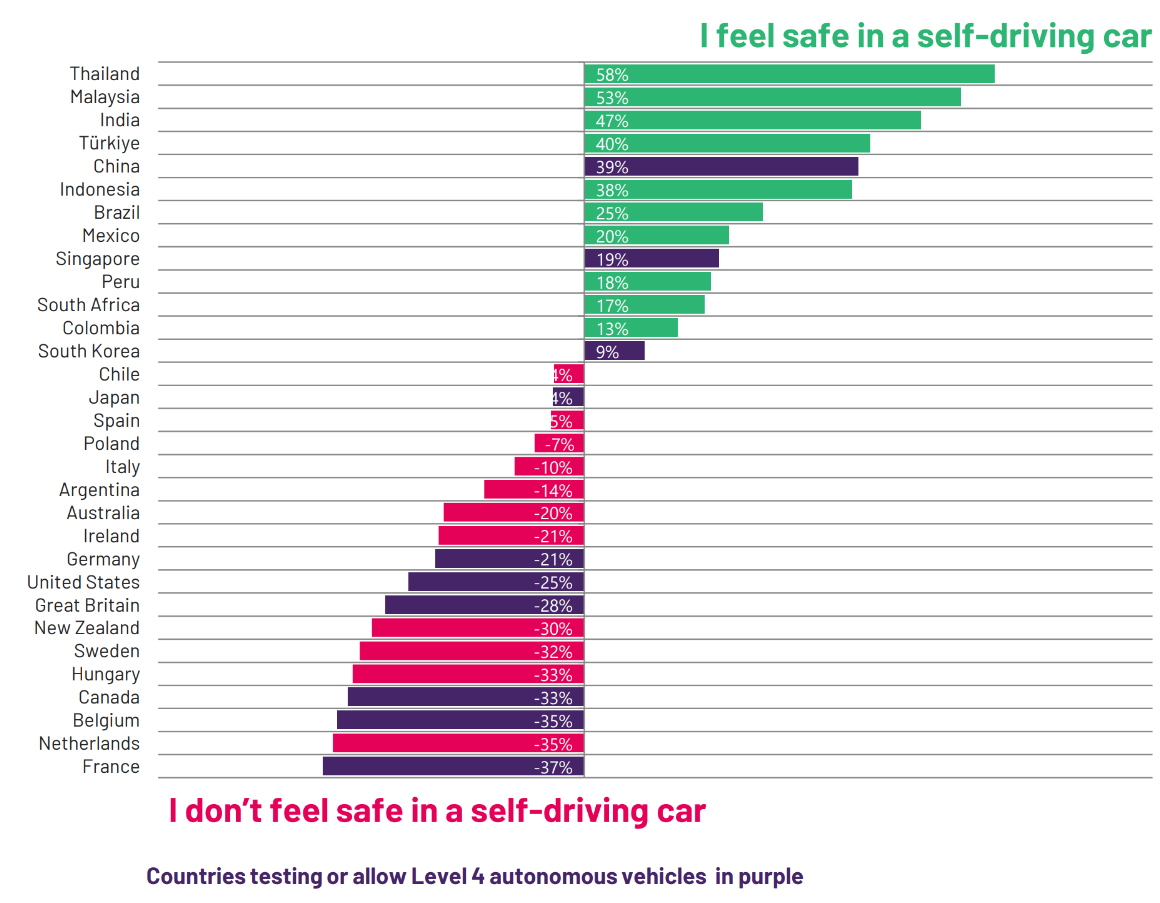
Meanwhile, Thailand and Malaysia's comfort with autonomous vehicles (AV) runs nearly double the global average, and Singapore's AV shuttle roll-out shows infrastructure advancing ahead of consumer sentiment. The Singapore case is worth pausing on. It is the most affluent market in SEA, yet EV enthusiasm trails its regional peers. The AV infrastructure push suggests policy ambition is real, and infrastructure historically pulls consumer sentiment forward rather than following it. Asia is not just adopting EVs, it is embracing the full technological reinvention of the car. That trust in new automotive technology, absent in much of Europe and North America where data privacy concerns dampen enthusiasm, represents a structurally different and larger commercial opportunity for brands prepared to meet it.
It is also worth naming the full scale of the opportunity. Across SEA, private vehicle dependency is deeply entrenched. Globally, 43% of car owners say living without a car is impossible, and SEA markets run higher. The EV transition here is not replacing a public-transport culture; it is redirecting an existing and deeply embedded car culture. That makes the addressable market considerably larger than headline EV adoption numbers suggest. The question for brands is not whether SEA consumers will buy cars; they will, but which cars, from whom, and on what terms.
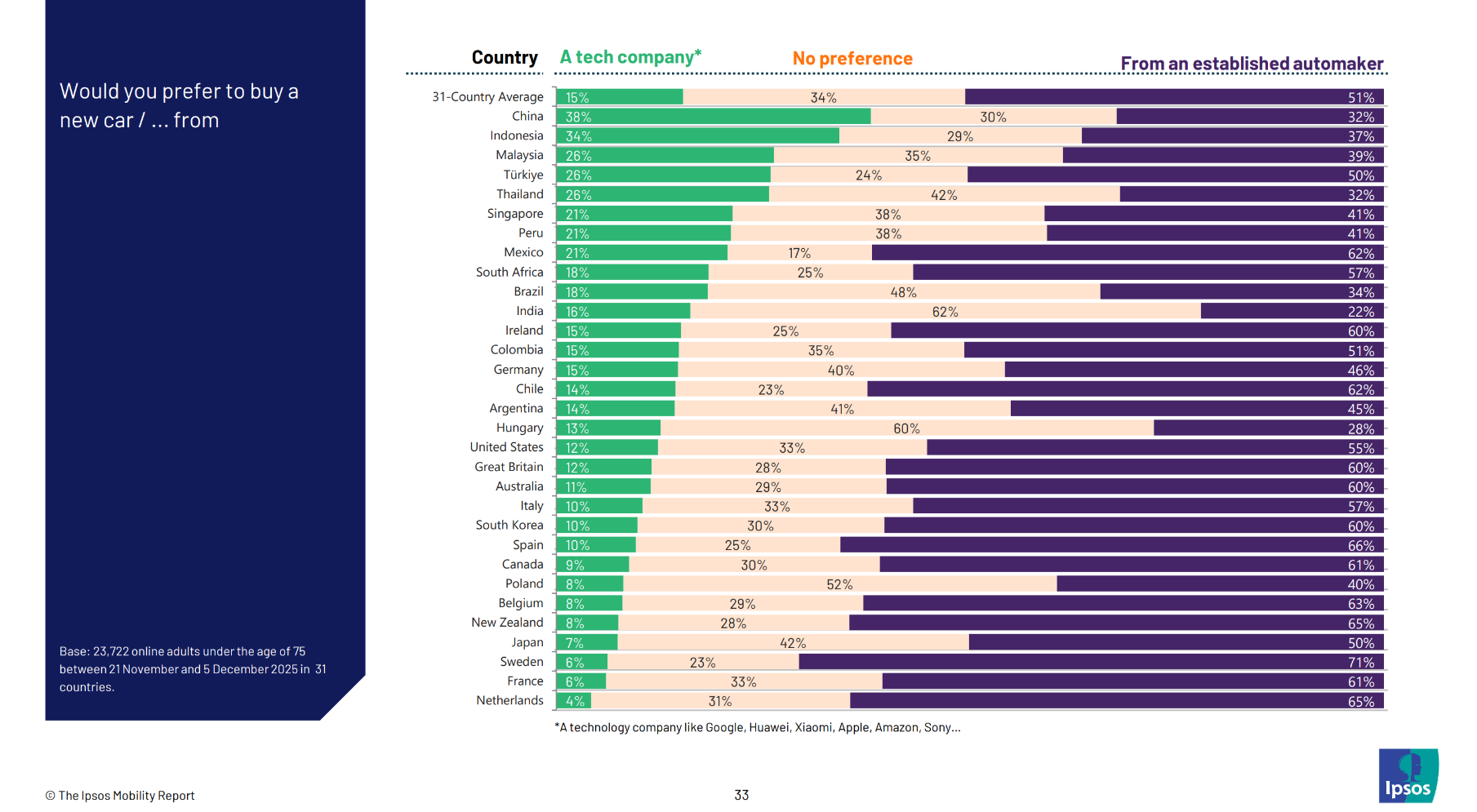
For established automakers, pressure comes from two directions — rising tech-brand preference in SEA especially in Indonesia and Malaysia, while country-of-origin tensions are sharpening globally. Chinese brand face the steepest consumer avoidance globally, yet are the ones expanding most aggressively into SEA. The tension between high regional openness to Chinese technology and growing wariness of Chinese brand origin is the defining strategic contradiction of the next three to five years, and one that incumbent brands would be unwise to assume resolves passively in their favour.
The global EV transition is not stalling, it is concentrating. And SEA is where the next chapter is being written.
The author(s)
-
 Thomas TanAutomotive Lead, Ipsos in Malaysia