

Structural Concerns Return as Top Worries for Thai Public in H2 2025
The new report What Worries Thailand? H2 2025 from Ipsos highlights a shift in public sentiment, with long-standing structural issues firmly returning as the primary concerns for people in Thailand in the second half of 2025. Following a temporary peak in anxiety over international conflicts, domestic issues like Financial/Political Corruption and Poverty & Social Inequality are once again the most pressing worries.
Domestic Issues Eclipse Military Conflict
What Worries Thailand? H2 2025 report confirms that while "Military Conflict Between Nations" briefly topped the list in August 2025, persistent domestic vulnerabilities are now driving public anxiety.
The Top 5 Concerns for November 2025 are:
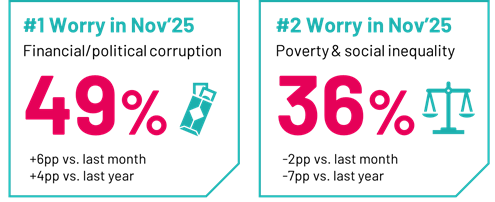
Financial/Political Corruption (49%) Now the top worry, showing a significant 6 percentage point increase from the previous month.
Poverty & Social Inequality (36%) Remains the second-largest concern.
Military Conflict Between Nations (29%) Dropped to the third position but remains a significant worry.
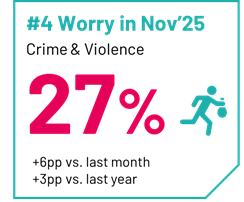
Crime & Violence (27%) Surged back into the top four (up 6 points), fueled by concerns over online scams and call center gangs.
Inflation (25%)
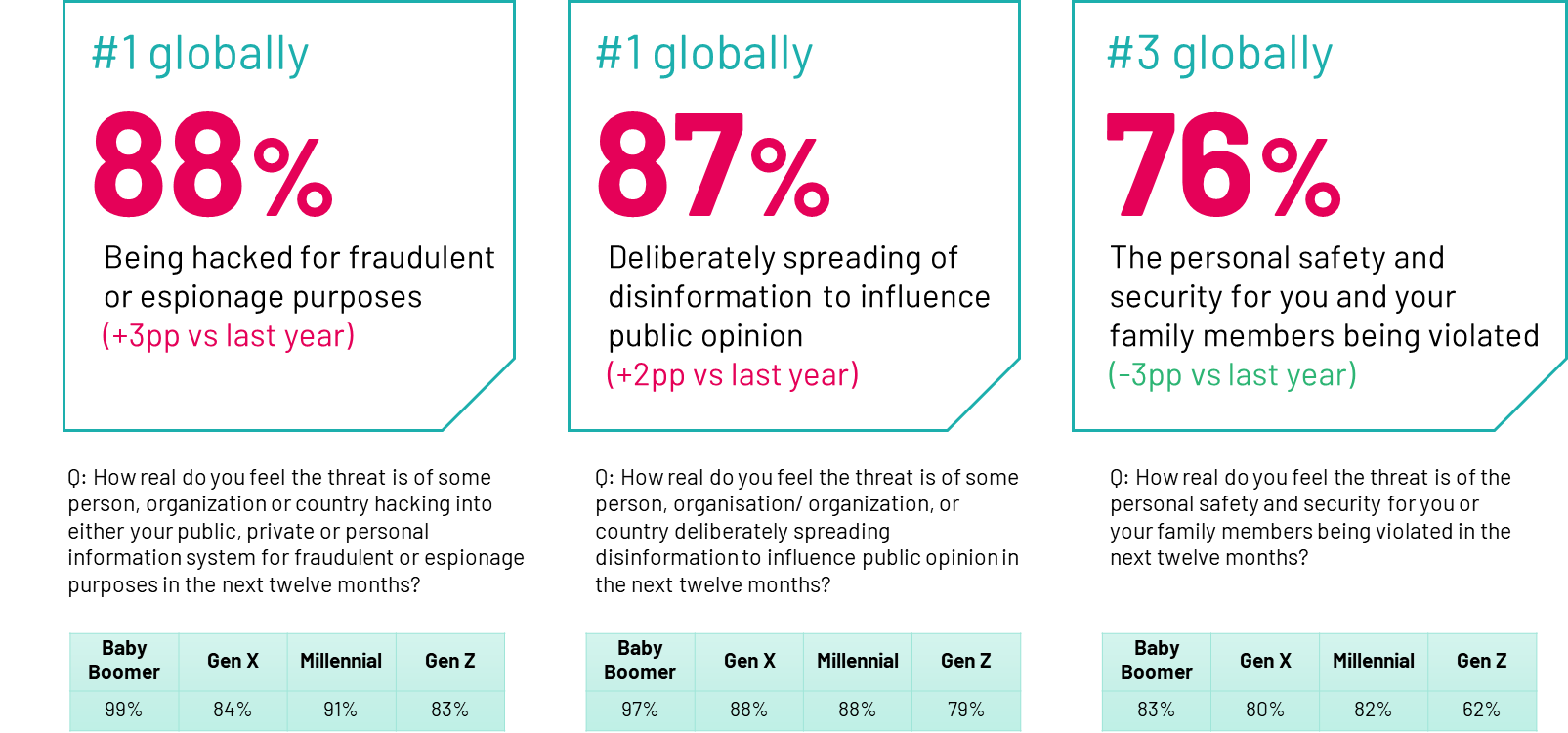
The research also found a widespread perception of heightened danger: 77% of respondents feel the world has become more dangerous over the past year. Notably, Thailand registered the highest global concerns regarding digital threats, with 88% feeling a real threat of being hacked for fraudulent purposes.
Economic Caution Persists Despite Nuanced Outlook
Despite a slight decrease in negative economic sentiment compared to the middle of the year, the belief that the economy is in recession persists, with 76% of people stating this is currently the case.
This wariness translates directly into consumer caution:
52% feel less comfortable making a major purchase (e.g., home or car).
40% are less comfortable making other household purchases.
41% express less confidence about job security for themselves or their families.
48% are less confident about their ability to invest in the future, including retirement or education.
Furthermore, 57% of respondents believe it will take more than a year—or never—for inflation to return to normal, anchoring this cautious spending behaviour.
Nostalgia for 1975: The Yearning for Simplicity and Security
A striking finding highlights a deep social nostalgia. A majority of respondents reported a "bad year" for themselves and their families (57%) and for Thailand (74% up 9% YoY) in 2025. This sentiment is amplified by a preference for the past:
38% of respondents would prefer to have been born in 1975 rather than 2025.
58% believe people were happier 50 years ago.
This longing is consistent across all age groups, with even younger demographics like Gen Z showing a preference for 1975. When comparing the quality of life:
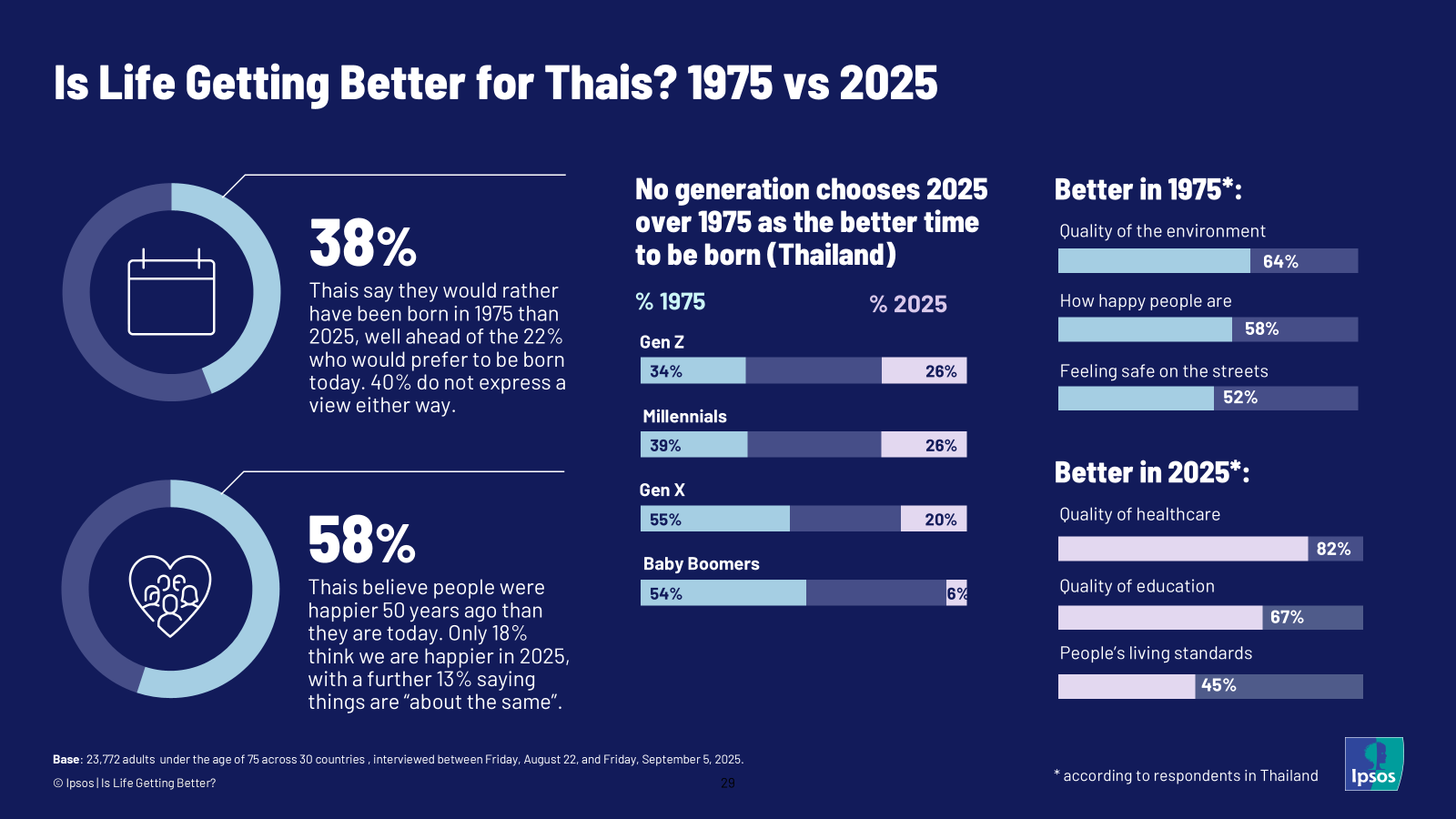
This suggests a collective trade-off, where people acknowledge modern-day advancements in services and material comforts but fundamentally yearn for the social and environmental security of the past.
Focus on Personal Health and Relationships for 2026
Despite the prevailing anxieties, personal resolutions for the New Year show a strong commitment to quality of life and health:
85% plan to spend more time with family and friends.
82% intend to exercise more than last year to stay healthy.
82% plan to invest more time on their appearance.
Ipsos concludes that to authentically connect with consumers, businesses and policymakers must find a balance between honouring heritage and embracing innovation, navigating the dual forces of social nostalgia and modern advancement.


