The future of energy and climate adaptation
 |
 |
| Rachel Brisley Research Director, Head of Energy and Environment
|
Kate Mesher Senior Research Executive
|


Interview with Richard Millar, Head of Adaptation for the Climate Change Committee
Just Adaptation and Public Services
Over the last few years, it has been hard to ignore the increasingly visible and tangible impacts of climate change. Increases in global temperatures have led to hotter and longer heatwaves, as shown by the impacts across Southern Europe this summer, and in the UK where temperatures reached 40C in 2022 for the first time since records began1. Ipsos polling indicates that two-thirds of the UK public2 agree that we are already feeling the effects of climate change, and must act now to prevent further consequences for future generations.
The overwhelming focus of climate change discussions and policy in the UK have centred on reducing our carbon emissions to reach the 2050 Net Zero target. However, even with a substantial reduction in emissions, climate change impacts will still continue, for example sea levels will continue to rise until 2100.3
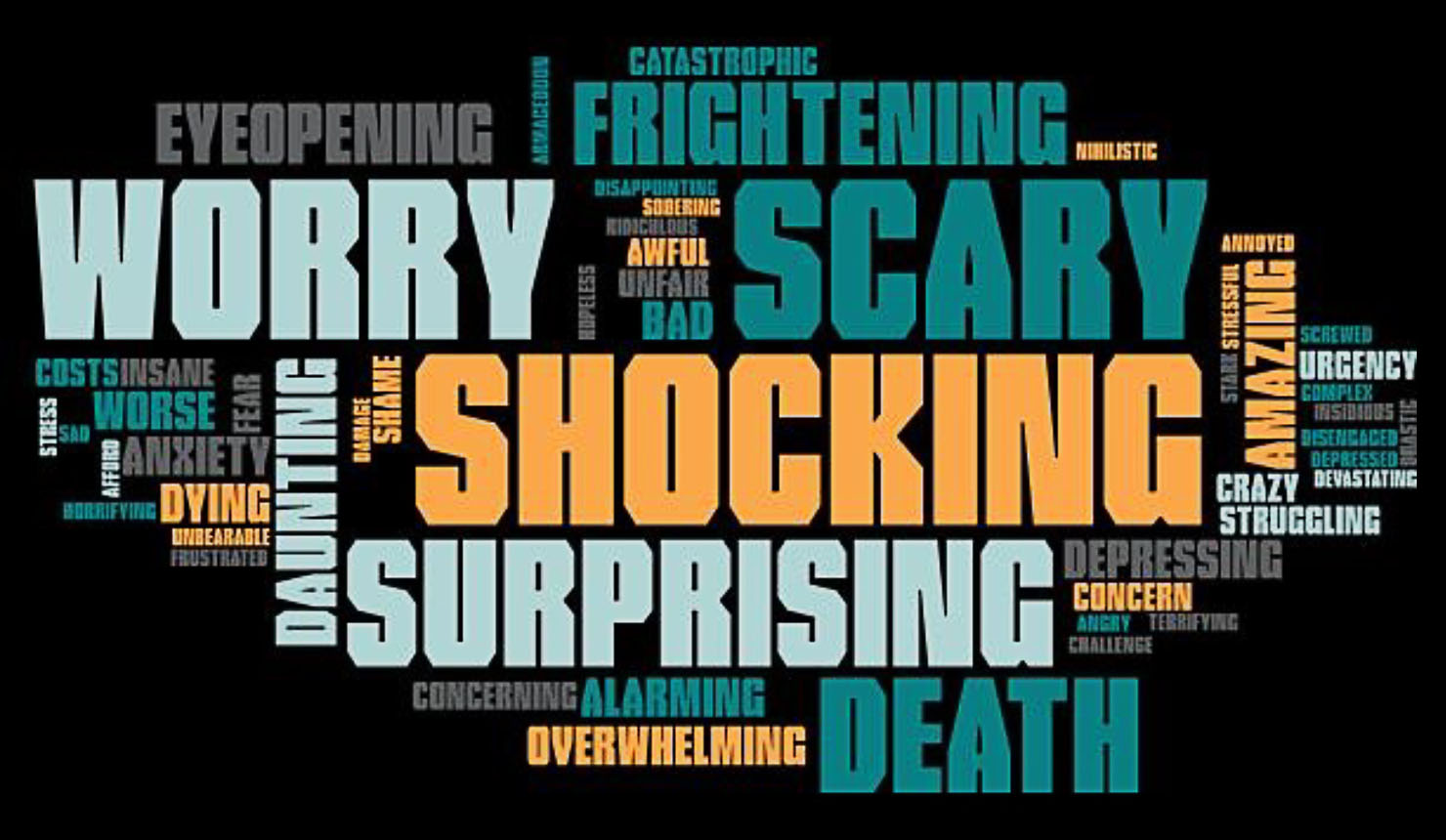
Extreme weather events, which are expected to become more frequent but less predictable, are likely to have significant impacts on the UK population and the public services we rely on, unless we take adaptation action now. This can range from building flood defences to building homes better adapted to hotter conditions. Ipsos conducted a public dialogue on climate risks and adaptation in 2022 and participants' initial concerns regarding the immediacy or climate risks are highlighted in the word cloud below.
How participants in a deliberative dialogue spoke about the state of the climate crisis4
We conducted an interview with Richard Millar, Head of Adaptation at the Climate Change Committee, who also highlighted how climate change is affecting us now.
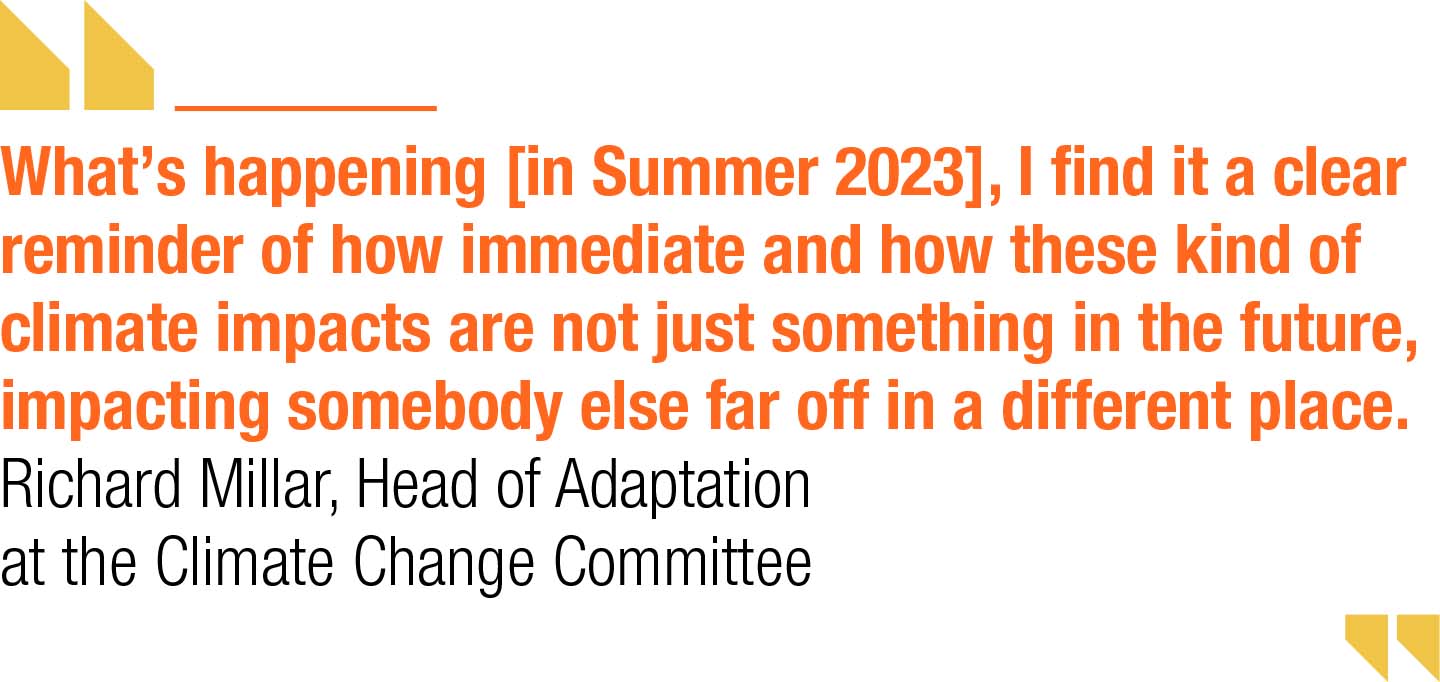
“What’s happening now [in Summer 2023], is a clear reminder of how immediate and how these kind of climate impacts are not just something in the future, impacting somebody else far off in a different place.”
– Richard Millar, Head of Adaptation at the Climate Change Committee
The UK Government recently published its third National Adaptation Programme (NAP3), which focuses on enhancing the resilience of the country’s economy and society. While the NAP recognises the importance of supporting vulnerabilities, it places greater focus on this aspect in relation to overseas development assistance rather than within the UK.
However, the NAP makes little reference to engagement with the public in adaptation planning and implementation. Critics argue that it falls short on addressing this issue.
A just transition, and just adaptation
There have been many calls to ensure that the transition to net zero is “just” – meaning that actions taken to reduce climate emissions do not have unfair detrimental impacts on any specific groups in society, and that opportunities created are available for all. But if we are considering the importance of a just transition, we must also consider how we can adapt to climate change in a just way, too. This is in line with the long-known fact that the effects of climate change will be felt more keenly by different communities.
The global south, despite being the least responsible for climate change, is likely to be5 disproportionately affected by its impacts. This pattern also hold true for the UK, where the most vulnerable individuals are expected to bear the brunt of climate change consequences. Just adaptation entails implementing fair approaches to adapting to climate change.
In an interview with the Climate Change Committee’s (CCC) Head of Adaptation, Richard Millar, we discussed the concept of just adaptation and the role of public services in addressing the challenges posed by extreme weather events. Millar emphasised the importance of the disparities in the impacts of climate change on different social groups, with the most vulnerable being hit the hardest. Often, these are also the groups with limited capacity to adapt to these new challenges on their own.
“This is obviously a global problem, and many of these impacts are being felt most strongly in developing parts of the world.”
– Richard Millar, Head of Adaptation at the Climate Change Committee
The UK faces significant risks from flooding and heat exposure, as highlighted in the UK’s recent Climate Change Risk Assessment (CCRA4) published in 2022. Flooding is a well-known and visible impact of climate change in the UK, with 1 in 6 properties (approximately 5.2 millions) at risk from rivers, the sea, or surface water. The level of flood and coastal erosion risk varies across the country, often affecting low income communities. For instance, Jaywick in Essex6, one of the most deprived areas in England, is also particularly vulnerable to flooding.
Flooding poses multiple risks, including immediate danger, financial burden and infrastructure damage. It also has a significant impact on the mental health of those affected. Individuals whose homes are impacted by flooding often experience higher rates of depression, anxiety, and post-traumatic stress disorder (PTSD) compared to the general population.7
Overheating, too, will present strong challenges in the future. Associate Professor Owen Landeg, Senior Net Zero Delivery Lead for Greener NHS, highlighted in our discussion that the 2022 summer heatwave resulted in almost 3,000 excess deaths, with many of the victims having pre-existing health conditions.
How can public services ensure a just approach to adaptation and implementation of measures?
1. Firstly, it is important to recognise the differential impacts that climate change and adaptation measures may have on different groups.
In a deliberative dialogue, carried out by Ipsos and the University of Leeds on behalf of Defra and Sciencewise in 2022, 120 participants emphasised the importance of fairness in how national government and local authorities develop climate adaptation policies. Participants felt strongly that climate adaptation policies should prioritise protecting and supporting the most vulnerable in society, including those on low incomes or at most risk of climate impacts. Participants also identified cost as a significant barrier to effective adaptation, and stressed the importance of considering costs associated with adaptation.
“The biggest priority is the vulnerable in society, those unable to help themselves.”
– Climate Adaptation Dialogue participant8
Several experts also believe that national policies need to go further, and to properly consider the impacts on vulnerable communities. Millar states that:
“Within the work that we’ve done at the Committee, one of the things that we’ve been keen to think about is how to embed fairness in policy design and to be cognisant of the kinds of implicit biases that you might make in designing a policy.”
- Richard Millar, Head of Adaptation at the Climate Change Committee
Millar emphasises that the heatwave of 2022 showed that it was important for local authorities to engage with their communities to understand who is most vulnerable to extreme heat impacts and formulate plans to support them. He contends that adaptation should consider both the vulnerability of specific groups and the fairness of actions, rather than solely relying on cost-benefit and return on investment approaches. An example of this is the government’s funding for flood and coastal erosion risk management interventions which prioritises areas of deprivation.
2. This feeds into the second element - that public services must implement co-ordinated and joined-up approaches to adaptation.
Ipsos polling indicates that the public considers the cost of inaction regarding climate change will be higher than the cost of measures to mitigate it. Two in five people believe that the economic costs associated with climate change will surpass the cost of implementing measures to reduce its effects.
The Climate Change Committee (CCC) has also emphasised that more extreme weather events and a hotter environment could result in public services struggling to operate. For instance, in extreme heatwaves infrastructure such as roads may become difficult to use. Therefore, it is crucial that infrastructure operators and local authorities consider the increasing likelihood of extreme events occurring and build this into their infrastructure planning and maintenance regimes.
“The health and social care systems across the UK are made up of people, buildings, infrastructure networks, equipment and service provision, with numerous providers. All these components are exposed to the climate hazards that will worsen as the climate changes, including flooding, overheating, and water scarcity.”
– Sector Briefing, Health and Social Care9
In our conversation with Owen Landeg, Senior Net Zero Delivery Lead for Greener NHS, he emphasised the potential benefits of integrated health and care, promoting collaboration among departments and agencies responsible for vulnerable people and adaptation. However, Landeg also points out the need for a more comprehensive approach to addressing health impacts from the cold and from overheating. For example, domestic energy efficiency programmes that focus on a whole-house retrofit approach to achieve affordable and sustainable warmth, but do not incorporate measures to address overheating or flood risk.
3. Finally, it is important to consider the co-benefits of taking action. Investment in adaptation measures can have significant co-benefits in terms of cost savings, as well as benefits for biodiversity, health, and job creation. These co-benefits are also important as a tool to engage with the public.
There are opportunities for achieving co-benefits through effective climate policy and action, which can simultaneously reduce carbon emissions and enhance resilience. In rural communities, for instance, adaptation measures can lead to future savings, while also leading to benefits for biodiversity.
However, the issue of up-front costs remains, especially if they disproportionately affect certain groups. Millar highlights that farmers were at the forefront of mitigation efforts around climate change through offsetting, and adaptation measures such as natural flood storage and at risk of climate change impacts such as drought and flooding:
“I think connecting the two issues and connecting with fairness is actually the only way you’ll probably solve that rural challenge. It’s pretty essential, actually, if we want to make headway on the joint challenges of resilience and decarbonisation
- Richard Millar, Head of Adaptation at the Climate Change Committee
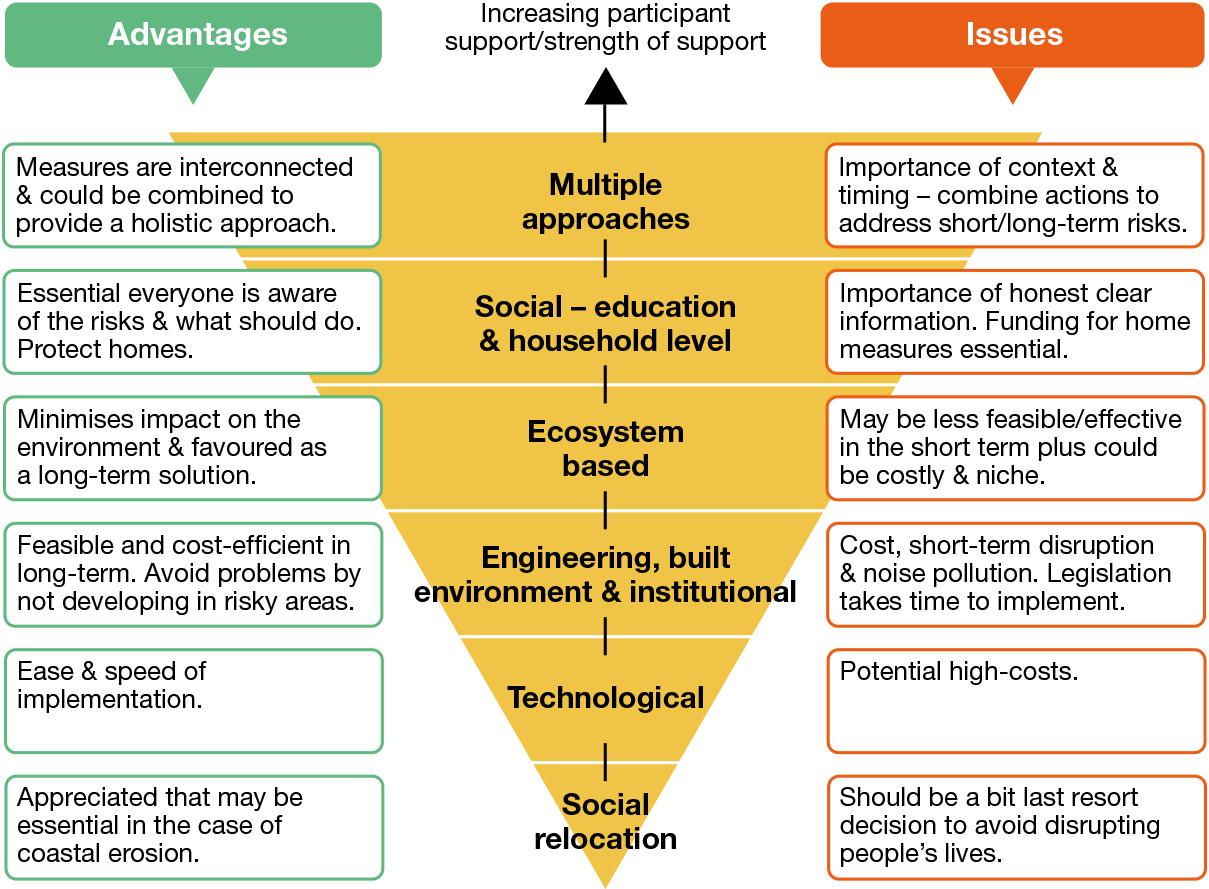
Members of the public who participated in the Climate Adaptation Dialogue also expressed support for nature-based solutions that reduce flood risk, promote natural carbon capture, and enhance biodiversity, while also benefitting mental and physical health. An integrated approach across all public services, shown below, can help to create a comprehensive package of measures that is more likely to garner public support.
Support for adaptation measures, from Climate Adaptation Dialogue10
Another significant co-benefit of climate adaptation is the potential for job creation. The creation of green jobs in low carbon industries is often highlighted as part of the just transition to Net Zero, and the same potential exists for climate adaptation. Millar emphasises the importance of these opportunities for rural areas:
“The really crucial one is then the job opportunities and the economic opportunities for those rural parts of the country that expect to deliver it.”
- Richard Millar, Head of Adaptation at the Climate Change Committee
Conclusion
To ensure a just approach to climate adaptation, public services must recognise the differential impacts of climate change and adaptation on different groups. Prioritising the protection and support of the most vulnerable in society, considering cost barriers, and engaging with communities are crucial steps.
Public services should also consider and communicate the co-benefits of taking action, such as cost savings and benefits for biodiversity, health, and job creation. Recognizing the potential for job creation in climate adaptation, particularly in rural areas, is important. Nature-based solutions that reduce flood risk and enhance biodiversity are also supported by the public. By addressing fairness and connecting adaptation with mitigation efforts, progress can be made on resilience and decarbonization challenges while stimulating the economy and promoting social justice.
References
2 Ipsos (July 2023). Ipsos Political Monitor
3 Met Office. Effects of climate change
4 Brisley, R. et al (2023). Climate Adaptation Dialogue Report, Defra/Sciencewise
6 Thorpe, C. (2017). Costal crisis: deprivation in Jaywick Sands, Inside Housing
7 Public Health England (2020). The English National Study of Flooding and Health
8 Brisley, R. et al (2023). Climate Adaptation Dialogue Report, Defra/Sciencewise, p. 54
9 UK Climate Risk (2021). Health and Social Care Briefing
10 Brisley, R. et al (2023). Climate Adaptation Dialogue Report, Defra/Sciencewise, p. 31