
Beyond Opinions: 5 Advertising Insight Myths We Put to the Test
By Alice Martin | Director, Ipsos Creative Fuel
Key Takeaways
Start with a meaningful insight. It matters. Make it relevant to your audience, but crucially, make sure your category and brand have a credible reason to address it too.
Explore both rational and emotional insights. Rational insights can be just as effective as emotional ones. If the problem is real and your brand has a credible role to play, the insight doesn’t need to carry the emotion — the creative can.
Feel empowered to explore insights rooted in aspirations that resonate with your audience, but choose an aspiration that also connects naturally with your category and brand, and keep that front of mind.
Look for what feels true, not just what feels new. Focus on finding a credible insight that feels true and relatable. Then let the creative find the unexpected angle that brings it to life.
Gut instinct has a role when uncovering an insight, but your audience has the answer. Testing can reveal whether an insight feels relevant and credible before you invest in bringing it to life.
What we did and why
In the advertising world, we all have opinions on what makes an insight “good,” yet there’s surprisingly little evidence to show how much they matter or what makes them effective.
We decided to change that. To go beyond opinion, we tested real-world advertising insights alongside the campaigns they inspired using Ipsos Creative|Spark, our in-context ad evaluation solution, drawing on responses from more than 21,000 human respondents.
Ipsos Creative|Spark measures how effectively advertising drives brand and business outcomes. Its core metric, the validated Creative Effectiveness Index (CEI), combines Brand Attention, the ad's ability to be encoded in memory and linked to the brand, and Behavior Change, the ad's ability to influence short-term brand choice. Higher CEI scores are associated with stronger in-market sales performance. We also examined the Brand Relationship Index, which measures an ad's ability to strengthen consumers' relationship with the brand and build long-term brand equity.
Within each ad evaluation test, consumers were also asked to rate the insight that inspired the ad across a range of measures. Building on our Ipsos Misfits Framework, these measures were designed to assess insight strength across two key dimensions:
Permission to Play (whether a category or brand can credibly address an insight, with a goal of laddering up into an authentic creative idea) and
Relevance (how resonant and meaningful an insight is to its audience in pursuit of an ad that expresses empathy for the audience).
By evaluating the insight and creative together, we could trace the link from effective insights to effective creative, and in turn, business results.
What do we mean by an “advertising insight”?
While advertising insights can take many shapes, we define one as the core audience need, want, problem, aspiration, or tension that a brand can credibly address in advertising. We zero in on raw audience truths, which often look different once they are polished into a final brief for creatives.
First, we wanted to settle the big question the industry has long debated: Do stronger advertising insights make stronger ads?
To do this, we carried out a drivers analysis to examine whether higher-rated insights across Permission to Play and Relevance were associated with higher Creative Effectiveness Index (CEI) scores for the corresponding ad.
Myth #1
The Myth: A strong advertising insight isn’t critical to effective creative.
Ipsos data reveals that surveyed advertising professionals are somewhat split on whether a strong insight is essential to building the strategic thinking behind effective creative. With opinion divided, we turned to the data to find out whether strong insights really make a difference.
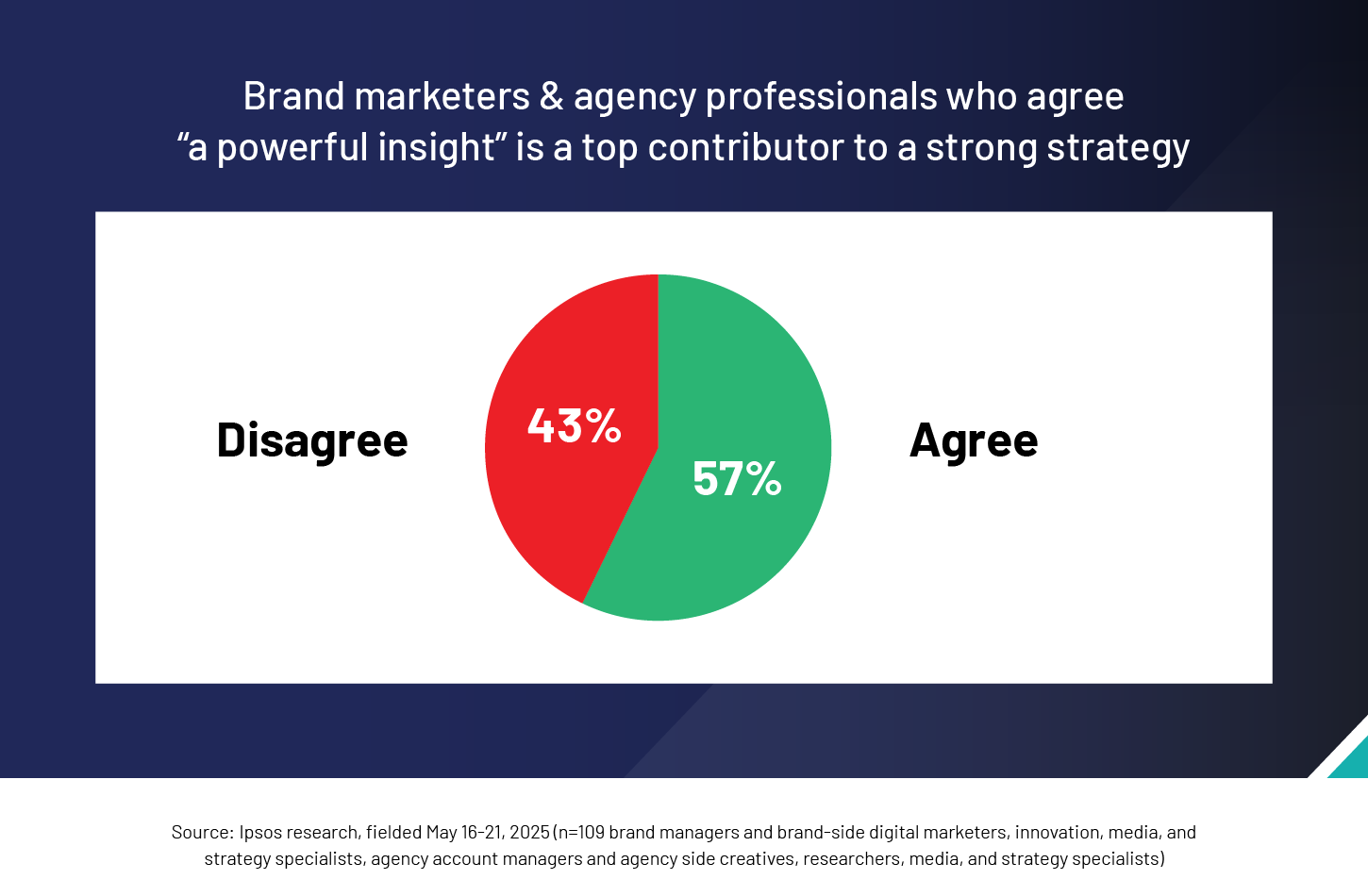
The Rethink: Strong advertising insights matter. A lot.
The evidence is clear: not all advertising insights are created equal.
Our analysis found that ads rooted in insights that score strongly on both Permission to Play and Relevance are, on average, +59% more effective.
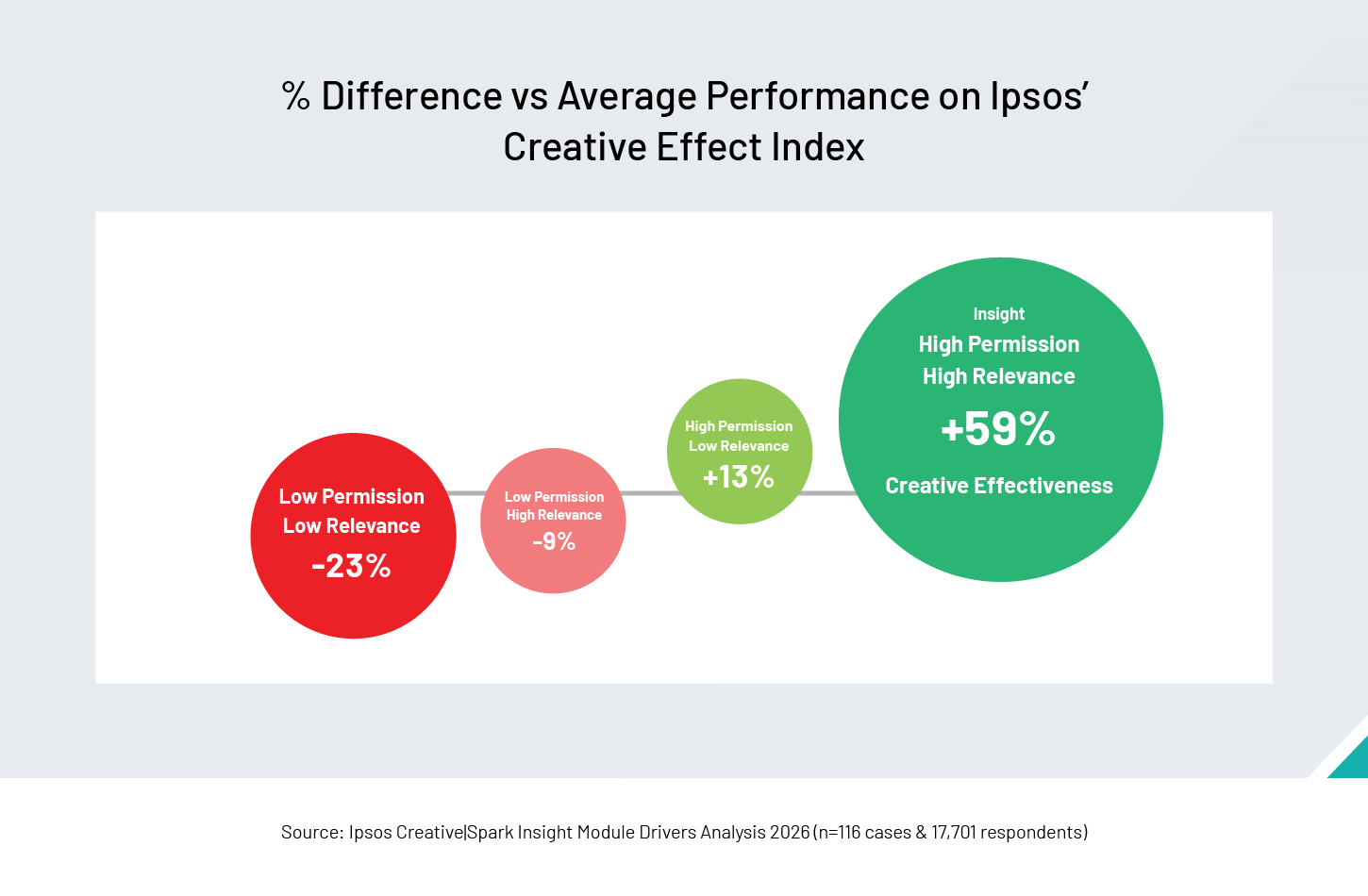
Optimizing the effectiveness of the insight should therefore be a priority for brands. An effective insight — one that can set creative up for success — must resonate meaningfully with the audience and address something the category can credibly speak to. It is a critical piece of the puzzle in building effective advertising. It provides the foundation for a more authentic creative idea and a more empathetic, human ad, while also giving creatives an inspiring jumping-off point for execution.
But here’s the twist: Permission to Play matters even more than Relevance. An insight being highly relevant isn’t enough. If the category or brand has no credible role in solving the need, it’s not the insight to build your strategy around.

To illustrate this further, we looked at a real-world ad, Lay’s “Happy Retirement.”
The tested insight was inferred by Ipsos strategy experts based on the creative and public statements from the team, not provided directly by the brand. Testing was funded by Ipsos.
The advertising insight was: “Knowing the origin of my food gives me confidence in its quality and freshness.”
This insight performed strongly on both Permission to Play and Relevance. Food provenance and locally grown food are increasingly important to consumers, and Lay’s has a credible role to play, given that the vast majority of Lay’s potato chips sold in the USA are made with potatoes grown in the USA.
And the results of the final ad speak for themselves. This ad delivered a Creative Effectiveness Index score well within the top third of all ads tested within our database.
But what about the classic characteristics we’ve long associated with strong advertising insights? In our second analysis, we asked: What qualities do the strongest-performing insights share?
Ipsos strategy experts classified each insight according to a range of characteristics and examined how these characteristics related to the insight’s Permission to Play and Relevance ratings — and ultimately, the ad’s effectiveness.
Should insights be emotional or rational? Aspirational or not? Fresh or familiar? Let’s find out.
Myth #2
The Myth: If an advertising insight isn’t emotional, it isn’t powerful.
Ask around the advertising world and you’ll hear a familiar belief: the best ideas start with emotion and end with emotion, from the initial insight right through to the final creative. But does the insight need to tug at the heartstrings to be effective? To assess this, we compared emotional versus rational insights. Here’s what we mean by each:
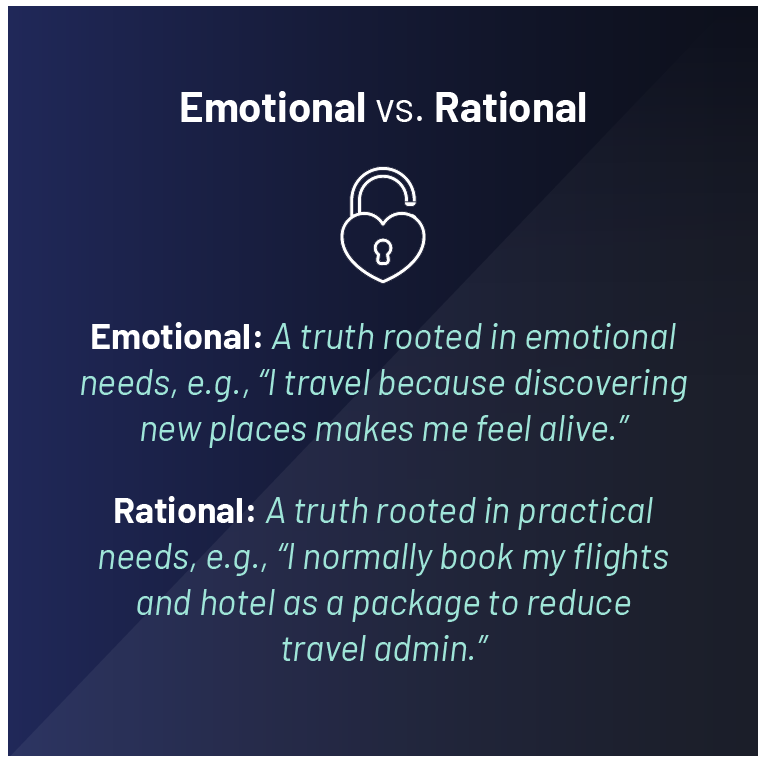
The Rethink: Advertising insights don’t have to be emotional to be effective.
Our analysis found that emotional and rational insights achieve similar Permission to Play and Relevance ratings and, importantly, while emotional insights show a slight advantage on some effectiveness measures, the differences are modest. Essentially, emotion in the insight is not a requirement for effectiveness.
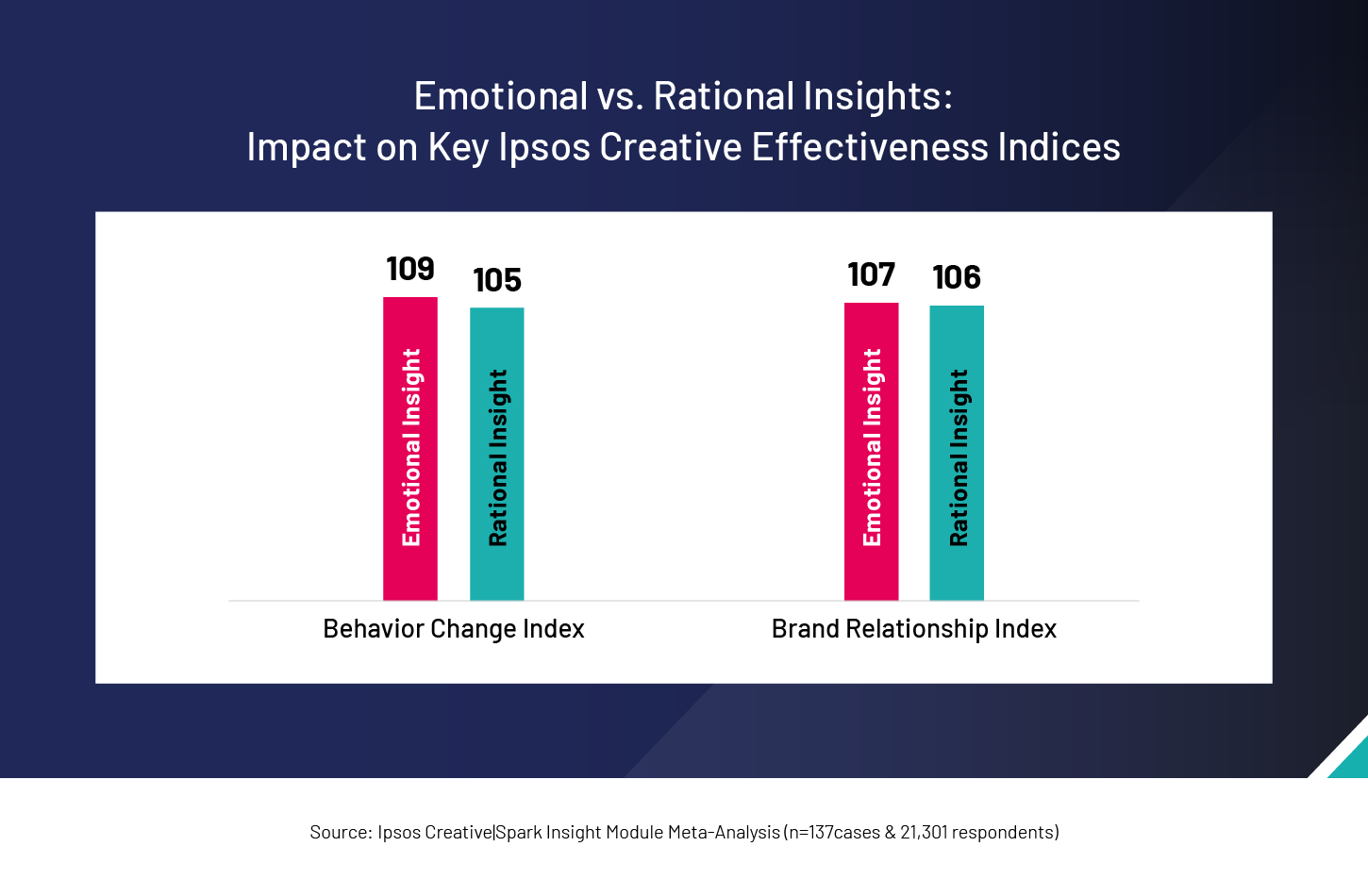
This isn’t to say emotion doesn’t matter in the creative. It absolutely does. In fact, Ipsos data shows that when an ad stirs the emotions of the audience the Creative Effect Index can see a 26-point lift.
But that emotional impact doesn’t have to start with the insight. A rational insight can inspire an emotional ad, with the feeling coming through in the creative expression.
We see this play out in the real-world ad Chewy’s “Junior, the Forever Friend.”
The tested insight was inferred by Ipsos strategy experts based on the creative and public statements from the team, not provided directly by the brand. Testing was funded by Ipsos.
The advertising insight was rational: “When choosing gifts for my pets, I look for ones that are appropriate for their life stage.”
But the creative took it somewhere much more emotional.
Ipsos data shows there was an 8 percentage point jump between those who found the insight emotional and those who found the ad emotional.
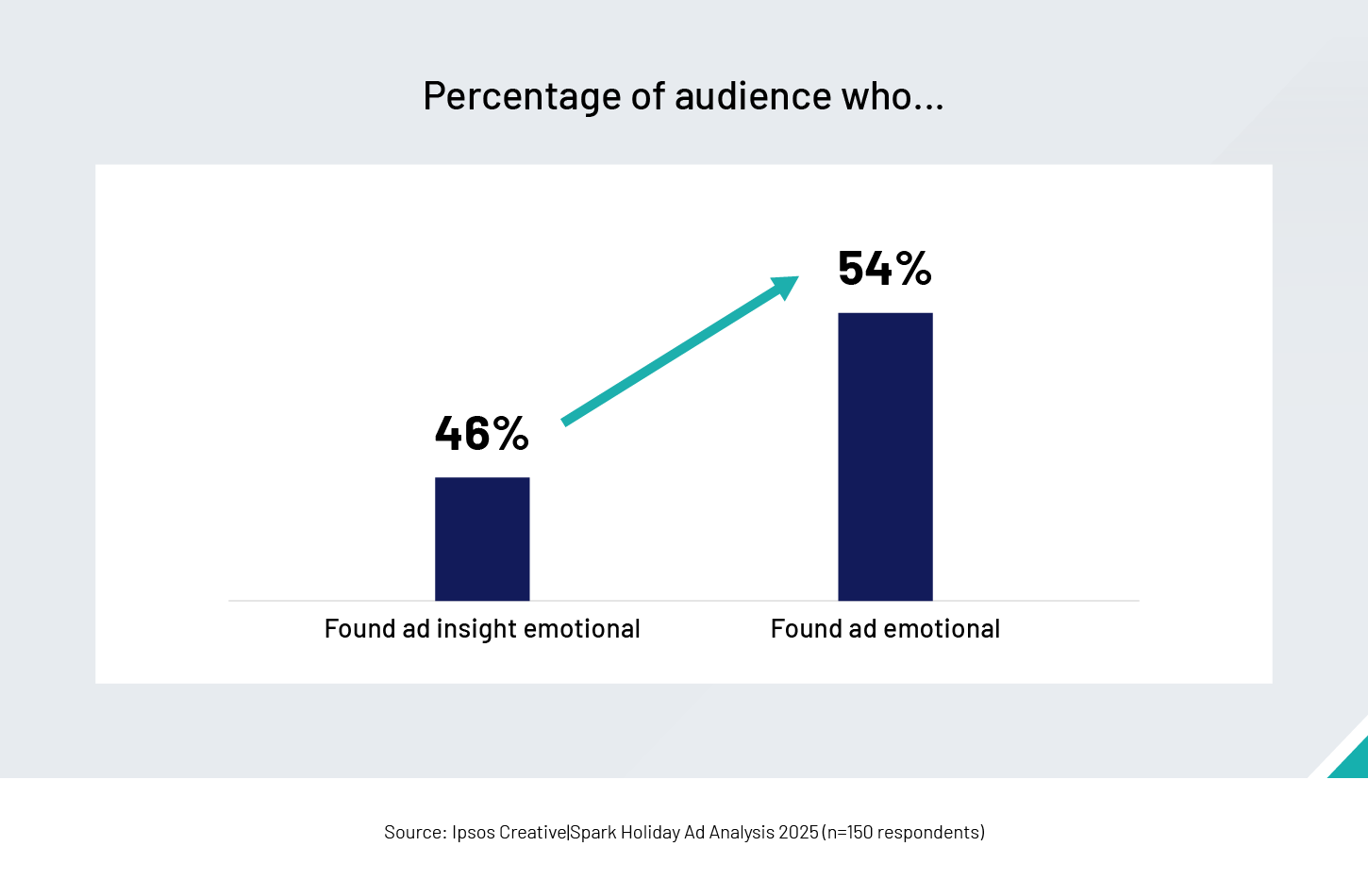
Alongside an above-norm emotional rating, the ad achieved scores in the top third of all ads tested within our database on both Behavior Change and Brand Relationship. This provides further evidence that rational insights can underpin emotionally engaging and effective creative.
Myth #3
The Myth: The more an advertising insight speaks to the audience’s aspirations, the better.
Emotion isn’t the only thing advertising puts on a pedestal. Aspiration gets plenty of attention too. The thinking goes that the best insights tap into who people want to become or what they want to achieve, giving brands a role in helping them get there. But does an insight need to tap into people’s aspirations to make an ad work? To understand, we compared aspirational versus non-aspirational insights. We define these as:
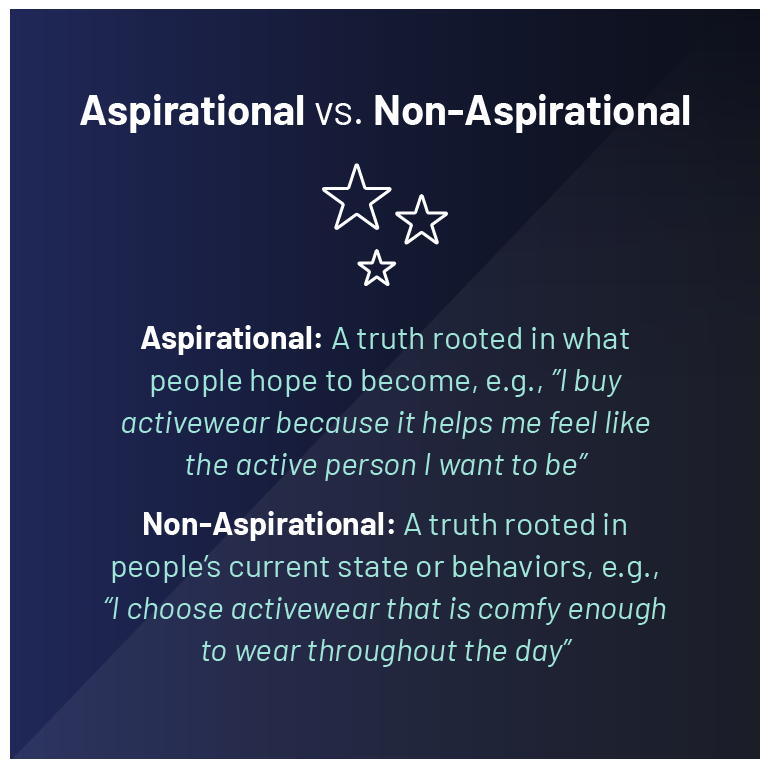
The Rethink: Aspirational advertising insights can boost effectiveness — but only if the brand has Permission to Play.
The truth? Yes. Aspirational insights can inspire creative that builds stronger brand relationships compared to non-aspirational insights.
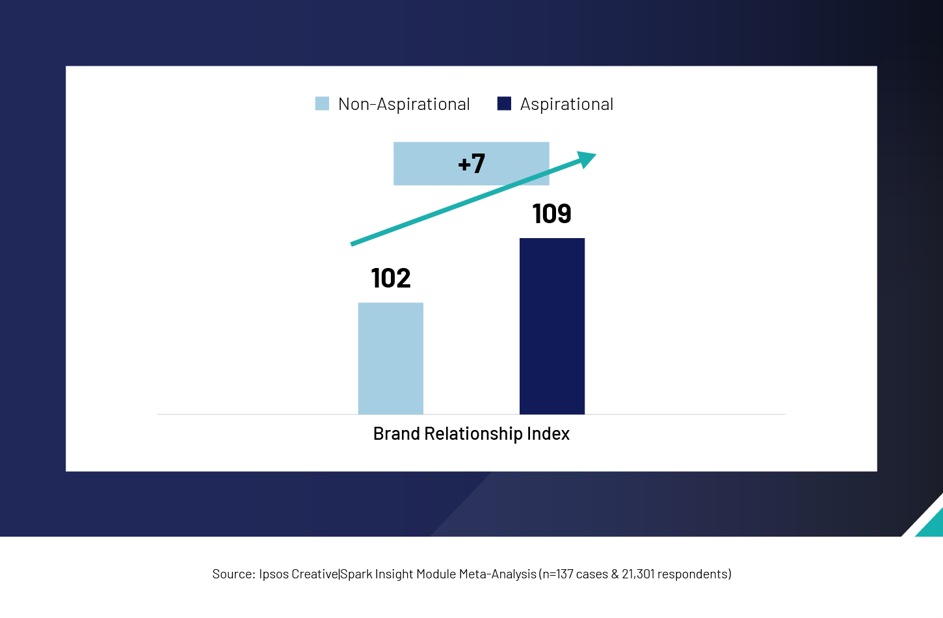
However, there is an important watch-out. Aspirational insights, on average, score at or above norm for all Permission to Play and Relevance insight ratings — except Category Fit and Brand fit, where they score slightly below norm.
That could be a dangerous miss, because our analysis shows Category Fit is the No. 1 quality an insight should have to maximize the creative effectiveness of the ad it inspires.
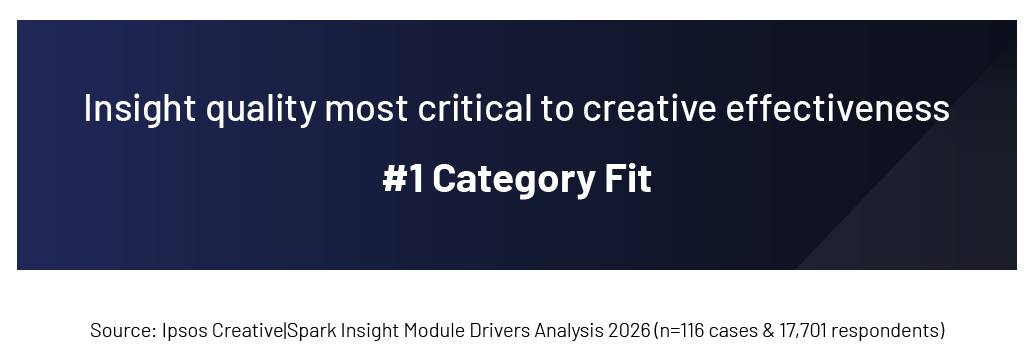
So, while aspirational insights have the potential to push your creative further, that potential can sometimes be limited by the insight stretching beyond what the category or brand can credibly address.
Aspirational insights should therefore still aim to sit in a territory the category — and eventually the brand — can authentically own.
We see this play out clearly in real-world analysis. We compared the Category Fit ratings of three aspirational insights against the Brand Relationship Index scores of the ads they inspired.
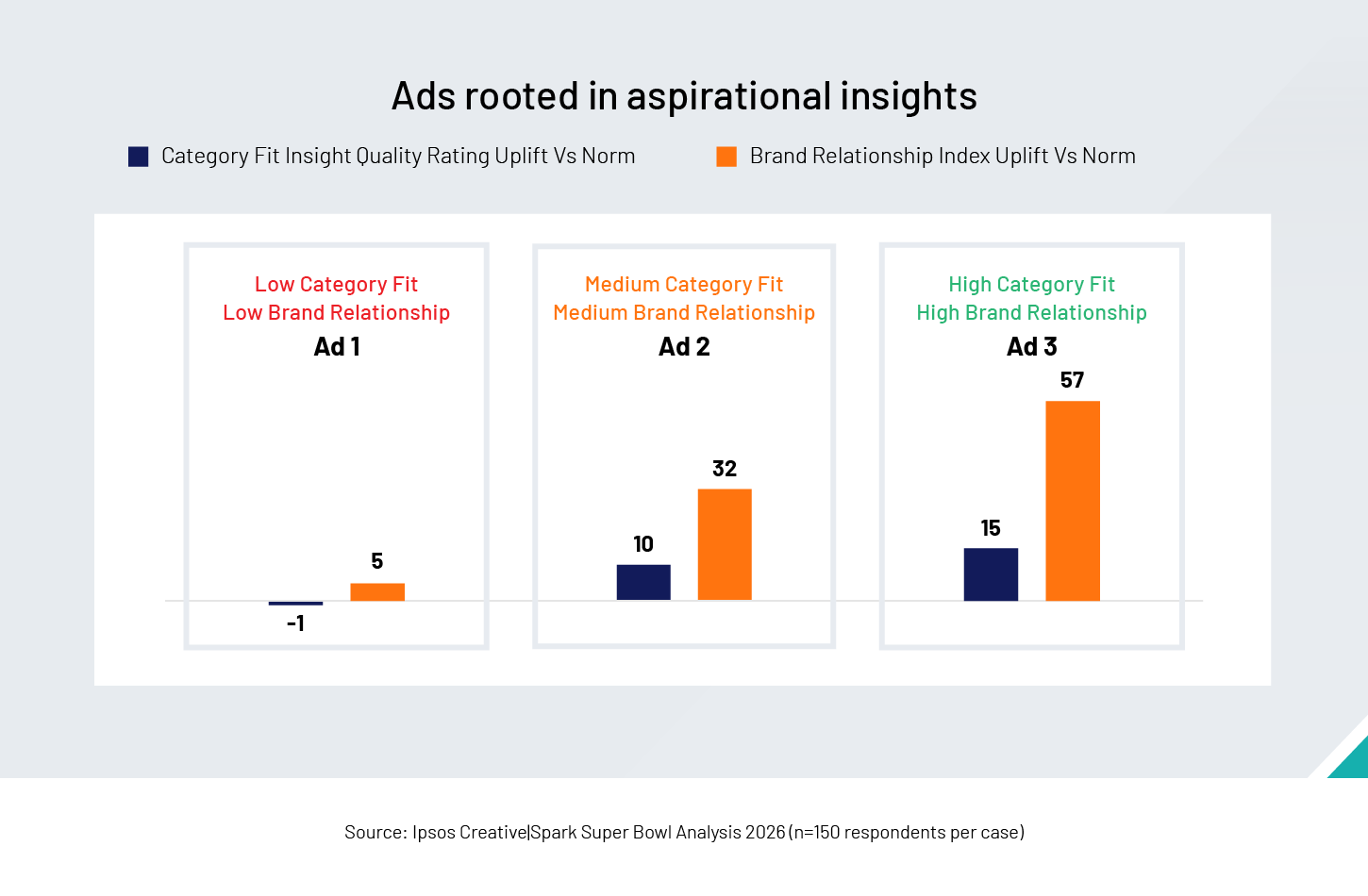
The examples show that ads built on insights that are both aspirational and strongly rooted in the category deliver greater impact.
To put more context behind this, we deep dived into Oakley Meta’s “Athletic Intelligence Is Here” ad.
The tested insight was inferred by Ipsos strategy experts based on the creative and public statements from the team, not provided directly by the brand. Testing was funded by Ipsos.
The advertising insight: “I want an edge on and off the field.”
The brand delivers on the insight almost literally. The ad showcases Oakley Meta’s credible ability to give athletes the performance edge they’re looking for, using AI to sharpen vision, support decision-making, and amplify potential both on and off the field.
The insight scored 8 percentage points above norm on Category Fit rating. The corresponding ad then achieved a Brand Relationship Index score in the top third of all ads tested within our database, demonstrating how an insight with strong Category Fit can translate into creative that strengthens the brand relationship.
Myth #4
The Myth: The best advertising insights are fresh and unfamiliar.
Conventional thinking goes that the best advertising insights uncover something people haven’t seen or thought about before. In fact, agencies rank “an insight that unlocks a new way of looking at things” as a top-three must-have for a good strategic brief, according to Ipsos research fielded in May 2025. But does an insight really need to be fresh and unfamiliar to make an ad work? To find out, we compared fresh versus familiar insights. By this, we mean:
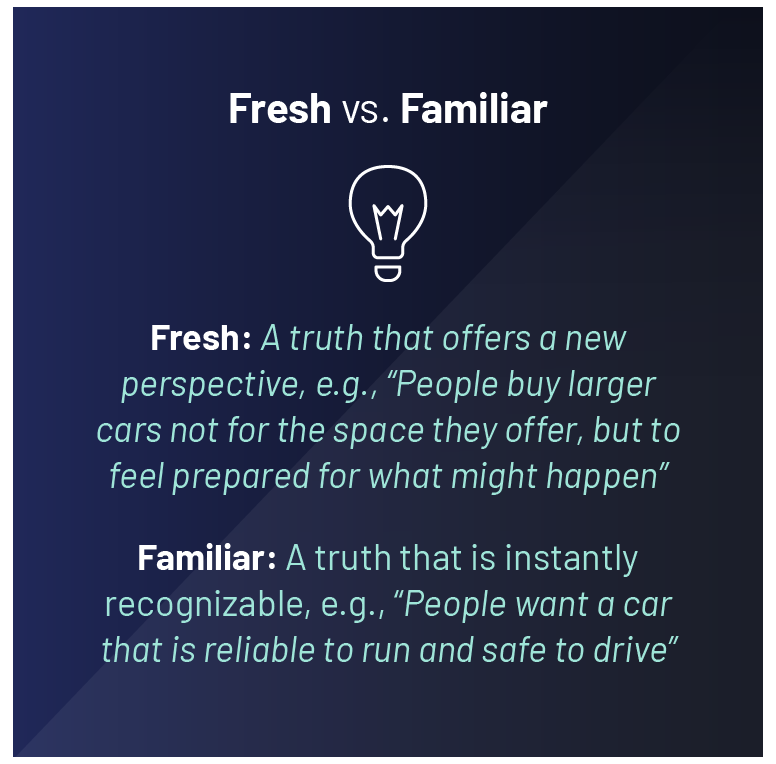
The Rethink: Advertising insights don’t have to be novel, just true.
The evidence actually shows familiarity can be a strength, not a weakness. Familiar insights can provide the foundation for creative that strengthens relationships between brands and their audiences.
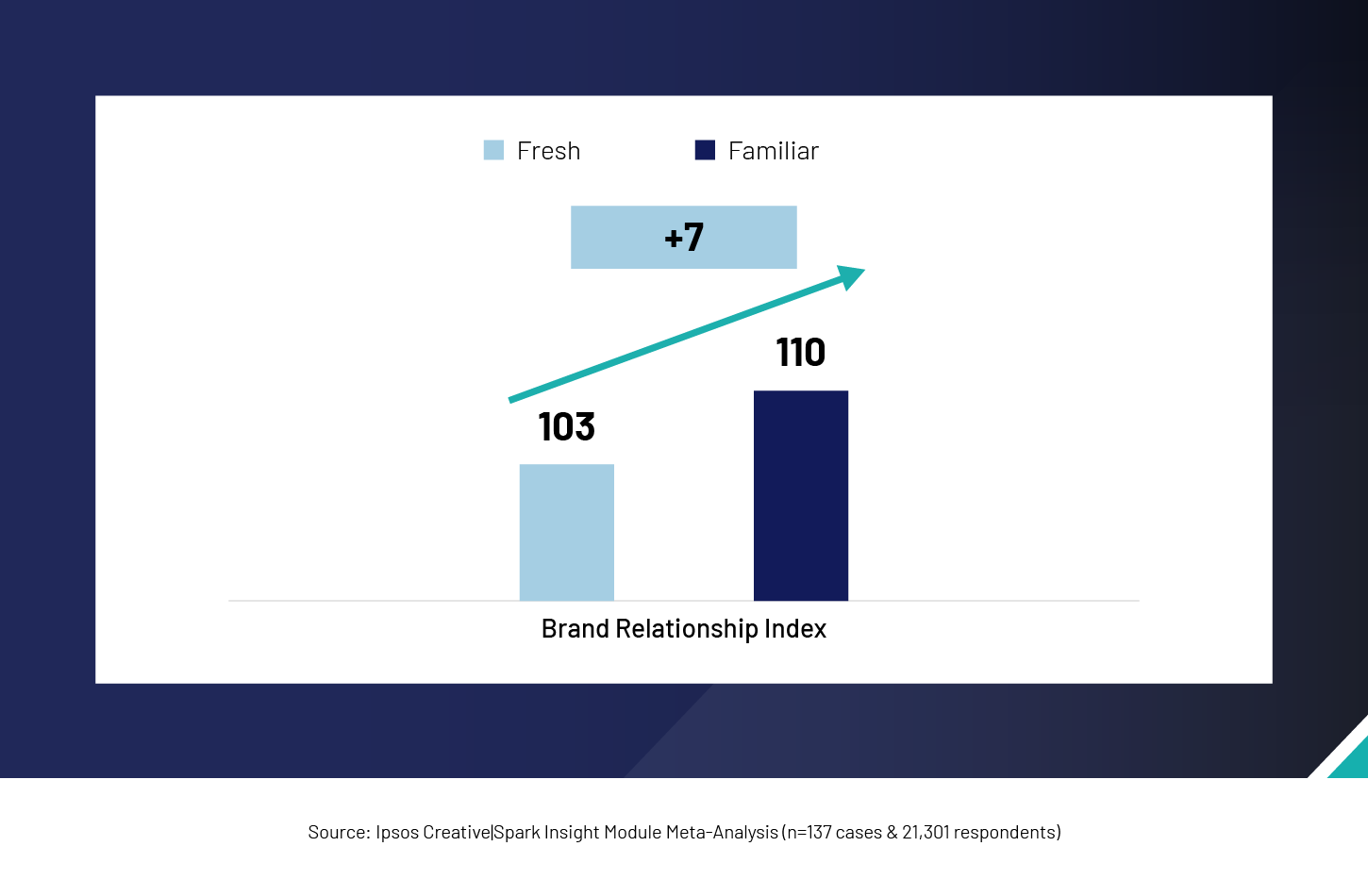
Familiar insights reflect experiences people already recognize. And when an audience can recognize an insight, it makes the brand’s role in addressing it feel more believable.
However, just as a rational insight can inspire an emotional ad, a familiar insight can — and should — inspire fresh creative. “Unique” ads can drive up Creative Effect Index scores by 37 points. A familiar human truth can become the foundation for an unexpected brand role, a surprising perspective, or an entirely new creative expression.
GrubHub’s “The Feest.” is a prime example of an ad’s creative execution bringing freshness to a familiar insight.
The tested insight was inferred by Ipsos strategy experts based on the creative and public statements from the team, not provided directly by the brand. Testing was funded by Ipsos.
The advertising insight: “I would order more from restaurant delivery services if I didn't have to pay so many fees.”
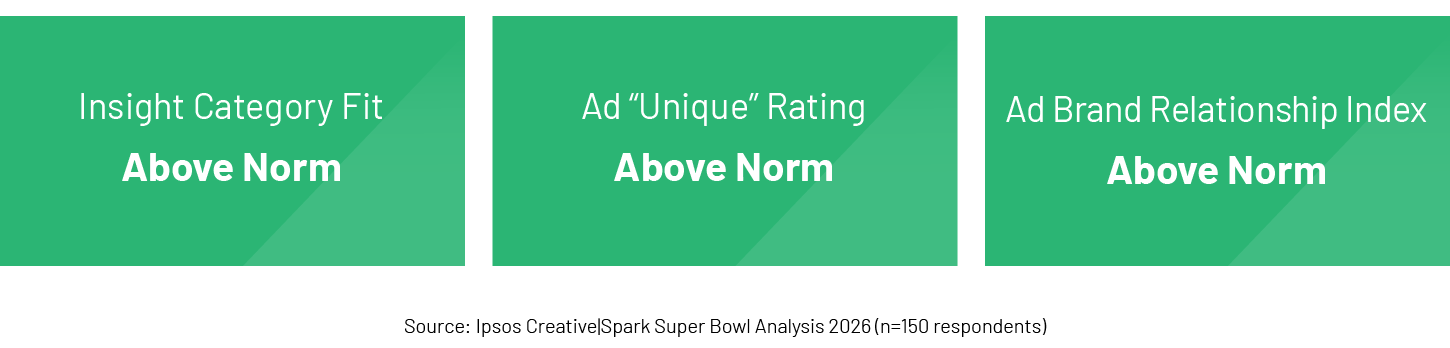
There’s no spectacular “ah-ha” in this insight, but it feels believable for both the category and the brand, playing squarely in a food delivery service’s territory. That’s reflected in its Category Fit rating, which is 7 percentage points above the norm.
The creative, however, found a compelling way to bring this familiar truth to life. The ad performed above norm for being “unique,” and ranked in the top third of all ads tested within our database for Brand Relationship Index. Showing a familiar insight can inspire fresh creative.
We now know getting the insight right matters, and what makes one effective. But our next question is: How do you know when it’s the one? Is it gut instinct? Or is there more to it?
Myth #5
The Myth: If an advertising insight feels right, it’s probably strong enough.
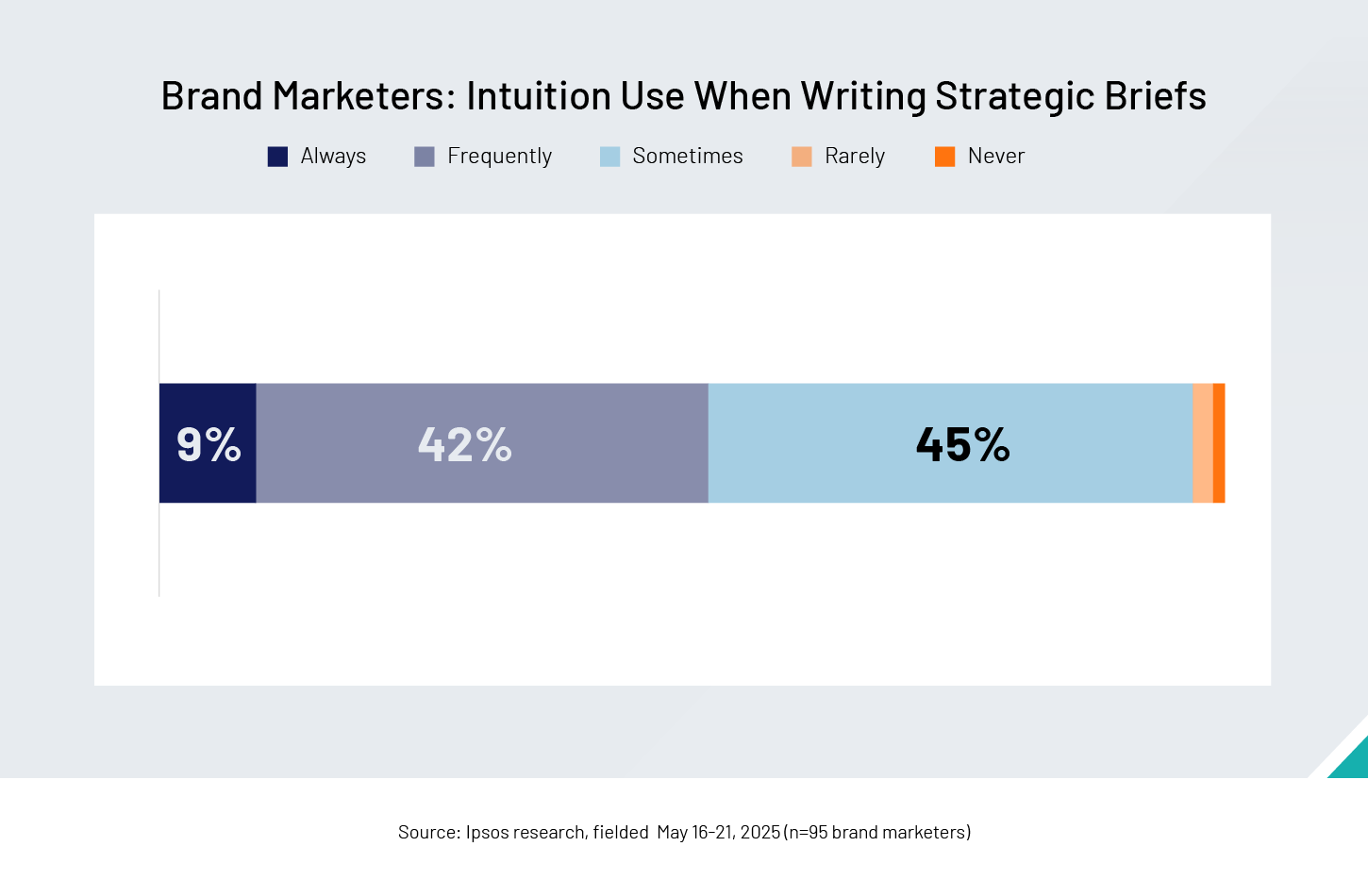
Over half of brand marketers “frequently” or “always” rely on their intuition when writing briefs for creatives, so gut instinct plays a big role in shaping strategy. And for many, that may feel like enough. But is it?
The Rethink: Trust your instinct. Then test it.
Gut instinct has a role. It can help brands make a strategic call on whether an insight feels right on paper. And some of the classic characteristics we’ve evaluated here, such as whether it is aspirational or familiar, can help inform that call.
But instinct alone can’t tell brands whether an insight will resonate with their audience, or whether their brand and category have a credible role to play. For that, there’s no substitute for hearing from the audience itself.
When we examine how target audiences respond to both ads and the insights behind them, strong audience-rated insights are consistently associated with more effective creative, improving performance by up to 59%, as we saw earlier. In other words, when the target audience responds positively to an insight early in the process, brands can have greater confidence that the creative it inspires will also perform strongly.
That means it’s worth pressure-testing an insight and strategy before investing in creative development. Is the insight genuinely relevant to the audience? Does the brand have Permission to Play? And ultimately, is the insight setting the creative team up for success?
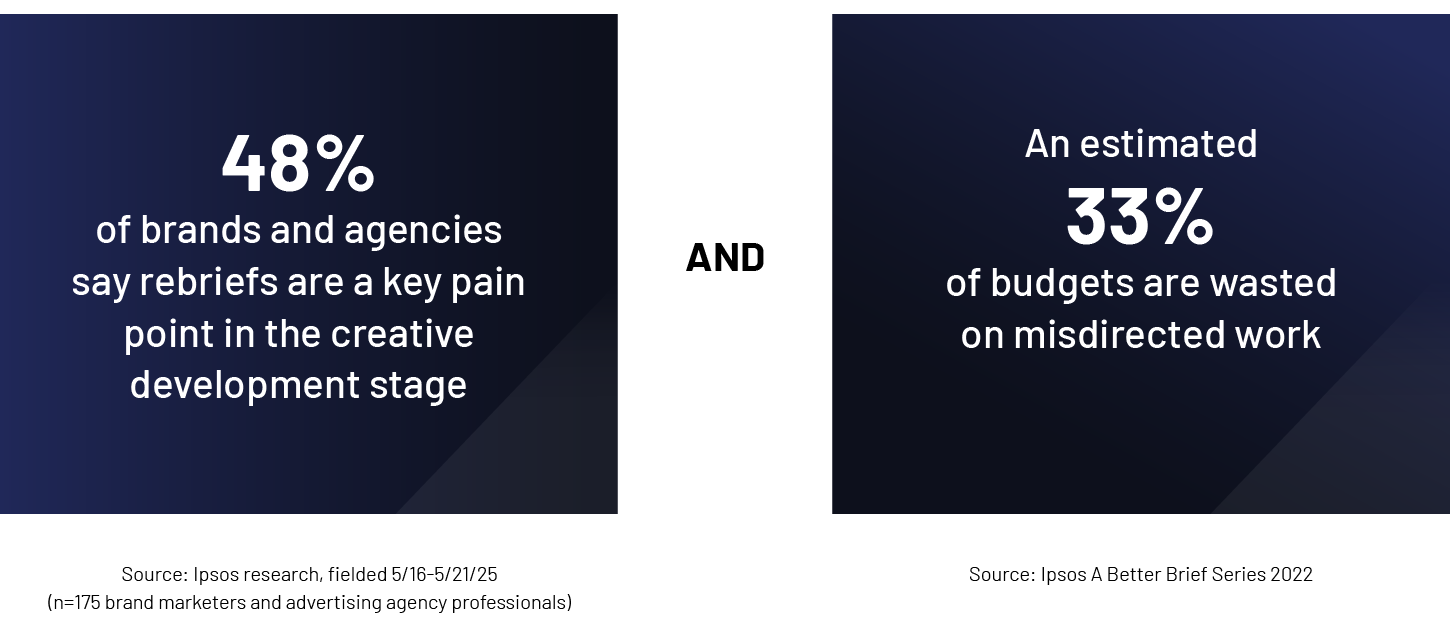
With 48% of surveyed brands and agencies citing that rebriefs are a key pain point in the creative development stage, upfront validation isn't extra work — it's protection against expensive course corrections, which another Ipsos study found can reach up to 33% of respondents’ total marketing budget.
How can we help?
Ipsos Creative Fuel is Ipsos’ advertising insight and strategy research solution, that helps brands move beyond instinct and understand whether their strategic direction is right for their audience, before entering creative development.
Our unique approach has brought inspiration, validation and focus to the insight and strategy development process for many of the world's leading brands, giving stakeholders the confidence to make decisions and keep the process moving forward.
Creative Fuel Exploration helps brands uncover and prioritize new strategic opportunities, while Creative Fuel Assessment helps validate, optimize and strengthen existing strategies.
For more information on how to build better advertising insights and strategies with Ipsos Creative Fuel, visit: https://www.ipsos.com/en-us/fuel or contact Lisa Sobilo, VP of Ipsos Creative Fuel.
 | Lisa Sobilo VP, Ipsos Creative Fuel [email protected] |