What do Brits want from the Budget?
October 2026
Checking the pulse of the nation
-

Labour leads, Tories rise
Labour now lead by eight points with the Conservatives in second place in our latest voting intention polling.
Click here -
Back in the game?
The public are now more likely to say the Conservatives are the main opposition to Labour than Reform UK for the first time in over a year.
Click here -

The home front holds back
Despite rising support for increasing defence spending, half of Britons say there are no circumstances under which they would take up arms for Britain.
Click here
The Budget Balancing Act
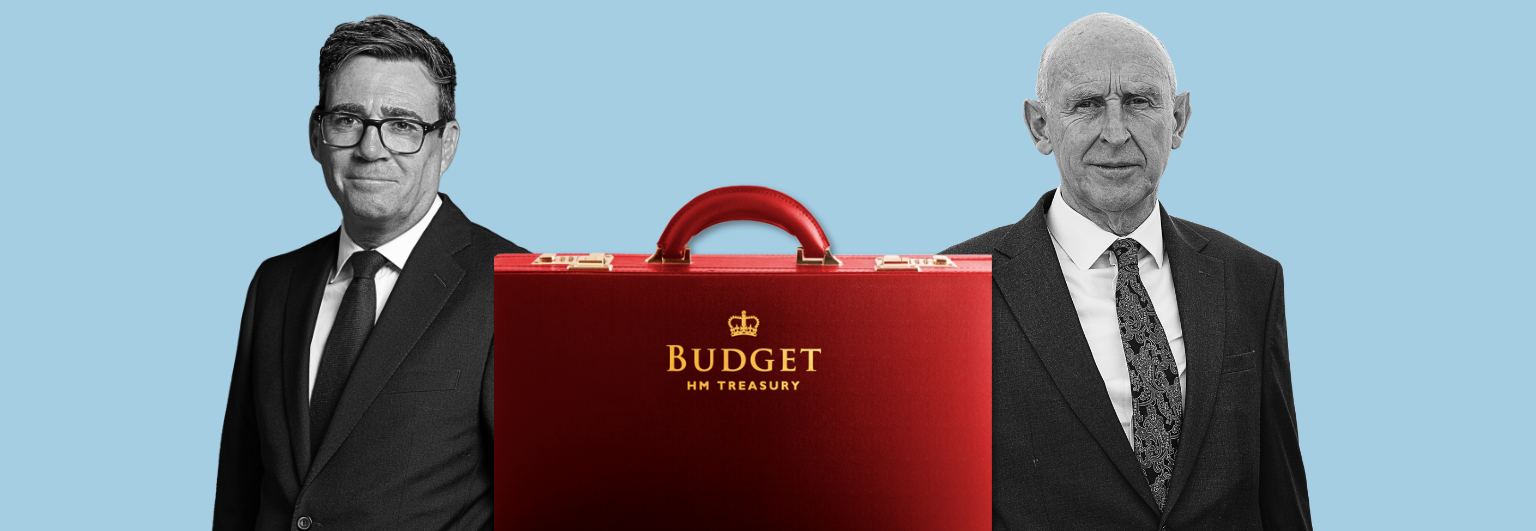
View Alex's slides | View David's slides | Watch the recording
The public understands the country faces difficult economic choices, but remains deeply divided on what those choices should be. This tension sat at the heart of the latest Beyond the Bubble webinar, where Ipsos joined the National Institute of Economic and Social Research (NIESR), to explore the economic and political realities shaping the Chancellor's decisions.
Chaired by Caroline Hepker, Bloomberg's Daybreak Europe anchor, the discussion brought together Ipsos' public opinion expertise presented by Alex Bogdan, Research Director, economic analysis from David Aikman, NIESR Director, and insights from former Bank of England Chief Economist Andrew Haldane.
What the public is telling us
Alex Bogdan opened with the political and public opinion picture. While the government has benefited from improved perceptions and a more favourable political environment, that has not translated into a more positive economic mood.
Ipsos polling shows that four in five Britons (80%) describe the economy as being in a poor state, while just 17% say it is in good shape. Confidence in Labour's ability to improve people's lives has improved since February, but still only around a third of the public say they are confident the party can deliver meaningful change.
The public also expects a difficult Budget. Nearly two-thirds (65%) expect taxes to rise, while half anticipate increased government borrowing. At the same time, people want help with household finances, support for businesses and continued investment in public services including the NHS, policing and defence.
The challenge for policymakers is that voters remain reluctant to embrace trade-offs. Whether the debate is growth versus redistribution, lower taxes versus public spending, or immigration versus economic growth, Ipsos finds opinion remains deeply divided. As Alex Bogdan put it during the discussion: "the hard choices have not gone away".
The government has some political breathing space, as most voters are waiting to judge the government and Chancellor’s approach. But patience is likely to run out as voters want to know how they will personally benefit from it.
The fiscal challenge beneath the headlines
David Aikman, Director of the National Institute of Economic and Social Research, explained that the UK's economy has proved more resilient than many expected. GDP growth is running at 1.8% year-on-year, with more recent annualised measures closer to 2.6-2.7%. However, stronger growth masks a more difficult fiscal picture.
Government borrowing costs have risen sharply, with UK 10-year borrowing yields reaching around 5.4-5.5%, the highest among G7 economies. While some of this reflects temporary global factors, NIESR analysis suggests much of the increase could prove persistent.
The result is a growing challenge for the public finances. Current fiscal plans imply moving from a primary deficit of around 1.5% of GDP to a primary surplus of around 1.5% within five years, amounting to roughly £100 billion of annual fiscal tightening. Additional borrowing now may ease short-term pressures, but would make those future adjustments even more demanding.
One striking finding from the joint Ipsos-NIESR research is that the public already appears aware of these pressures. Fifty-eight per cent believe significant additional action to reduce debt will be needed within the next five years, while 52% think a serious loss of market confidence in the UK's ability to pay its debt is likely.
What should the government prioritise?
Joining the discussion, former Bank of England Chief Economist Andrew Haldane said a central challenge facing the government is growth.
While welcoming signs of improving confidence and greater stability around the Budget process, he warned that fiscal risks have increased as global borrowing costs continue to rise. In his view, this is not the moment to reduce fiscal headroom, but to strengthen it (but not through tax rises).
Both Andrew Haldane and David Aikman also discussed the government’s broader growth strategy. David highlighted weak private investment as one of the UK's long-standing economic challenges, while Andy questioned whether the government has yet articulated a sufficiently developed growth model.
For Haldane, the key test is whether policy makes the UK a more attractive place for businesses, talent and capital. Devolution may form a necessary part of the solution, but it is not a growth strategy on its own. Investors, meanwhile, will be looking for signals of long-term stability and policy certainty.
He rounded off his contributions with a clear Budget prediction - expected increases in borrowing and tax, or in other words "I expect a budget for the backbenchers rather than for business or the bond markets.”
The verdict
The webinar highlighted an unusual moment in British politics and economics. The public remains gloomy about the economy, and many understand the scale of the fiscal challenge ahead. They expect action, but disagree on what form it should take. They support growth, but are less convinced about the trade-offs required to achieve it.