A glimpse into America’s future?
A glimpse into America’s future?
This week, we released our Axios/Ipsos poll, conducted with Telemundo, exploring the priorities and voting sentiment of the Hispanic and Latino community. There is much to unpack.
But, before we investigate that more closely, we have to consider a more fundamental question – who identifies as Latino? As a group, Latino Americans represent the heritage of many different countries and cultures.
When it comes to their politics, as a group, they tend to look like independents who lean Democratic, but have a unique stance on certain issues – like immigration and the economy.
- A growing population. The total US population grew by more than a third from 1970, up from 205m then to more than 329m today. During the same period, the number of Americans who identify as Hispanic or Latino grew even more rapidly. They now make up around 19% of the total population, up from 5% in five decades ago.

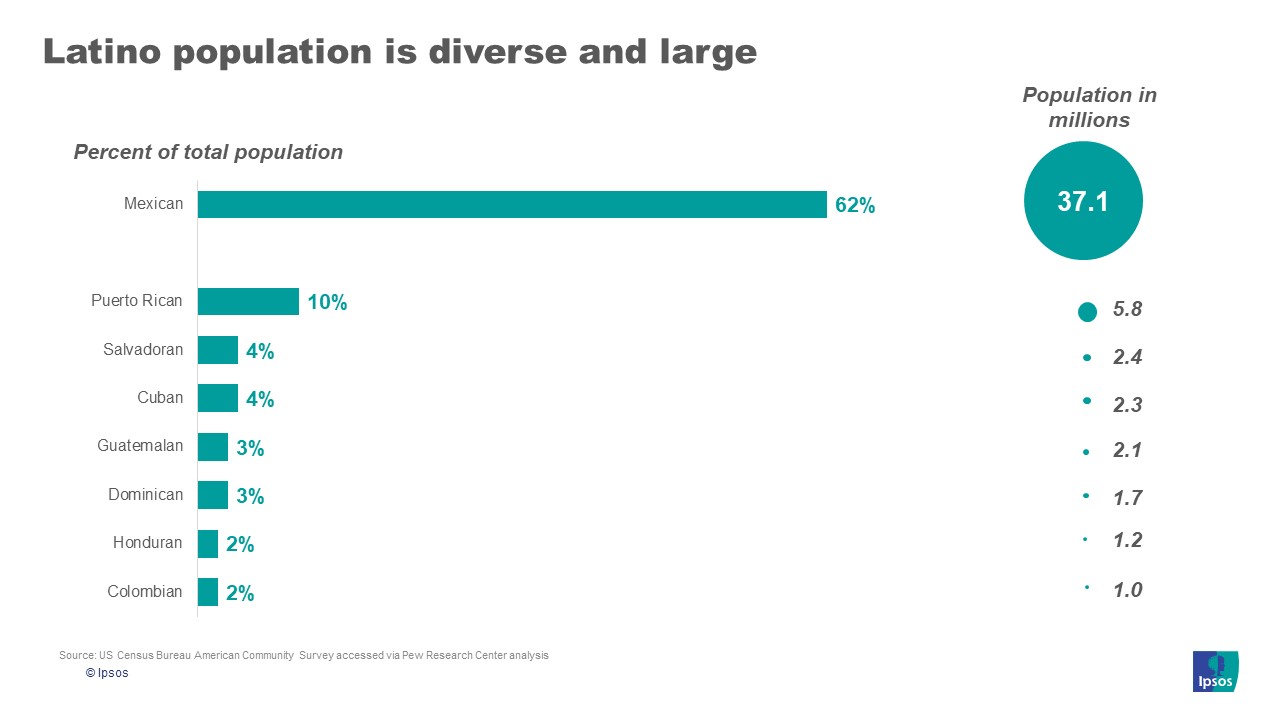
- Not a monolith. The Latino population in the United States is not homogenous. Many people who identify this way come from many different parts of the world. But as US Census Bureau data shows, Mexican Americans make up a majority of the Latino community, followed by Puerto Ricans, Salvadorans, and Cubans.
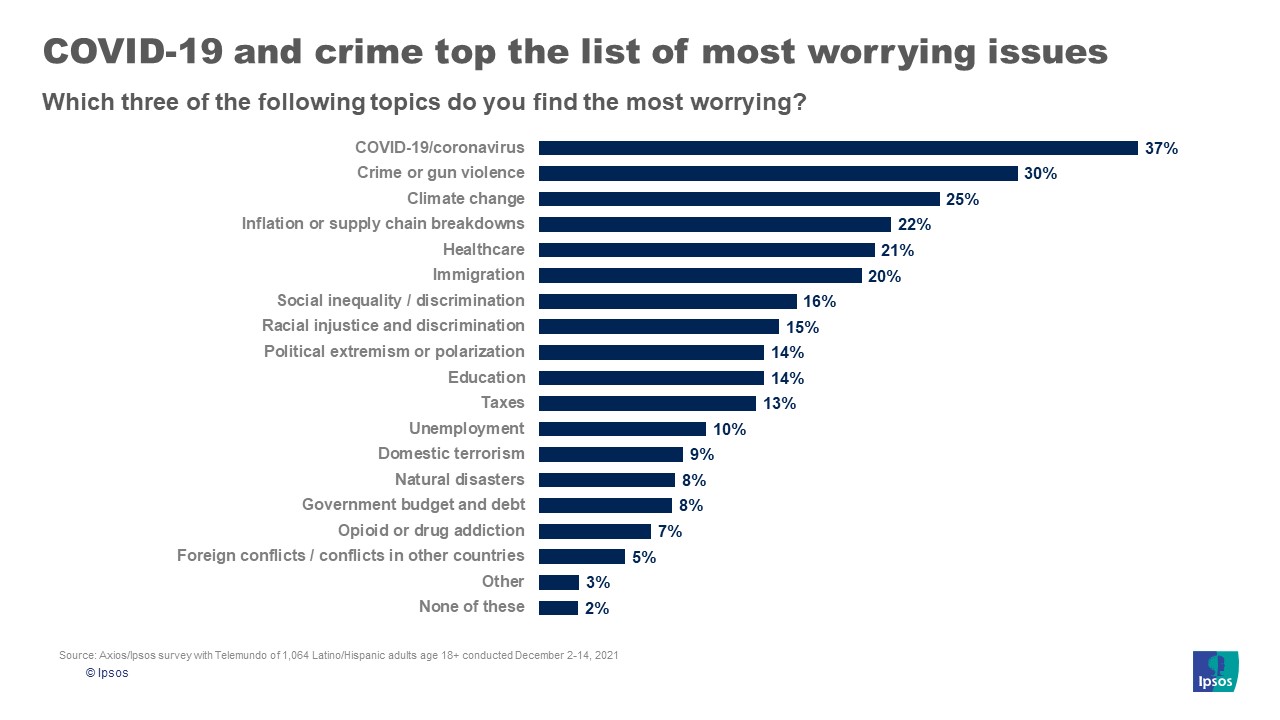
- Main worries. As a group, Latino Americans identify COVID as one of the top issues facing the country, much like the general public who see the pandemic as a top concern, followed by crime or gun violence, climate change, inflation and healthcare. Unlike the general public though, they differ in caring more about climate change (although concern is largely driven by people under the age of 30), and crime or gun violence at a higher rate than other Americans. This survey was conducted in early December before the Omicron variant precipitated another COVID surge in the US, which may have impacted where COVID lies in the list of top concerns.
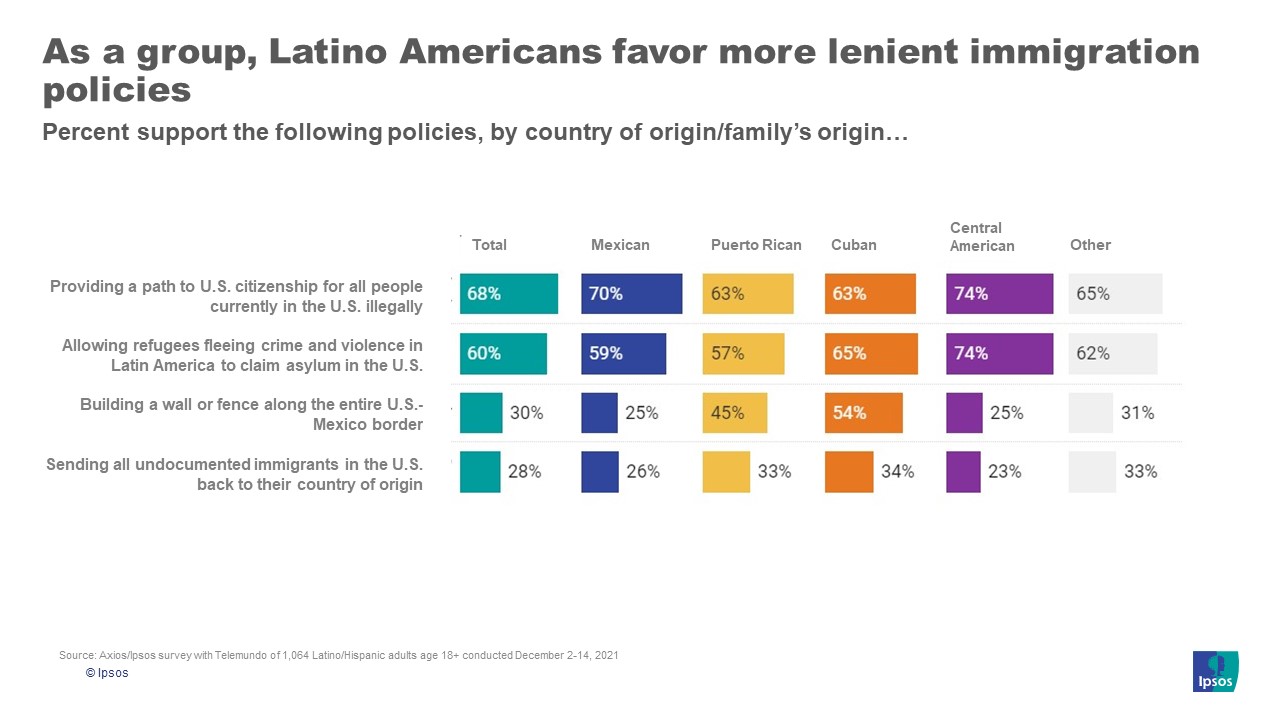
- Immigration. As a group, Latino Americans favor more lenient immigration policies. A majority support the creation of a path to citizenship for all undocumented people currently in the US and asylum for those fleeing crime and violence in Latin America. But again, views are not monolithic. Depending on the respondent’s country of origin (or where they say their family lived before migrating to the US), support for these policies softens.
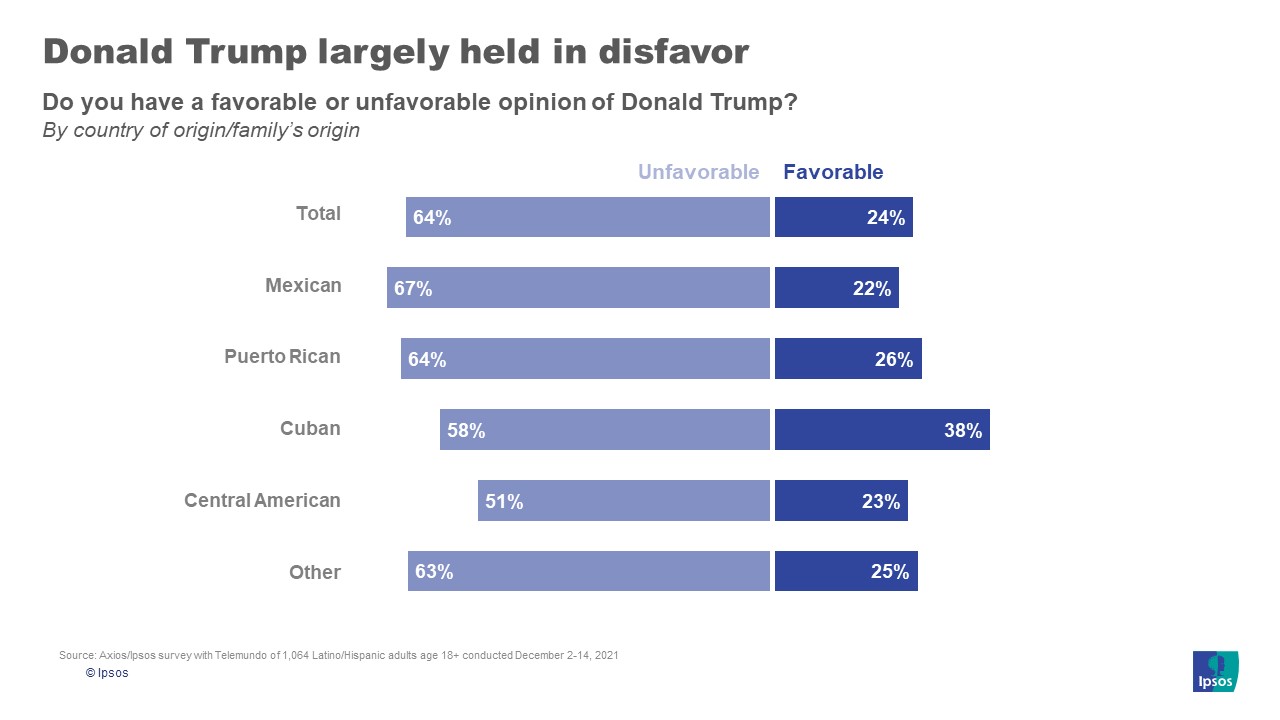
- Trump unfavored. Just one in four Latino Americans hold a favorable opinion of Trump. Compare that with the 52% favorability for Biden. But remember that this group is not a monolith – the Cuban American community in southern Florida, for instance, was instrumental in keeping the Sunshine State red in 2020. With just 3040% of the Latino population participating in elections, even a 24% favorability rating gives Republicans and a candidate like Trump potential backers in the Latino community. Understanding these nuances is essential as we think ahead to the political topography of 2022 and beyond.
A final key point – while Biden has a definite edge on Trump, a plurality of Latino Americans opted to not vote in the last presidential election. Why? Our polling with Axios and Telemundo underlines that many feel politically disempowered and doubtful about the country’s prospects.
By understanding Latino Americans, we gain important insights into one of the fastest-growing demographic groups in America.