
Where Americans stand on crime in cities
Los Angeles, Washington D.C., Memphis, and Portland.
The list of cities where the National Guard has been deployed has increased in recent weeks and may only continue to grow.
The deployments are one of many partisan flashpoints in 2025, with Democrats claiming the deployments are targeted and an example of federal overreach and Republicans claiming that the deployments are needed to keep cities safe.
Between all this, where do Americans stand on these deployments as well as the state of crime across the nation?
Below are five charts on concern with crime, perceived levels of crime, and attitudes towards recent National Guard deployments in American cities.
1. Concern with crime. Crime has not been the issue of the second Trump administration, but it has been a major theme, sitting behind inflation and political extremism but above immigration on the list of America’s top concerns.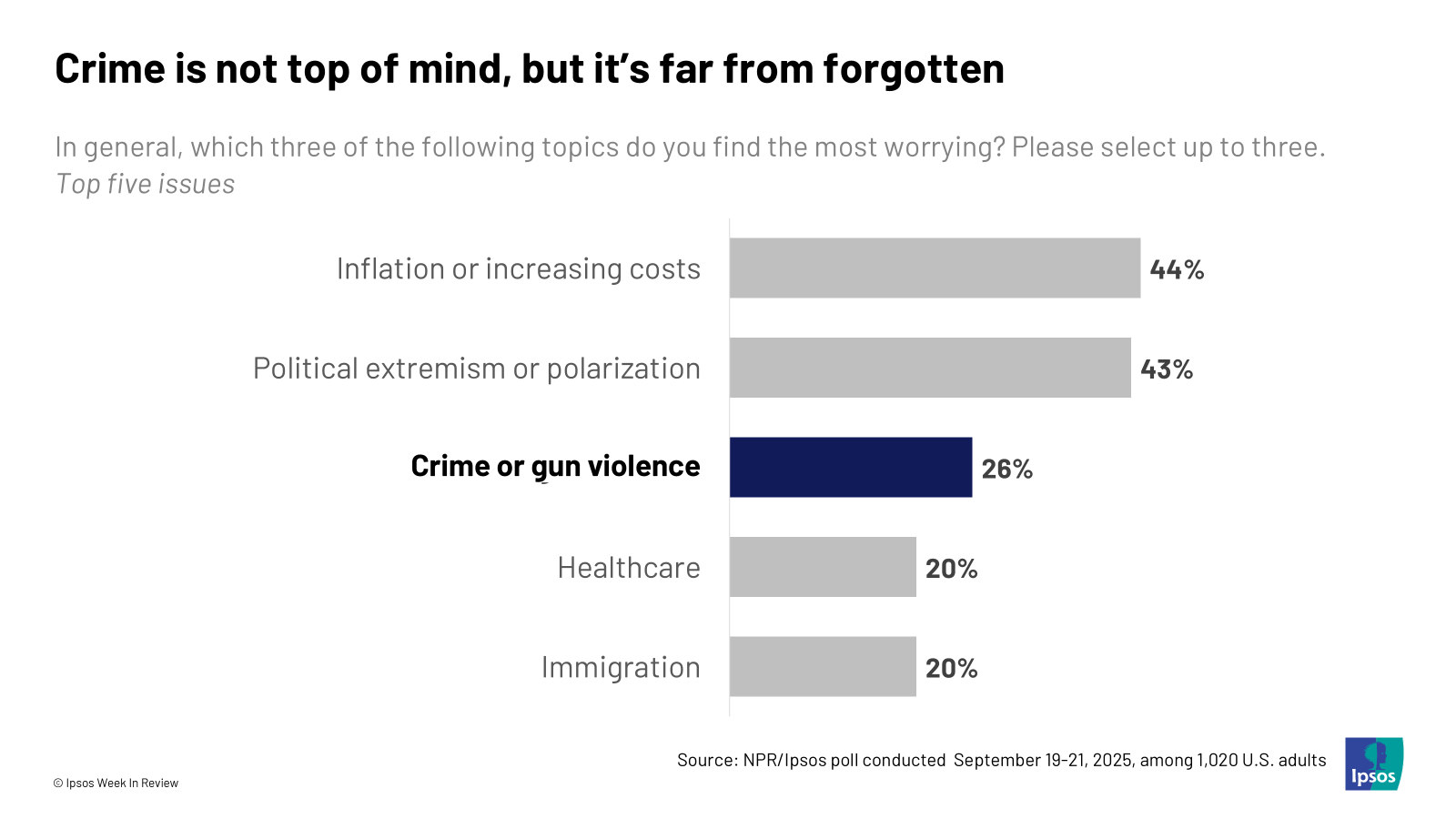
2. Perceived levels of crime. A shared reality is not a given in today’s America. Relatively few Republicans and Democrats feel that crime has increased in their local area. What about crime in cities? It depends on who you ask.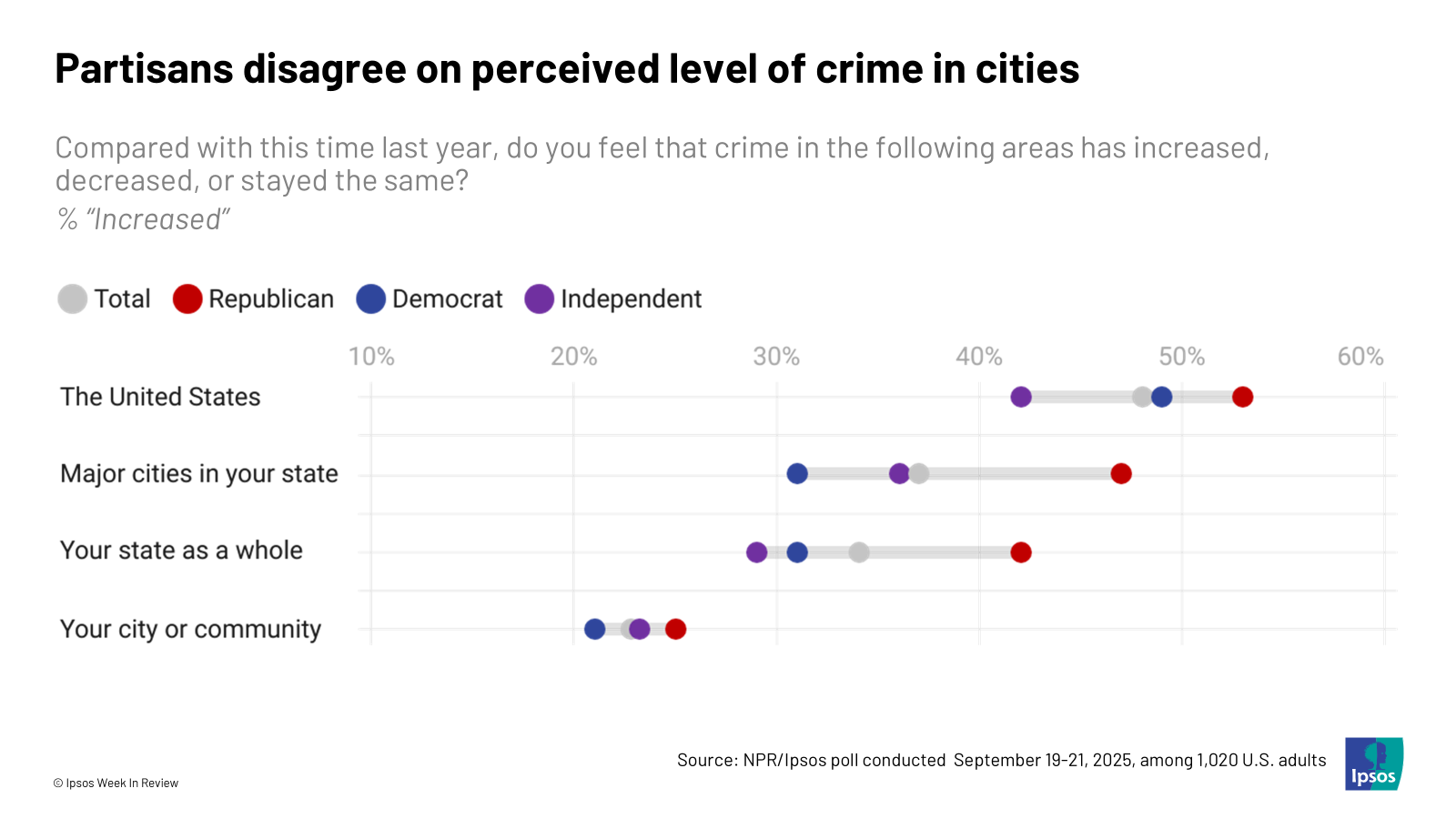
3. The level of crime in cities. While the perceived level of crime in cities is debated, the majority of Americans feel that crime and violence in American cities is unacceptably high, even beyond partisanship.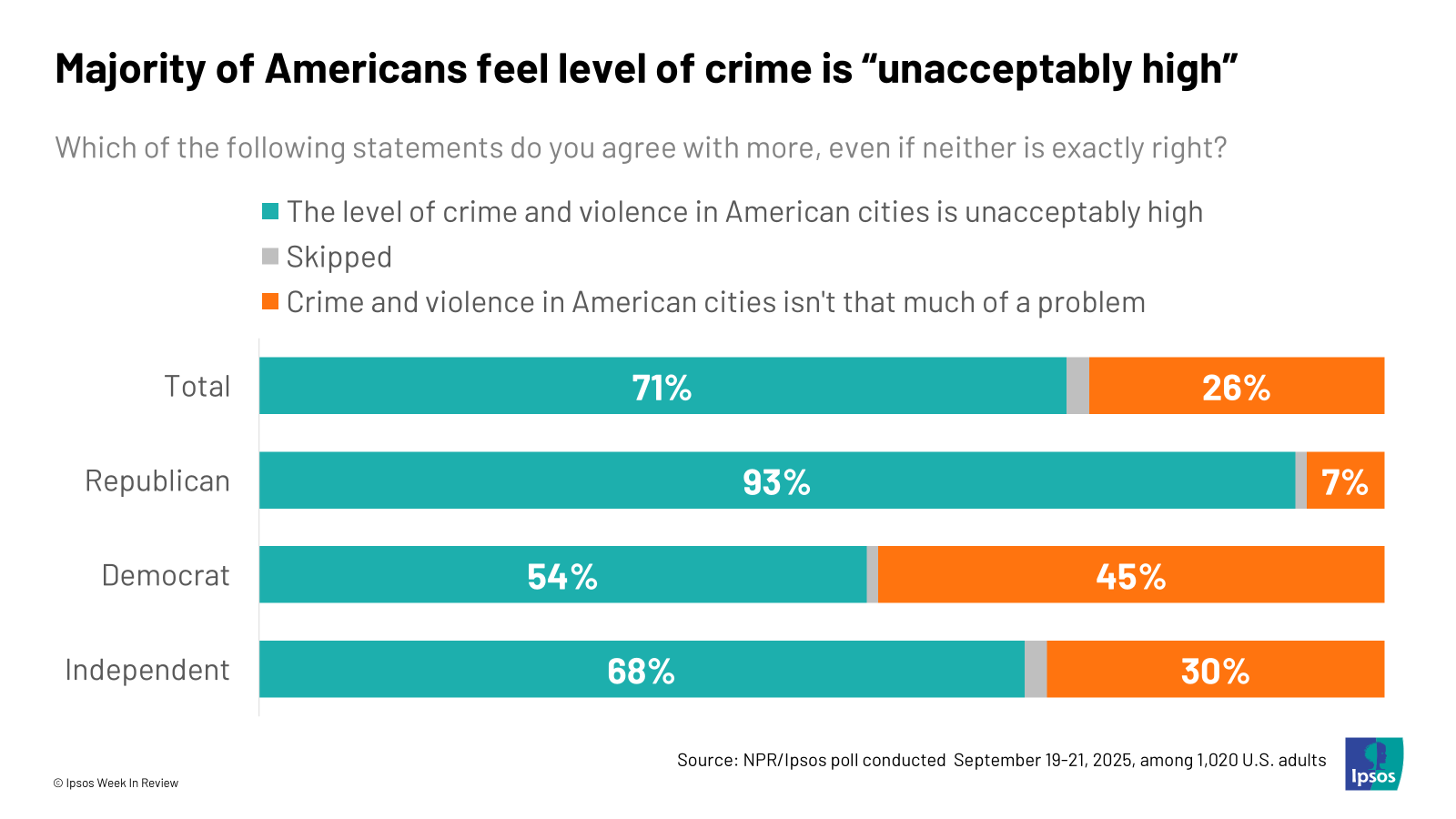
4. National Guard deployments. Even as a clear majority views the level of crime in cities as unacceptably high, support for the deployment of the National Guard is relatively low.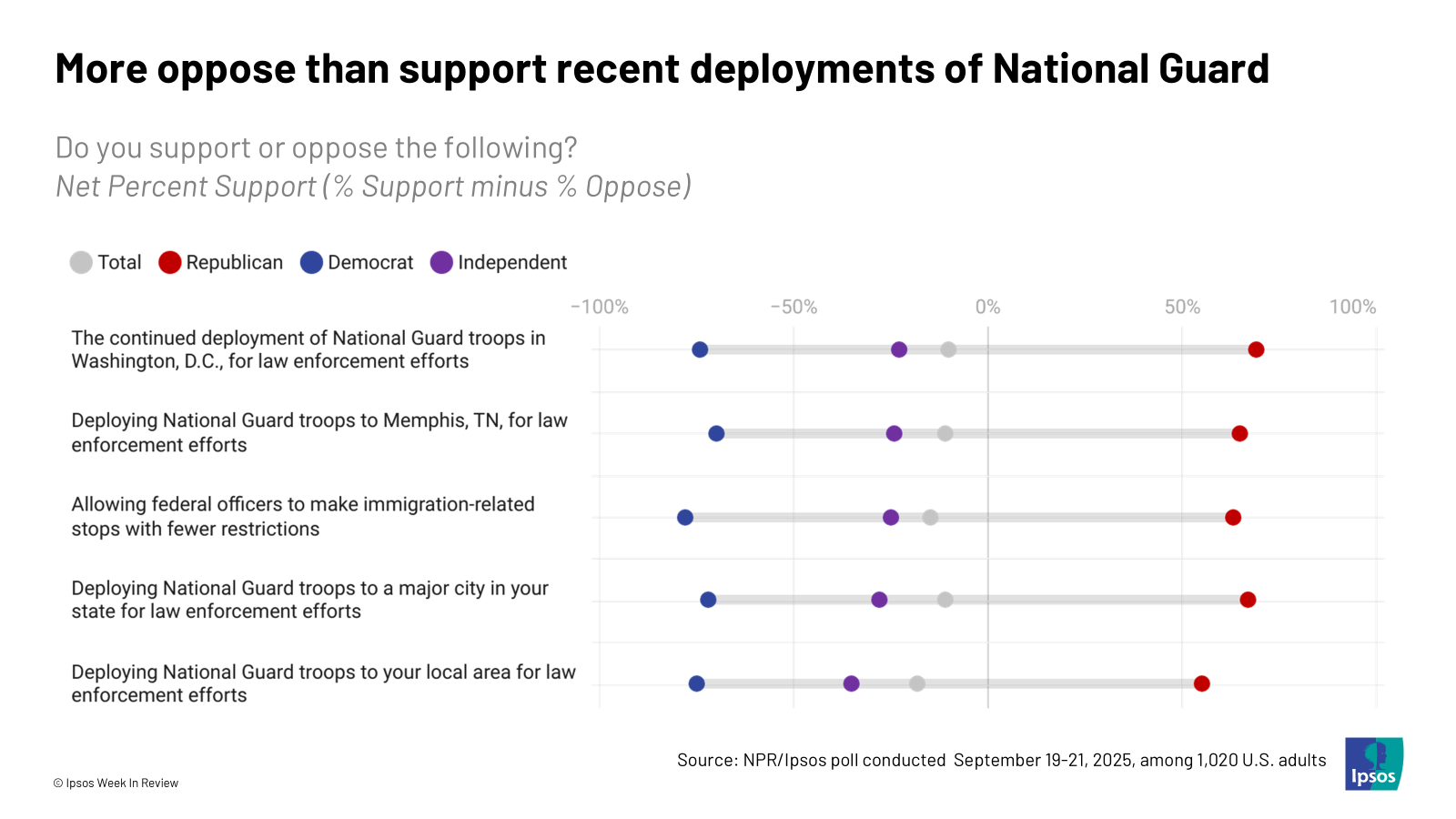
5. Not a Republican weakness. Relatively support for these deployments doesn’t mean that it’s a Trump or Republican weakness. In fact, when Americans are asked to choose between Republicans or Democrats on crime, Republicans have a substantial advantage.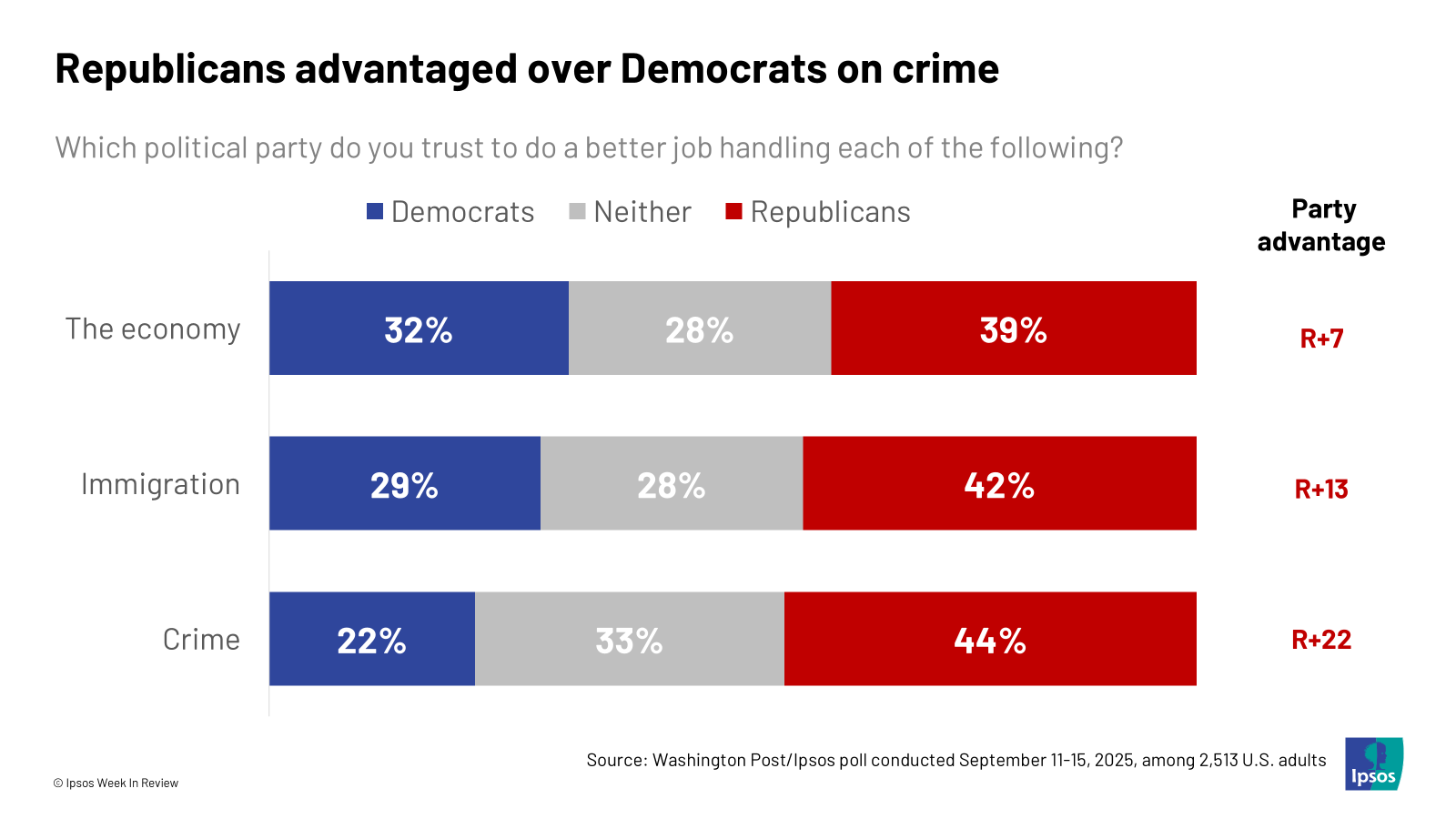
Crime, particularly in cities, is a prime example of America’s fractured realities, at least when it comes to certain topics. Partisans are in alignment on how they view crime in their local area, but not when it comes to crime in cities. This isn’t exclusive to crime. For example, perceptions of the U.S.’ economic health tends to vary among partisans based on whether their party is in power. This is a feature, not a bug, of U.S. politics.
That said, most Americans feel strongly that crime in cities is a problem. And even though support for the deployment of the National Guard is relatively low, Americans favor the Republican Party’s approach to crime over that of the Democrats.

