Who Do the Debates Help?
After impeachment hearing-filled weeks and a labor strike that nearly brought down the whole event, the last DNC primary debate of 2019 is set to go off tonight.
About 6.5 million viewers tuned into the last debate, a nearly 58% drop in viewership from the first debate in June (which had over 15 million viewers) and overall the least-watched debate.
Only seven candidates will take the stage, a reduction from twenty over the summer debates and ten contenders in the fall.
With all that is happening and has happened, it is worth asking: who is watching the debates, and does it help the candidates?
Based on our polling with FiveThirtyEight, about 40 percent of Democratic and Independent respondents watched all or some of the debates for the September, October, and November events. For any given debate, only about 10 to 15 percent of Democrats or Independents watch the whole program straight through.
While four in ten people tuned in is at best a hefty minority, debates do seem to help second or third-tier candidates get on people’s radar. Across the three most recent debates, there is a nearly 10-point gap in vote consideration among those who watched the debate and those who did not for candidates like Cory Booker, Pete Buttigieg, and Andrew Yang. For Amy Klobuchar, that gap is about 20 points.
This poses an opportunity for these candidates to distinguish themselves and potentially drum up financial support from engaged or interested viewers. Jamal Raad, who ran communications for Governor Jay Inslee, a former primary contender, told Fortune that a strong debate performance holds the potential to “catapult you in financial support.”
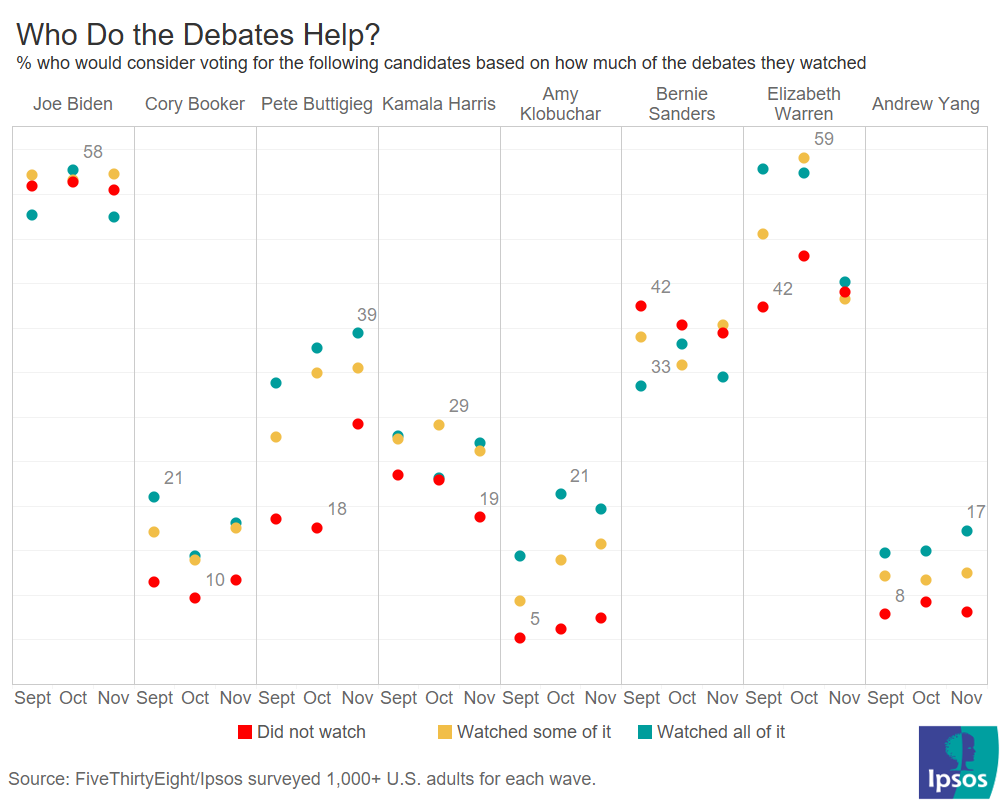
The debates matter less for front runners. Interestingly, Senator Bernie Sanders is more likely up for consideration as a viable candidate by people who did not watch most or any of the debate, a trend untrue for any other candidate. After establishing her place as a front runner, Senator Elizabeth Warren collapsed a gap in vote consideration between viewers and non-viewers from nearly 15-points to virtually nothing between the October and November contest, moving her vote consideration down overall.
Former Vice President Joe Biden enjoys stable support, regardless of whether respondents watched the debates or not.
What does that mean for those trying to break into the front runner pack?
It gives those middling primary campaigns a chance to consolidate support and gain more steam. February will bring the Iowa caucus and the New Hampshire primary along with a marathon of debates ahead of Super Tuesday. The combination of these events presents a real chance to develop momentum. Generating attention outside of the debates, which essentially function as large media events, creates the possibility that these candidates can amplify any ground gained during the debates, with the combined effect (or lack thereof) making or breaking them.
Senator Kamala Harris is a prime example of just that. The California Senator and former primary candidate scored higher in vote consideration among people who watched the debate, particularly for her last performance. Senator Harris could not translate that elevated stance among viewers to the rest of her campaign, failing to win convincing support overall in addition to other campaign issues.
Still, more established candidates don’t need to rely on these events quite as much. Despite slips or apathetic debates, frontrunners have gained a presence with voters and put their candidacies on people’s radar. While a major slip up could end them, voters are already familiar with their campaign and message, making it less likely for large gaps in vote consideration between people who tune in to the debates and those who don’t.
While the debate stage shrinks, the pressure is on for the remaining candidates to stay relevant.