

The Chilean route to sustainable development
A little more than 10 years ago, business leaders in our country were discussing the need to stop using the concept of Corporate Social Responsibility (CSR) when talking about the tasks to be fulfilled by the private sector by the challenges imposed by the economy and society, and to move towards an approach based on the idea of sustainability, which considers the balance between economic growth, environmental respect and social justice.
To many of us working in the public opinion industry, it seemed to us that the new paradigm revolved around the same old ideas, and that the concept of sustainability was likely to be a passing fad. Above all, it seemed like a renewed recourse to clean up the negative corporate image of the time, which had been deepened by a series of price collusion scandals between companies in the same sector.
Over time, the opposite proved to be true. Today, few trends are driving the agenda of the country's government and business as much as the goal of moving towards sustainable development. The urgency of mitigating the effects of climate change has been added to the challenge of building a fairer Chile, where economic growth is not a benefit of a minority elite, a challenge that resurfaced as a priority during the social outburst we experienced in 2019.
With the impetus of the UN (United Nations), which has drawn up a medium and long-term plan based on the definition of the 17 Sustainable Development Goals (SDGs), a trend of change has been consolidated that has had a real impact on both the public and private sectors. Recent governments have made significant progress, especially in environmental matters, aligning themselves with this international movement, which has specific commitments in the 17 areas defined as priorities.
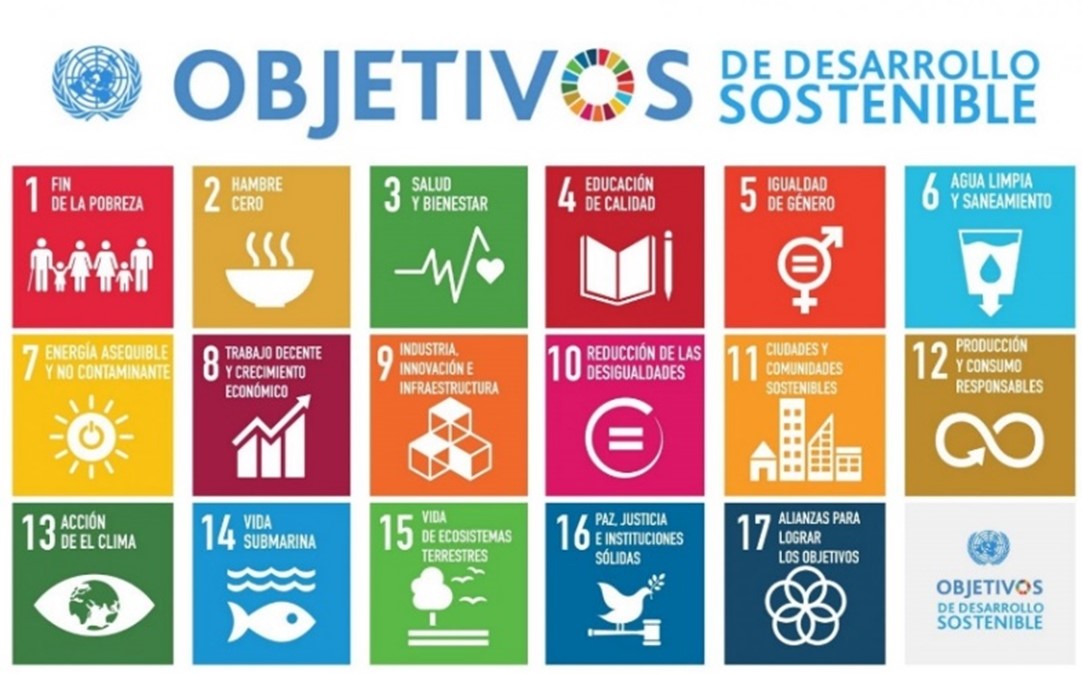
While recognising that much remains to be done, there is some data that shows that Chile has taken the lead in the LATAM region in terms of sustainability. In the latest ranking that measures progress on the Sustainable Development Goals, Chile ranks 28th in the world, surpassing all Latin American countries. Uruguay appears 31st, Cuba in 40th place, and we even rank above countries with greater economic development such as the United States, which appears in 41st place.
State- and business-driven change
Perhaps the greatest progress in our country has been in the area of energy transition. Chile surpassed its goal of reaching 20% of energy production from renewable sources by 2025 (it is already at 31%), and the government redefined this challenge to 40% by 2030. Good geographical and climatic conditions make Chile an ideal place to implement wind farms, solar panels and tidal plants.
In 2022, Bloomberg New Energy Finance published the Climatescope report, with the ranking of the most attractive countries for investment in clean energy, where Chile was recognised as the best country to invest in renewable energy in the Americas, beating Brazil, Canada and the United States. The same ranking placed Chile in first place among emerging markets and number nine worldwide[i] .
In addition, in 2022 under the current government, the Framework Law on Climate Change was enacted, which among other things defines the goal of achieving carbon neutrality by 2050. Among other measures, the country has made a number of environmental advances that can be highlighted:
- The elimination of plastic bags in direct-to-consumer trade.
- The enactment of the so-called Rep (Extended Producer Responsibility) Act, which is basically a mechanism to make producers responsible for organising and financing the management of waste from the marketing of their products.
- The sustained increase of bicycle lanes to favour carbon-free transport. By 2021, Chile had nearly 1,900 kilometres of bicycle lanes, an increase of 27.9% over the past three years (with plans for further growth).
- The injection of electric buses into the public transport system: 650 electric buses were added to the metropolitan transport network in 2020, representing 10% of the fleet at that date.
The great environmental milestone to consolidate Chile's leadership in the region was going to be the organisation of COP25, which had to be cancelled due to the social outburst that began in October 2019. Since then, and later with the pandemic, other urgencies have arisen, but the policies promoted are still there, strengthening the basis for a change towards the future that has no turning back.
Businesses have also contributed to the sustainable development approach. With the push from large companies, both local and international, there has also been a trend to contribute mostly from an environmental perspective, but also with a focus on other areas of the Sustainable Development Goals, such as those related to decent work, gender equality and the inclusion of diversity.
Certainly, the most concrete change we have seen in the Chilean business world over the last decade is that practices, policies, and activities aligned with this idea of sustainability have been professionalised within companies; sustainability management has been included within the business structure as an essential area and in many cases independent of Corporate Affairs Management, where community relations (CSR) tasks were traditionally organised. The current sustainability areas are specialised structures, with people dedicated solely to this focus and who normally work strategically to define the contribution that the company can make to the different Sustainable Development Goals.
Larger companies define short- and medium-term policies and activities, allocating resources so that the transformation involves both the production chain and the relationship with their customers and other stakeholders.
Universities now have postgraduate degrees specialising in sustainability to prepare these professionals, and it is increasingly common for companies to participate in associations dedicated to systematising good practices, learning, and promoting collaboration between companies and the public sector. Events, clean production certifications, certifications free of animal abuse, respect for suppliers and small producers, talks and seminars are multiplying, all within a business world that invests in measuring its impacts and the progress generated annually.
Sustainability reporting, carried out under international standards such as the GRI (Global Reporting Initiative), has started to become a basic activity of commitment to sustainability.
What about citizens and consumers?
Thanks to Global Advisor, a monthly study by Ipsos in 29 countries around the world, we have seen a considerable increase in the concern of Chileans for environmental issues in general and especially for the phenomenon of climate change.
In the World Earth Day 2023 report[ii] , Chile appears fourth among the countries who think their country should do more to tackle Climate Change.

It is not surprising that Chileans are particularly sensitive to environmental problems, because our geography has frequently exposed us to natural disasters such as floods, volcanic eruptions, earthquakes, and tsunamis. Not only that, but we have also had almost two decades of drought in the central zone, which has had a strong impact on the availability of water for the population's consumption and on the price of food grown in the area.
Along with concern, we are among the countries with the lowest level of scepticism about climate change; most Chileans feel that the effects of this phenomenon are a reality in our territory, mainly because of the drought mentioned above, but also because of the changes in temperatures and the extension of the extreme summer and winter seasons.
The data, however, also show that beyond concern for the environment, and more generally for sustainability in its broadest sense, there has not yet been a profound change in lifestyle or consumption. The coming years will certainly be transformative in this area. There will be a gradual change in consumer behaviour that will open up spaces where companies can offer more sustainable product and service alternatives, as well as helping to improve the relationship with citizens.
According to the first Corporate Sustainable Development Monitor[iii] , conducted by Ipsos in 2022, the price of sustainable products is the main barrier people perceive to changing their purchasing habits.
In our Latin American societies, where the economic and inflationary crisis is hitting the majority of the population hard, it is difficult to generate responsible consumption patterns when companies favour transforming these practices into elite behaviour.
Chile has a higher GDP per capita than its neighbours, which opens up the possibility of positioning products at a higher price in some segments that are more concerned about environmental issues. But the truth is that, in order to generate a significant and widespread change, it is necessary that companies make available products that are competitive in price and that aim to make responsible consumption something feasible for the majority of the population, especially in times of economic crisis.
Unfortunately, we live in a country that has seen increasing levels of distrust in the private sector, and as a result there is a constant suspicion about the social or environmental contribution of companies. Companies are often hesitant to communicate openly about their initiatives, at the risk of being seen as green washing.
In the same context, citizens expect companies not to pass on the production costs of ethical or environmentally responsible alternatives. The policies promoted by government and business clash with this permanent tension among citizens, but we are moving towards a necessary change given the climate and social urgency.
The transformation towards a sustainable development model is happening, perhaps slowly and at the pace of deeper cultural transformations. But we are undoubtedly moving as a society towards a change in our purchasing behaviour, eating habits, the use of natural resources, the way we move around, and a host of other behaviours rooted in our economic and socio-cultural model.
[iii] Ipsos Chile (December 2022). Corporate Sustainability Monitor. Available at: https://www.ipsos.com/es-cl/pese-ser-positiva-baja-percepcion-del-aporte-de-las-empresas-hacia-el-desarrollo-sostenible
[ii] Ipsos (April 2023). World Earth Day 2023. Available at: https://www.ipsos.com/en/earth-day-2023-concern-and-focus-slipping-climate-change
[i] BloombergNEF (2022). Climatescope 2022: Power Transition Factbook. Bloomberg Finance L.P. Available at: https://www.global-climatescope.org/downloads/climatescope-2022-power-report-en.pdf
Table of content
- An introduction to Flair Chile 2023: A historic year?
- Global view of Chile
- Gen Z: A snowflake generation?
- Feminism in Chile: A movement that is progressing, albeit slowly
- The chilean route to sustainable development
- Is it possible to innovate in a disruptive way in Chile?
| Previous | Next |