The Daily Overwhelm
In a world where many are consistently worrying about everything from tariffs and political turmoil to inflation and unemployment, perhaps it’s no surprise that emotional struggles are capturing the public’s imagination these days.
In India as well, the conversation around mental health is no longer a whisper—it’s the background hum of everyday life. It’s the student refreshing a results page at midnight after months of coaching and anxiety. It’s the young professional toggling between a video call and messages from home about an ailing parent, wondering how to be present in two places at once. It’s the gig worker tracking incentives that evaporate by evening, the homemaker carrying invisible emotional labour, the farmer watching a sky that no longer keeps its promises given the impact of climate change. It’s the scroll through feeds that blur news, noise, and everyone else’s “perfect” life, leaving behind a “longing for more”.
Across cities and small towns alike, the pressures are layered: the hustle of an always-on economy, uncertain jobs, rising costs, relentless exam culture, the loneliness of urban living, and the weight of caring—often silently—for children, elders, and ourselves. And the feeling of “too much to cope up with.”
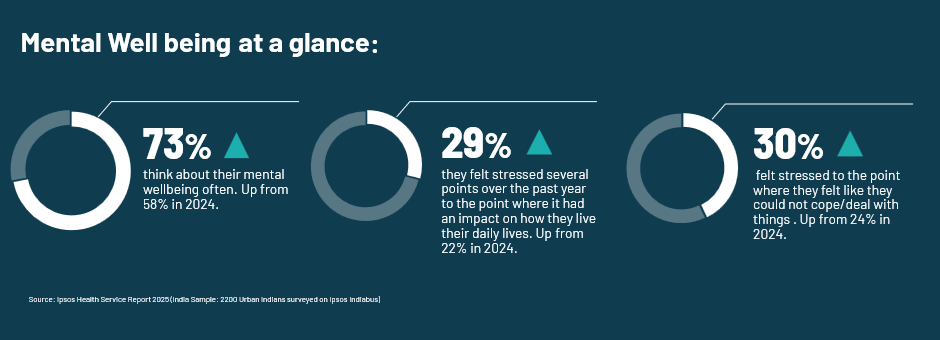
The Ipsos Health Service Report 2025 released recently shows some alarming figures for India:
- The proportion of Indians saying they think about their mental wellbeing often has gone from 58% in 2024 to 73% in 2025.
- Those saying they felt stressed several points over the past year to the point where it had an impact on how they live their daily lives increased from 22% to 29%.
Those saying they felt stressed to the point where they felt like they could not cope/deal with things increased from 24% to 30% in the last year.
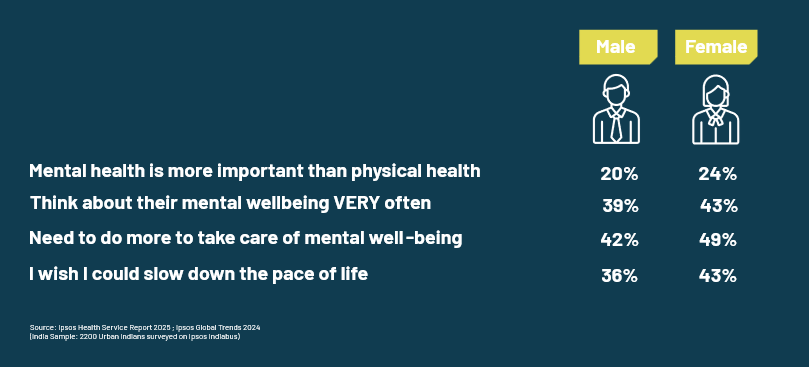
What is important to note is the impact of mental health issues among females in particular. The proportion of females who say mental health is more important than physical health is 24%, compared with 20% among males. Females are also more likely to think about their mental well-being — 43% compared to 39% among men. This was also reflected in the Ipsos Global Trends, The India Story, where more women reported a greater need to take better care of their mental well-being and to slow down the pace of life. (Also read Mental health study confirms what many already suspected: Indian women are more stressed than men | Trending - Hindustan Times).
Some further statistics - The Global Burden of Disease study states that nearly 197 million Indians—one in seven—live with some form of mental disorder. And the economic cost tells its own story: between 2012 and 2030, according to WHO research, India is projected to lose around USD 1.03 trillion because of mental health conditions.
What will it take to address this? A whole‑society response. Integrate mental health into primary care, expand community services in local languages, create more positive workplaces, and educate and spread the right messages. This issue is not just for the healthcare industry to address, but for each organisation/ institute/ community group to recognise and support.
How can brands support? Keep messages simple, normalising and helpful. Be solution‑oriented: design products and services that reduce complexity, save time and money, and create moments of calm in the chaos; create curated choices over choice overload, transparent pricing over hard sells, and practical tools over hype. Brands that align expectations with empathy and ease the pressure of daily life will earn durable trust.