Eight in ten Britons say it’s more costly to eat healthy today than a decade ago
79% say it’s more costly to eat healthy today than a decade ago, with Britons are just as likely to turn to social media for guidance on nutrition as healthcare professionals.
Ipsos in the UK has conducted new research, highlighting the perceptions and realities British adults face regarding healthy eating practices.
Key findings
- Cost a key barrier to healthy eating: Eight in ten (79%) of British adults agree that it's more expensive to eat healthily today compared to a decade ago, reflecting broader public concerns about the economic barriers to adopting healthier lifestyles.
- But confusion also a factor: Four in ten (40%) struggle to discern healthy food options, hinting at the overarching complexity surrounding nutritional education. Nearly half (49%) of the population views protein bars as healthy and two in three (68%) believe that granola is healthy, despite both items commonly containing high amounts of sugar.
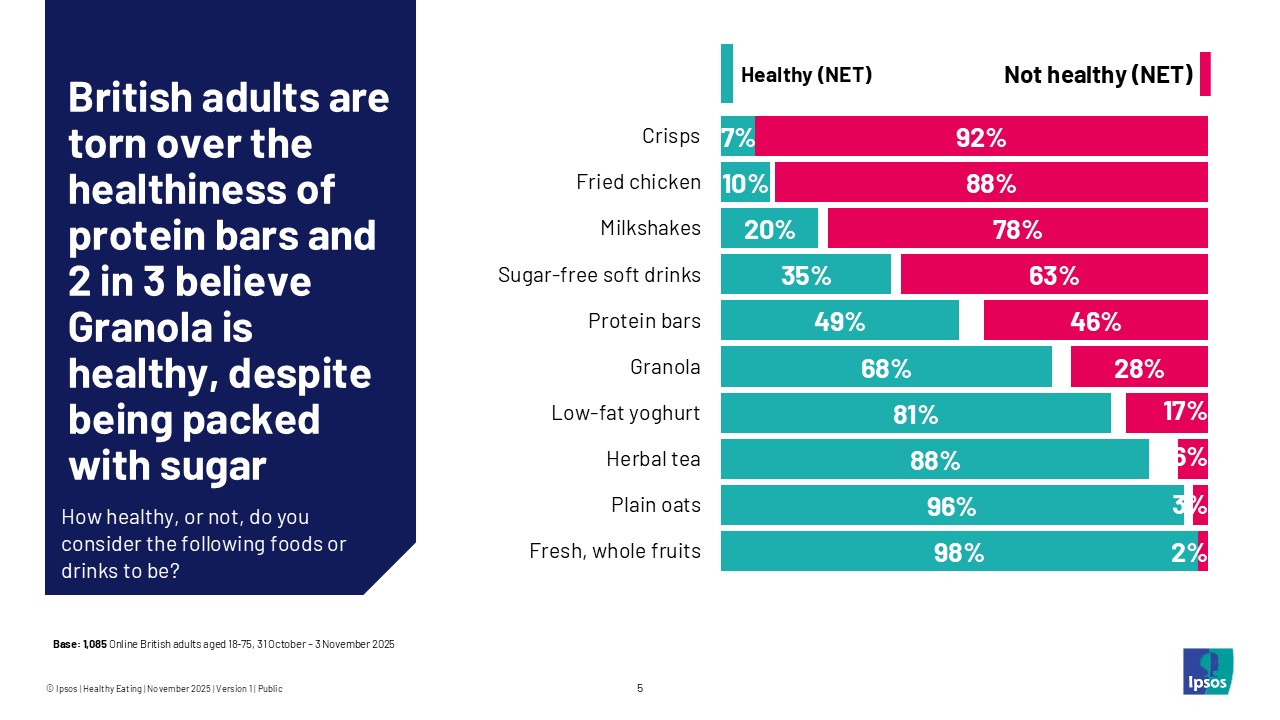
- Women are more skilled at identifying unhealthy foods: Men and younger adults (aged 18-34) are notably more inclined to view protein bars and granola as healthy.
- 55% of men consider protein bars healthy, compared to 42% of women.
- 63% of those aged 18-34 view protein bars as healthy, compared to 44% of those aged 35-54 and 41% of those aged 55-75.
- Granola is viewed as healthy by around three in four (73%) of men, compared to 63% of women.
- 76% of those aged 18-34 view granola as healthy, compared to 63% of those aged 35-54 and 66% of those aged 55-75.
- Britons just as likely to check social media for information as accredited sources: When asked what sources they use most often for guidance on healthy eating,
- 38% say they turn to the nutritional information on packaging.
- 32% each say recipe websites/books/apps/magazines and internet searches,
- 29% say they consult friends or family,
- 23% say they turn to social media, while 22% say they seek guidance from healthcare professionals.
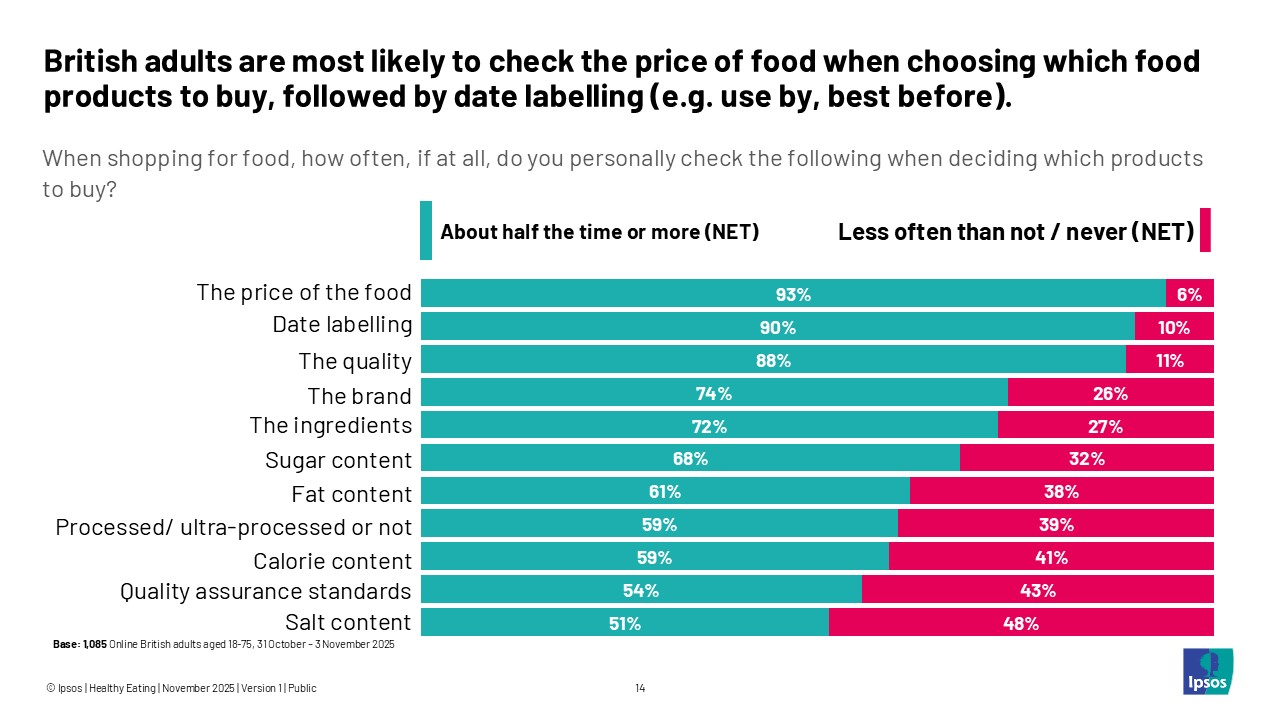
- Nutritional information checked less often than price: When deciding which products to buy, the nutritional content of food is checked less often than the price, date and quality of the food when choosing which products to buy.
Commenting on the findings, Peter Cooper, Research Director at Ipsos said:
The findings point to a critical need for increased transparency and affordability within the food industry. As adults continue to navigate complex food environments, it becomes ever more crucial to provide clear, accessible nutrition information.
Technical note:
- Ipsos Observer interviewed a representative quota sample of 1,085 adults aged 18-75 in Great Britain using its online i:omnibus between 31st October – 3rd November 2025.
- Data are weighted to match the profile of the population. All polls are subject to a wide range of potential sources of error.