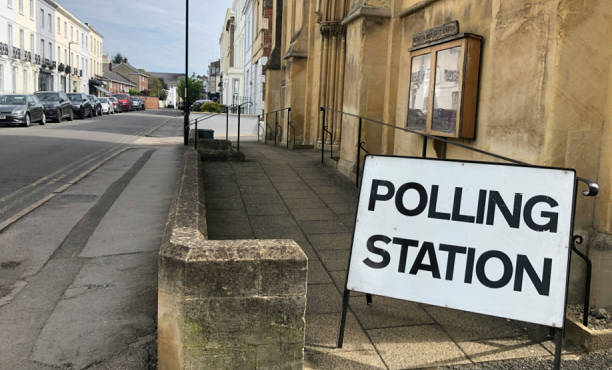
Ipsos’ latest English local elections research is now released, with fieldwork carried out 2-8 April. This means field work was carried out before media reporting around Peter Mandelson’s vetting and the Government’s response. Ipsos interviewed more than 1,600 adults in England in local authorities where elections are taking place in May.
MORI's latest Delivery Index survey, conducted for the Financial Times, shows that the public remain divided over whether the Government's policies will improve the state of the economy. The public also remain sceptical about the Government's ability to improve public service in the long term, although trends on both these areas have improved since 2003.
Ratings of local government fluctuate over time, with perceptions of the institution consistently less well regarded than individual service areas. Latest findings show signs of a potential recovery after notable declines in ratings since the late 1990s. When asked to identify reasons for satisfaction/dissatisfaction with their local authority, residents typically find it difficult to pinpoint specific reasons, highlighting the complex set of issues which underpin a council's reputation. If an authority is perceived to provide generally good quality services and good value for money, then it is highly likely to also achieve strong satisfaction ratings. Indeed, perceptions on these attributes are consistently shown to be the strongest drivers of overall satisfaction across different studies and across key sub-groups within the population.
A recent MORI survey for the Greater London Authority shows that Londoners are seeing higher numbers of uniformed police officers on the streets, both in their local neighbourhood (41%) and London as a whole (45%). Although nearly three quarters (71%) say that the additional police visibility makes them feel safer personally, its effect on reducing crime and anti-social behaviour is perceived to be less. Indeed two thirds (69%) believe that crime is getting worse in the Capital.
On 4 November 2004 there will be a referendum in the North-East of England on whether or not to have an elected regional assembly for the region. The latest MORI research on behalf of the Northern Echo looks at the knowledge of the referendum process, likelihood of voting, and attitudes towards an elected regional assembly. Among the key findings are:
MORE than two thirds of British people (69%) think it unfair to tax a person's estate after their death, according to new research from MORI. The survey, for Friends Provident, looks at views on inheritance tax, it's fairness as a means of generating tax revenues, and whether the current threshold (£263,000) is considered correct. Most people (57%) think the threshold should be raised and two thirds (67%) believe a 'banding' system should be introduced, so that smaller amounts attract a lower rate and larger sums a higher rate.
British people want to see reform in public services, but have mixed views on choice, according to new research from MORI Social Research Institute. The survey, for the Radio 4 'Today' programme, shows that when asked to choose between two policy statements, more than half (53%) of British people preferred the statement 'Paying more taxes to ensure a good quality hospital near your home'. Meanwhile, just over two in five (43%) opted for the statement 'Having no increase in taxes but a choice of receiving treatment in a hospital anywhere in the country'.