
Affordability and the Democratic Party
If there is one theme that has defined political discourse in the latter half of 2025, it’s affordability.
And if the 2025 elections are any indicator, affordability is back in the lexicon for Democrats. The question is, why did it drift away in the first place?
For one potential explanation, we can look towards America’s growth of college-graduates and the political realignment that followed.
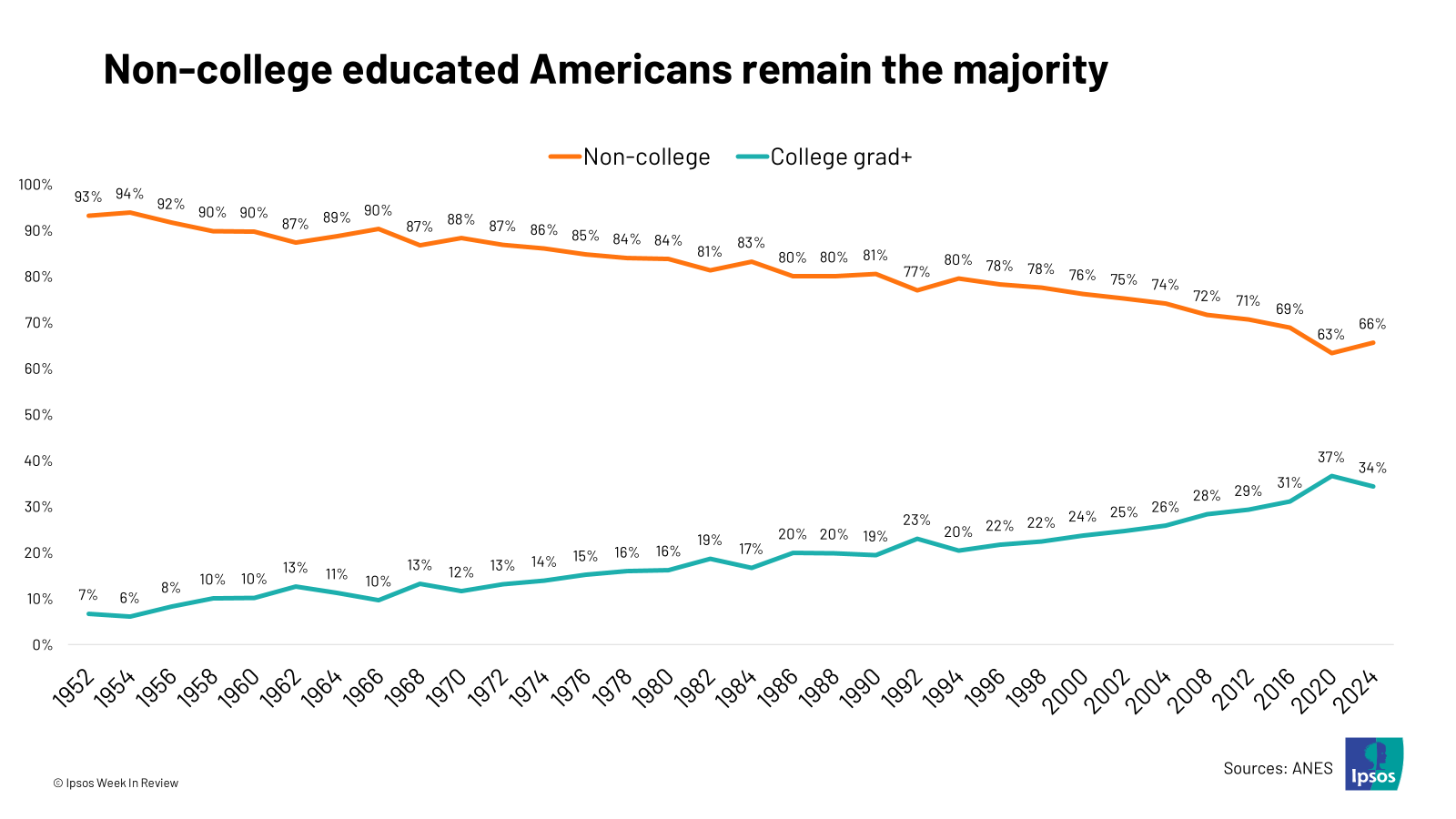
- The nation has grown more educated. That said, non-college educated Americans are still the majority.
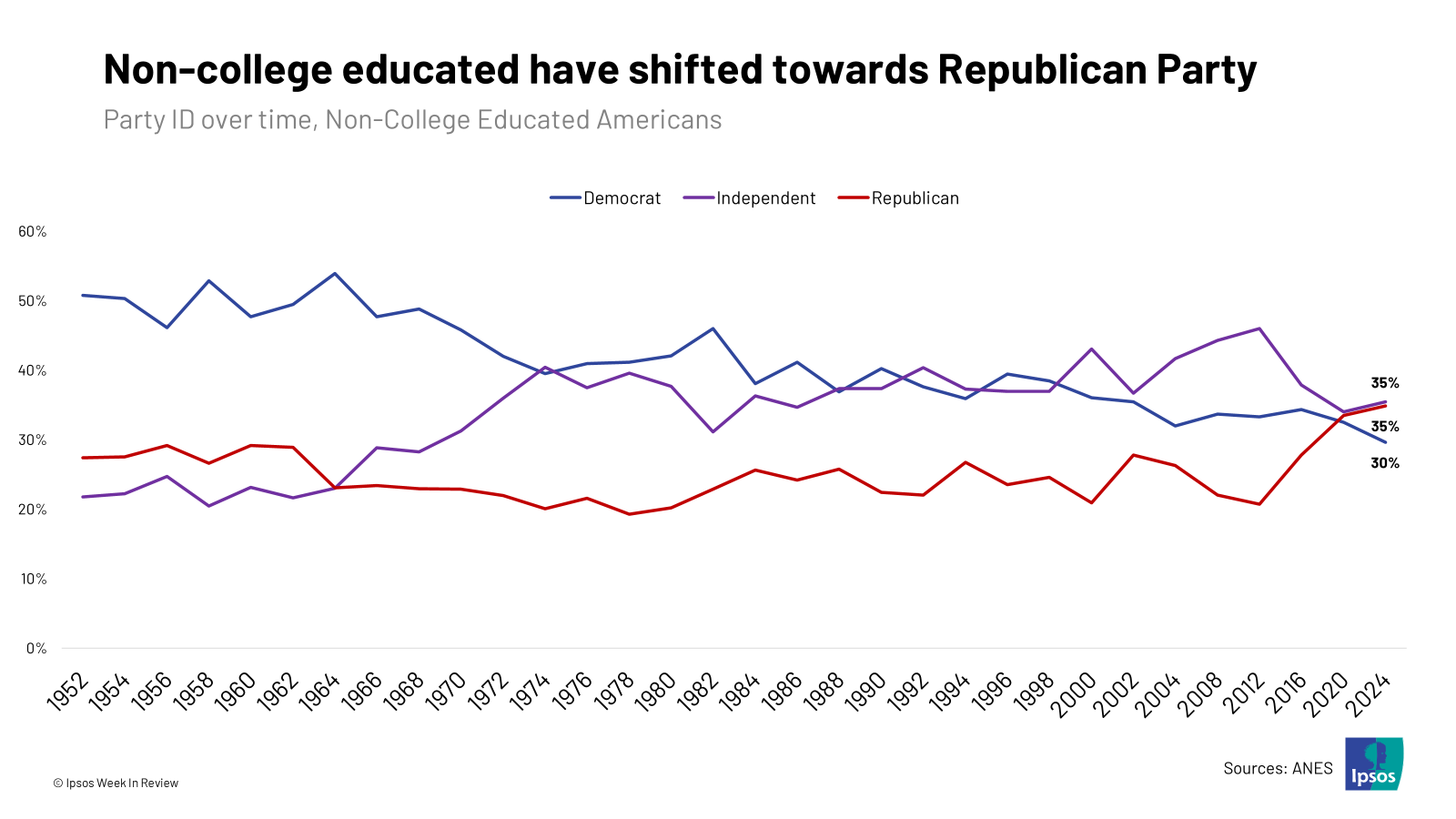
- Non-college educated Americans have drifted Republican. Whereas once, non-college Americans leaned heavily Democrat, they now tilt Republican.
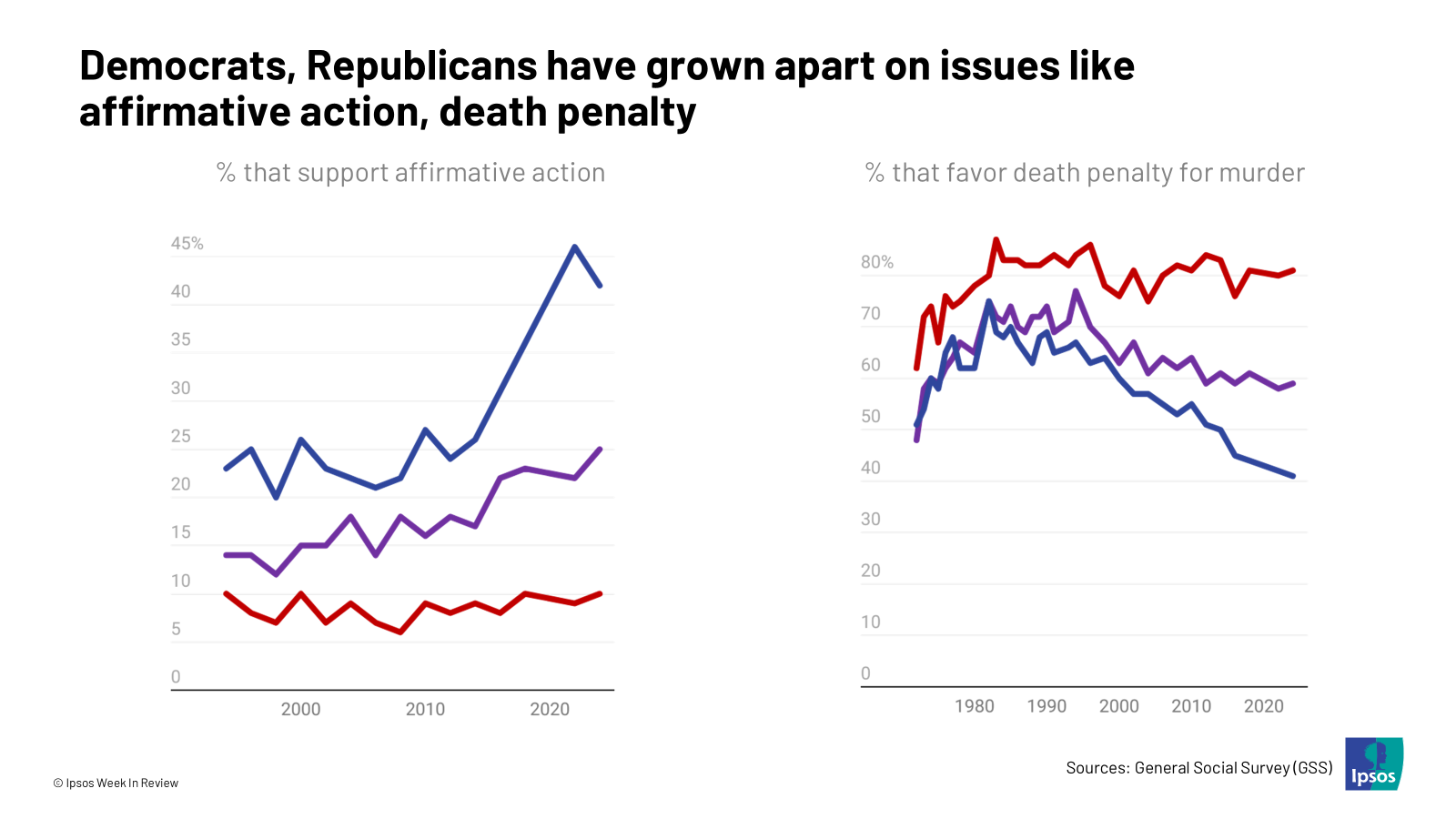
- Post-material issues. According to Ronald Inglehart’s theory of post-materialism, as a population becomes more educated and affluent, they become more concerned with post-material issues. Indeed, a similar pattern emerged among Democrats – at the same time Democrats became more educated, they also became more concerned with post-material issues.
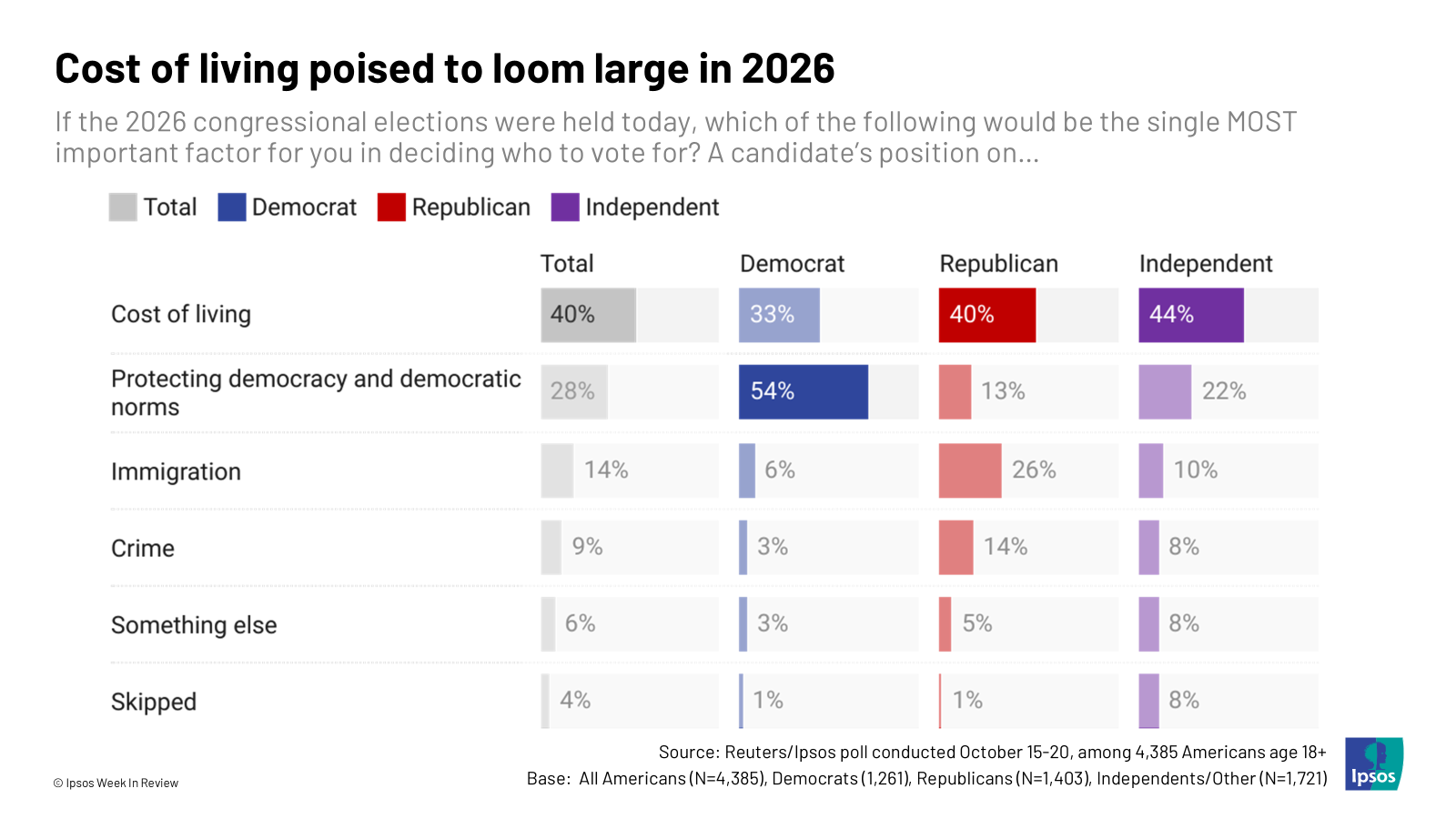
- College-educated Democrats remain out of step with the nation. The economy is the main issue to most, but concerns over political extremism and threats to democracy dominate among college-educated Democrats. Like immigration is for Republicans, the idea of “protecting democracy” can be an effective issue to rally the base, but it can’t be the bread and butter.
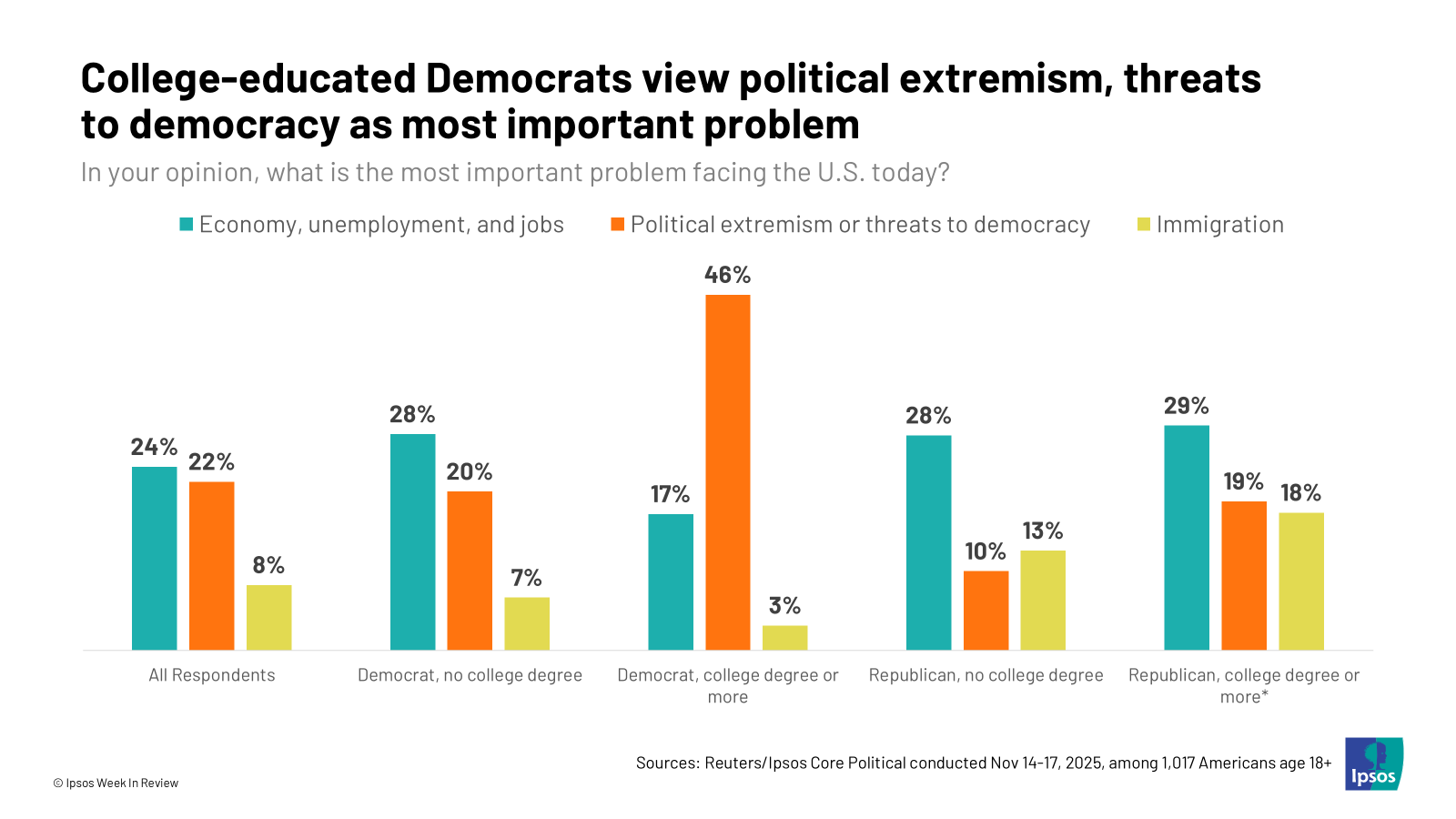
- The theme of the midterms will be affordability. Much like the 2024 election, the economy, the cost of living, and affordability will be a major theme of the 2026 midterms. The Democratic base, though, is again slightly out of step with the broader public. For broader electoral success in higher-turnout elections, the Democratic Party will need to campaign in ways that more directly addresses people’s material reality.
The nation as a whole has indeed become more educated and increasingly concerned with post-material issues. The Democratic Party embraced this shift, but in turn, saw their reputation on economic issues drop and lost support from the non-college educated.
This shift has left the Democratic Party poorly suited to perform well in an America where citizens, college educated or not, are finding it harder and harder to get by. But politics is a pendulum. Have Democrats sufficiently caught on, and if so, are they positioned to take advantage? Only time will tell.