
How Americans feel about the U.S. removal of Maduro
In the early hours of January 3, the U.S. military launched a surprise military strike in Venezuela that ultimately resulted in the capture of Venezuelan President Nicolas Maduro.
The news traveled fast. In Reuters/Ipsos polling conducted just a day after the operation, 87% already reported hearing about the news.
Polling shows an American public that is divided along usual partisan lines about the strikes, where concerns over a drawn-out U.S. engagement exist alongside some optimism about the impact for Venezuelans.
Below are five charts on how Americans feel about the U.S. removal of Maduro and whether the military operation moved the needle.
1. Support grew for the strike among Republicans. Just last November, the American public was cautious towards a hypothetical military removal of Maduro. In polling just after the operation, Americans – particularly Republicans – were much more supportive of the operation. Despite this increase in support, Americans overall are highly divided, with a significant minority unsure of how to feel about the strike.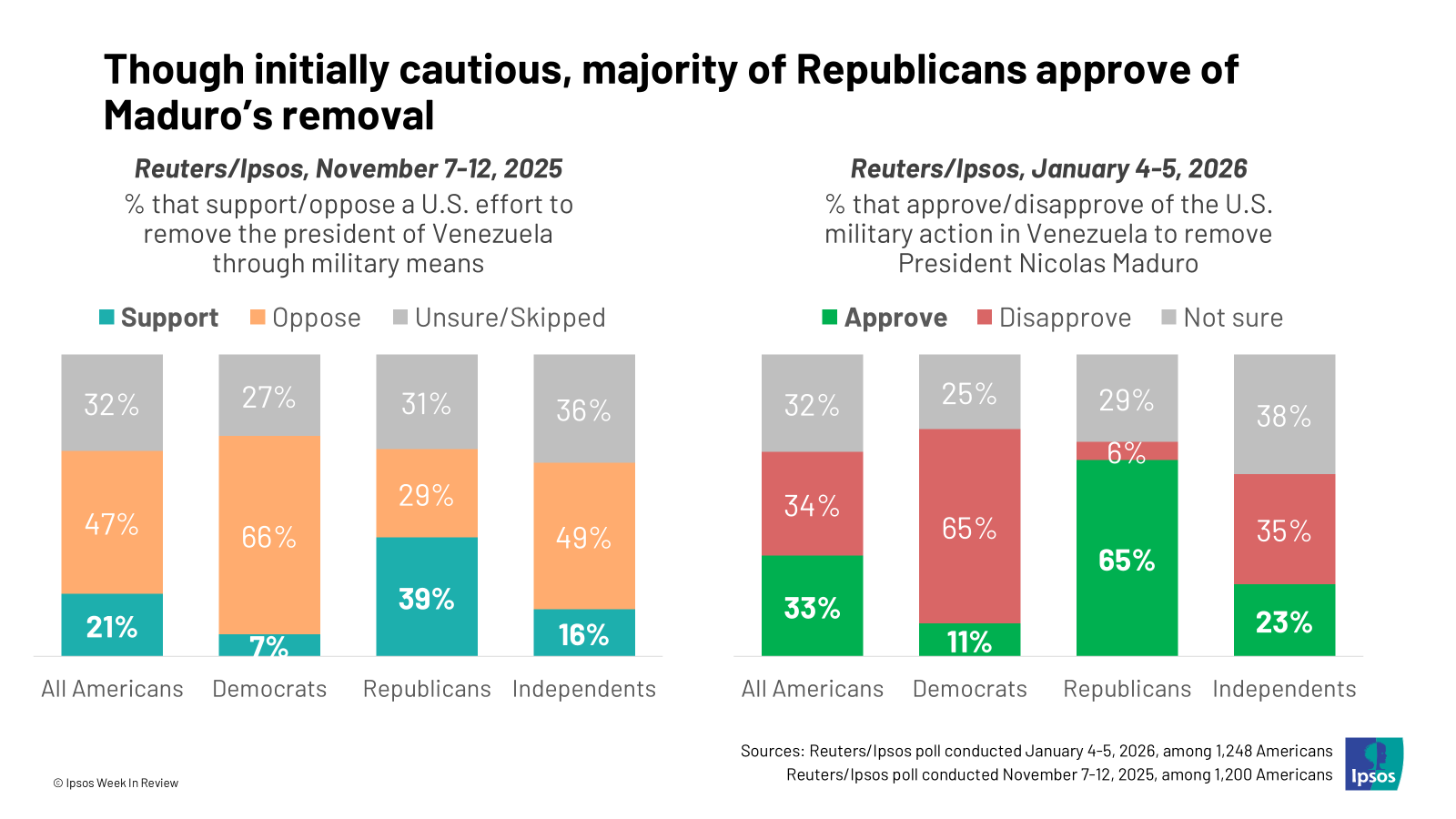
2. Concern over being too involved. Though the country is divided on the removal of Maduro itself, there is more consensus on the concern that the U.S. could become “too involved” in Venezuela.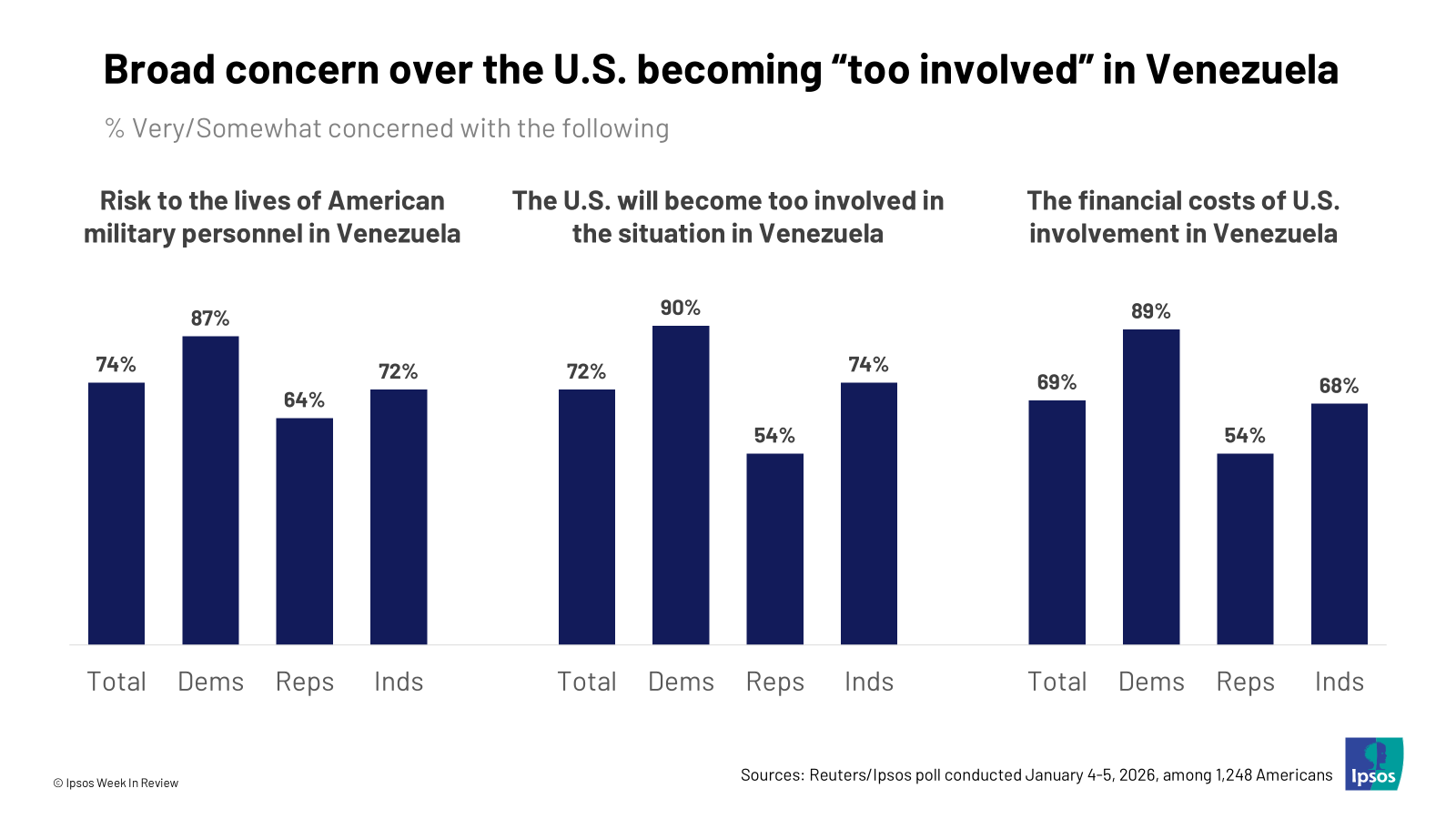
3. The silver lining. On the flip side, there exists more optimism than pessimism for how the operation will affect the quality of life for Venezuelans and the fairness of democratic elections in Venezuela. Right now, concern for the U.S. exists alongside optimism for Venezuelans. As for the ultimate legacy of the strikes, only time will tell.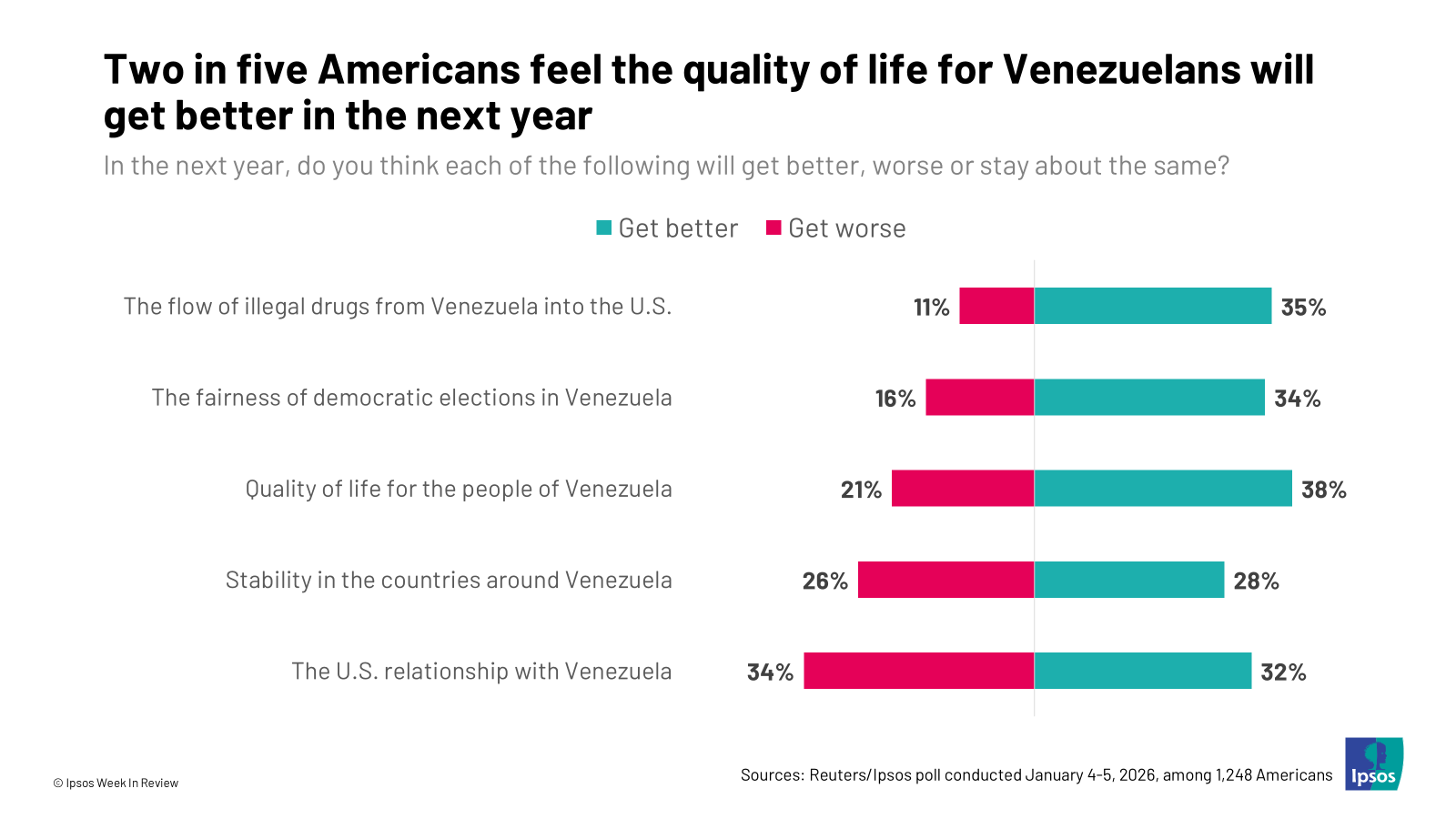
4. Americans on the “Donroe Doctrine.” The Trump administration has not been shy of stating it’s desire to dominate affairs in the Western Hemisphere. The polling shows that the public is less eager about an approach that involves “dominating affairs” in the Western Hemisphere. Of course, most situations fall somewhere in between these black and white scenarios.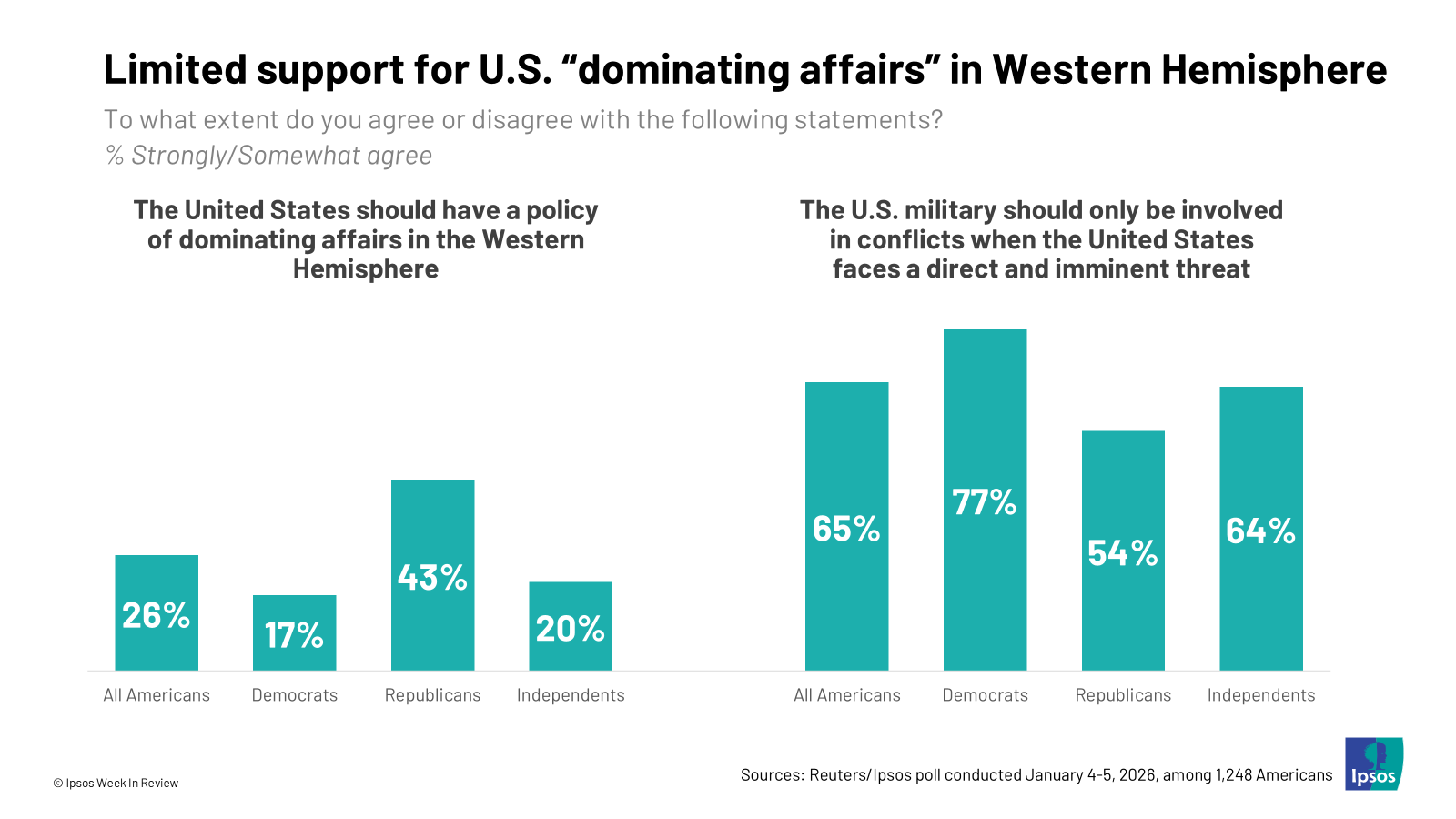
5. Not a big needle mover. At least in the immediate aftermath, Trump’s overall approval rating saw next to no significant upwards or downwards movement. At best, it’s a needed rally-around-the-flag moment for Republicans. But the initial evidence suggests that the operation isn’t enough to shift sentiment in a public that already has deeply held convictions about the President.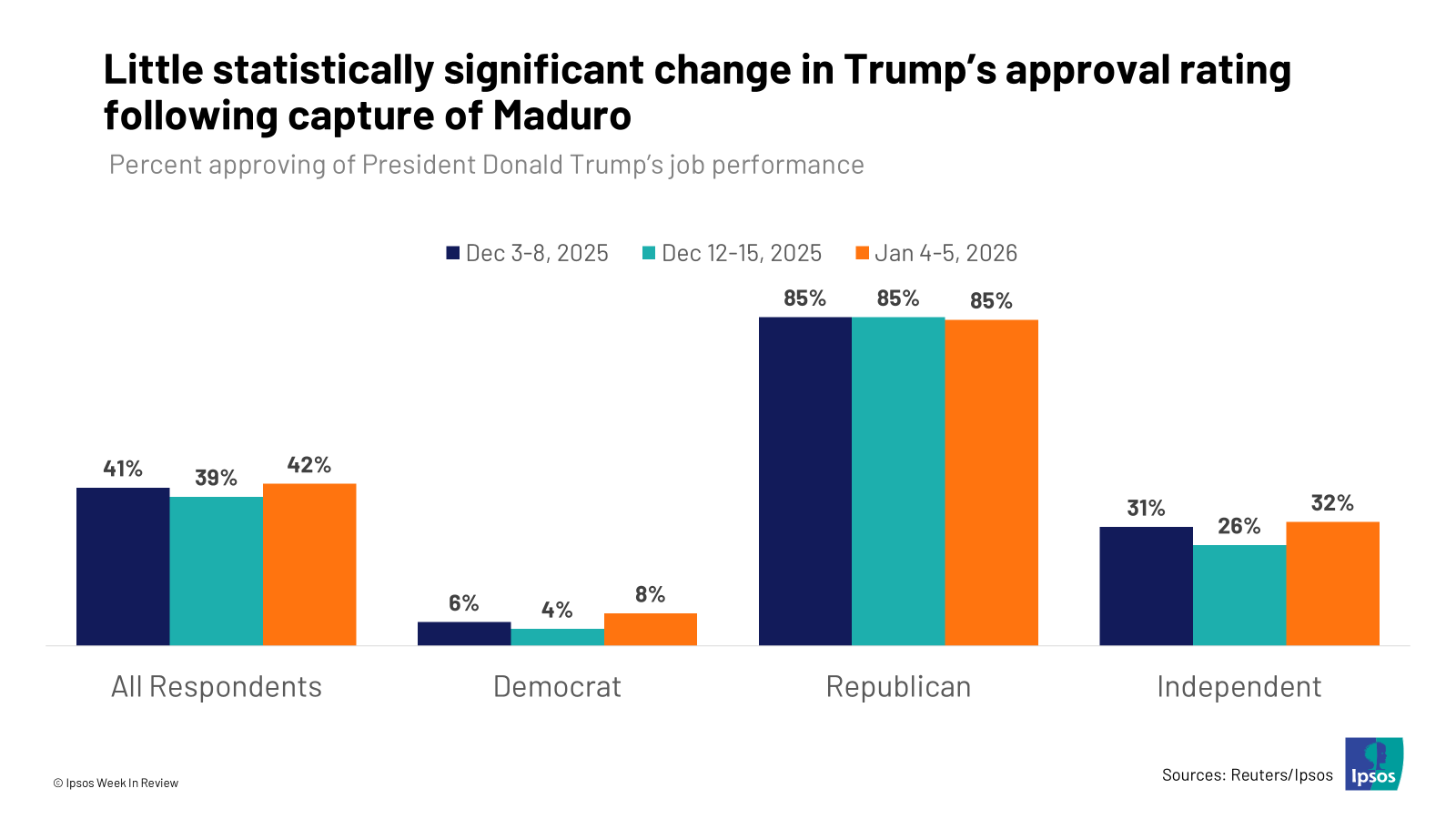
As the dust settles, this military action will most likely not change much at home. Not towards President Trump’s approval rating and not for the priority set of Americans today.
Americans will likely remain most concerned with cost of being an American: the price of daily goods, the job market, the economy, the cost healthcare, and so on. We are now in an election year, and these are what will be the deciding factors in this year’s elections. Watch this space.